Understanding Safety Relays in Industrial Automation: Architecture, Operation, and Functional Safety
- 〡
- 〡 by WUPAMBO

Limitations of Standard Relays in Machine Guarding Applications
Standard electromechanical relays provide basic electrical isolation between low-voltage control circuits and high-power output loads. A traditional switching relay features a magnetic coil driving mechanical Common (COM), Normally-Open (NO), and Normally-Closed (NC) contacts. However, standard relays pose severe functional risks when deployed in critical safety interlock circuits. High current inrush or mechanical wear can weld contacts together permanently. If contact welding occurs in an emergency stop circuit, pressing the button fails to halt hazardous machinery movements. Consequently, global functional safety standards prohibit standard relays for critical machine guarding functions.
Mechanism of Forcibly Guided Contacts and Self-Monitoring Safety Relays
Safety relays solve single-point mechanical failures through forcibly guided contacts, also known as mechanically linked contacts. Internal mechanical linkages physically couple the NO and NC contact sets together. Therefore, if an NO contact welds shut due to electrical overload, the associated NC contact cannot close when the coil de-energizes. Built-in internal diagnostic logic continuously checks contact alignment during every power cycle. If the relay detects a contact welding anomaly, it immediately locks out the output power rails, ensuring fail-safe protection across the entire automation loop.
Advanced Diagnostic Capabilities for Field Device Integration
Modern safety modules provide sophisticated line diagnostics beyond simple contact monitoring. Safety relays send low-frequency test pulses through input wiring to detect field shorts, cross-faults, and wire breaks. Control engineers integrate these specialized devices with critical emergency stop buttons, safety light curtains, interlocking guards, and two-hand control stations. Modern safety units also feature manual reset modes to prevent automatic machine restarting after fault clearings. Furthermore, integrated fieldbus communication protocols like Industrial Ethernet and Modbus allow real-time diagnostic telemetry exchange with plant-wide DCS and PLC platforms.
Functional Safety Standards and Risk Assessment Frameworks
Implementing safety relays requires strict adherence to international risk evaluation frameworks, particularly ISO 12100, ISO 13849-1, and IEC 62061. Control system designers evaluate required Safety Integrity Levels (SIL 1 to SIL 3) and Performance Levels (PL a to PL e) before selecting hardware. Standard PLCs manage routine machine control sequences, but they lack certified functional safety hardware architecture. Therefore, automation engineers pair standard PLCs with dedicated safety relays or deploy safety PLCs to meet regulatory compliance across European and North American markets.
Practical Application Scenario: High-Speed Robotic Stamping Cell
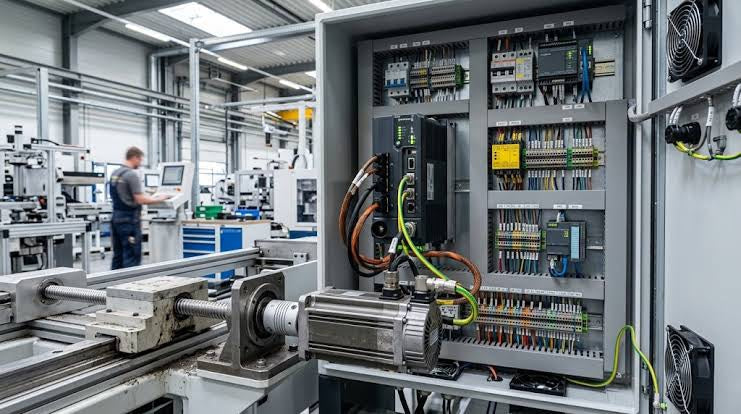
In a high-speed automotive sheet metal stamping facility, safety engineers integrated safety relays to protect operators around a robotic loading cell. The design team wired dual-channel light curtains and perimeter interlock doors directly into a dedicated SIL 3 safety relay. If an operator breaches the light curtain during operation, the safety relay immediately removes power from the servo motor contactors within 15 milliseconds. Concurrently, the safety relay transmits a diagnostic warning signal via Ethernet to the main plant DCS. This dual-channel design prevented severe operator injuries while eliminating false diagnostic trips during daily tool changes.
About the Author
Sun Guowei is a Senior Functional Safety Specialist and Industrial Automation Consultant with 15 years of global field experience in PLC architecture, DCS safety loops, TSI machinery monitoring, and emergency shutdown system design. He frequently publishes technical articles for leading B2B engineering publications, advising manufacturing enterprises on regulatory compliance and machine safety design.
- Posted in:
- control systems
- DCS
- factory automation
- forcibly guided contacts
- machine safety
- PLC
- safety relay