Demystifying Programmable Logic Controllers: Comprehensive Guide to PLC Classification and Selection in Industrial Automation
- 〡
- 〡 by WUPAMBO
Introduction to PLC Architecture and Classification in Factory Automation
Modern industrial automation heavily relies on Programmable Logic Controllers (PLCs) to drive factory floor efficiency. Over my 15 years as an industrial automation expert working with DCS, TSI, and control systems, I have seen PLCs evolve into the central nervous system of modern manufacturing. Selecting the right controller requires a deep understanding of PLC types based on physical size, hardware architecture, and power supply configurations.
Classifying PLCs by System Size and I/O Capacity
Control system engineers evaluate factory automation requirements by examining the total input and output (I/O) count. Manufacturers categorize PLCs into distinct tiers: nano, micro, medium, large, and very large. Nano and micro controllers suit compact machine automation, whereas medium-to-large architectures manage expansive petrochemical plants and automotive assembly lines. Memory capacity scales directly with I/O density, allowing large systems to execute complex PID loops and high-speed motion control algorithms simultaneously.
Hardware Setup: Compact versus Modular PLC Architecture
Hardware configuration dictates system scalability and maintenance workflows. Compact PLCs integrate the processor and fixed I/O terminals into a single housing. Engineers frequently leverage expansion modules to scale up these compact units when application demands grow. Conversely, modular PLCs utilize independent cards—including CPU, analog/digital I/O, and communication modules—mounted onto a standard rack or chassis. Maintenance teams appreciate modular systems because hot-swapping faulty cards minimizes downtime. Furthermore, critical applications deploy redundant CPU and communication cards, often featuring automated firmware synchronization to ensure zero single points of failure.
Power Supply Configurations: SMPS Integration in Industrial Environments
Power distribution design directly impacts control panel reliability. PLCs generally fall into two power supply categories: units equipped with an internal Switched-Mode Power Supply (SMPS) and those requiring external power conversion. Controllers with internal SMPS accept 230 VAC directly and internally step down the voltage to standard 24 VDC logic levels. Meanwhile, other industrial controllers demand an external 24 VDC power rail. In my field experience, utilizing high-quality external DIN-rail power supplies provides superior galvanic isolation and protects sensitive processor boards from plant-floor electrical noise.
Real-World Application Scenario: Automotive Assembly Line Upgrade
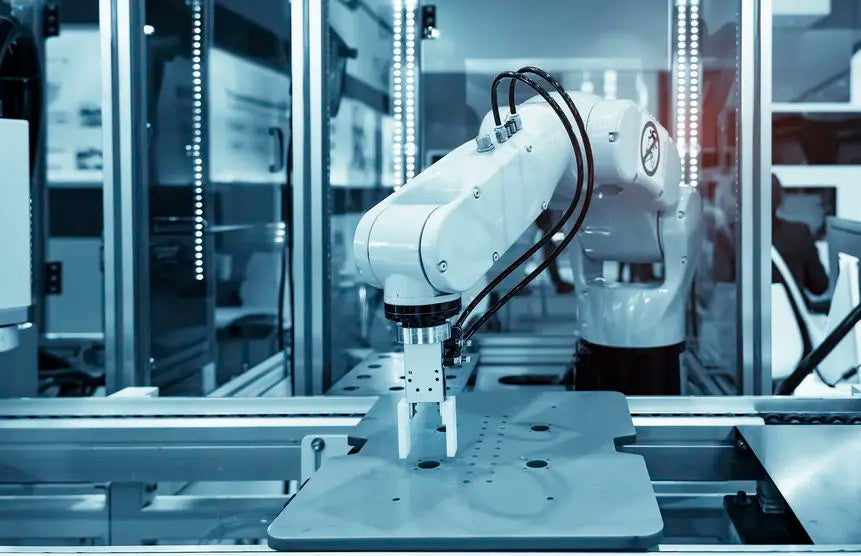
Consider a recent factory automation retrofit project upgrading an automotive body-shop welding line. The engineering team deployed a modular PLC architecture featuring redundant CPU cards and high-density distributed I/O drops via industrial Ethernet protocols. Because vehicle assembly lines demand continuous operation, the modular plug-and-play capability allowed technicians to replace communication cards without halting production. Integrating robust external 24 VDC power supplies successfully eliminated transient voltage spikes, ensuring stable 24/7 operation across hundreds of robotic welding cells.
About the Author
Chen Weiguo is a Senior Industrial Automation Technical Expert with over 15 years of global engineering experience specializing in PLC, DCS, TSI, and power protection systems. He regularly contributes technical white papers and architectural guides for leading industrial automation portals, helping manufacturing enterprises optimize their factory floor control strategies.
- Posted in:
- control systems
- DCS
- factory automation
- PLC types
- programmable logic controller
- SMPS power supply