Mastering Wire Identification in Industrial Automation: The Power of Ferrules and Cross-Ferruling
- 〡
- 〡 by WUPAMBO

The Fundamentals of Wire Identification in Control Systems
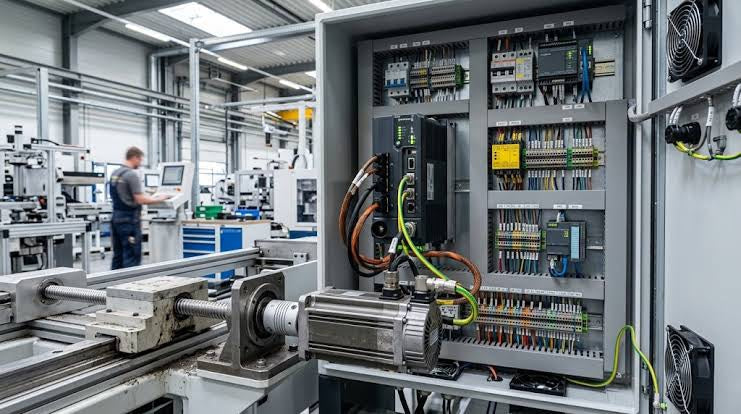
Proper wire labeling forms the cornerstone of reliable control system installation and long-term maintenance. In complex industrial automation environments, technicians terminate thousands of conductor ends inside control panels, marshalling racks, and field junction boxes. Ferrules serve as individual tube-shaped sleeve markers slipped onto conductors before final termination. While technicians historically relied on pre-printed individual letter rings, modern control panel builders utilize automated ferrule printing machines. These thermal-transfer printers generate durable, single-sleeve heat-shrink tags directly matching approved wiring schematics, significantly accelerating cabinet assembly workflows.
Standard Ferruling versus Advanced Cross-Ferruling Methodologies
Conventional wire ferruling typically displays only a localized signal wire number or terminal designation. However, complex DCS and PLC architectures require a more sophisticated tracking method known as cross-referencing or cross-ferruling. Cross-ferruling prints both the source location and destination targets directly onto the wire sleeve at both termination ends. For instance, a cross-ferrule tag details the panel number, junction box tag, terminal strip identifier, specific terminal point, and signal polarity. Consequently, maintenance engineers can immediately trace instrument loops without constantly consulting paper schematics.
Enhancing Reliability and Streamlining Troubleshooting Workflows
Accurate ferrule sleeve labeling eliminates ambiguity during high-stress operational downtime. Clear wire markers distinguish positive and negative polarities for sensitive DC analog loops, preventing reverse polarity destruction on expensive field instruments. In addition, during emergency troubleshooting, technicians can quickly isolate faulty conductors across complex cabinet lineups. In my 15 years overseeing power plant automation retrofits, panels utilizing standardized cross-ferruling reduced diagnostic loop-checking time by more than 60 percent compared to conventional single-number labeling setups.
Modern Printing Technologies and Industrial Standards Compliance
Selecting high-quality wire sleeve materials ensures long-term legibility under harsh factory environments. Industrial control panels often experience ambient heat, oil exposure, and vibration over decades of service. Therefore, panel builders must specify halogen-free, flame-retardant heat-shrink sleeves conforming to international panel assembly standards such as UL 508A and IEC 60204-1. Furthermore, using computer-linked printer systems directly connected to CAD engineering software prevents human transcription errors when printing complex cross-ferrule strings.
Practical Application Scenario: Thermal Power Plant Control System Overhaul
During a critical control system retrofit at a 600 MW thermal power generation plant, commissioning engineers faced strict outage timelines for replacing legacy turbine control panels. The engineering team mandated strict cross-ferruling for all interconnecting cables running between field junction boxes, marshalling cabinets, and the turbine safety system racks. When a pressure transmitter experienced loop instability during initial cold commissioning, technicians used the destination data printed on the cross-ferrule to locate a loose intermediate barrier terminal within three minutes. This clear identification strategy enabled zero-defect handover ahead of schedule.
About the Author
Zhou Shengwei is a Senior Electrical and Instrumentation Engineer with 15 years of global hands-on experience in PLC architectures, DCS integration, TSI vibration systems, and industrial control panel design. He frequently authors technical guides and best-practice white papers for global industrial automation portals and engineering EPC firms.
- Posted in:
- control systems
- cross ferruling
- DCS
- factory automation
- loop checking
- panel wiring
- PLC wiring
- wire ferrules