Strategic PLC Selection: A Technical Guide to Choosing the Right Controller for Industrial Success
- 〡
- 〡 by WUPAMBO
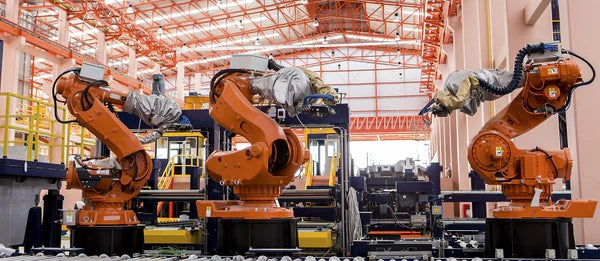
In the competitive world of industrial automation, the Programmable Logic Controller (PLC) stands as the bedrock of machine efficiency. However, simply purchasing a high-end unit does not guarantee success. Selecting a PLC that aligns perfectly with your specific process targets ensures maximum productivity and long-term reliability. This guide explores the essential criteria and expert strategies for identifying the best controller for your factory automation needs.
The Role of the PLC in Modern Control Systems
A PLC acts as the central intelligence of an automated line, processing inputs from sensors and executing commands to actuators. These devices excel in harsh industrial environments, offering resistance to vibration, heat, and electrical noise. By providing real-time response capabilities, PLCs maintain precise control over complex sequences. Furthermore, their programmable nature allows for rapid production changes without significant hardware overhauls.
Defining Application Requirements for Optimal Performance
Before selecting hardware, you must clearly define the physical and logical scope of your application. For instance, a basic conveyor system requires high-speed digital I/O but minimal analog processing. In contrast, temperature-controlled chemical mixing requires high-resolution analog modules and PID loop capabilities. Failure to map these requirements early often leads to costly hardware upgrades or system bottlenecks during commissioning.
Evaluating Processing Power and Memory Capacity
Processing speed directly influences cycle times and system responsiveness. If your control logic involves complex mathematical algorithms or high-speed motion, you need a high-performance CPU. Conversely, simpler logic tasks can run efficiently on more economical, entry-level controllers. Moreover, consider memory capacity for data logging and recipe management. Always choose a CPU that offers at least 20% "headroom" for future logic expansions.
Connectivity and Industrial Communication Protocols
In the era of IIoT and Industry 4.0, a PLC must communicate seamlessly with other plant assets. Most modern systems utilize Ethernet-based protocols like Profinet, EtherNet/IP, or Modbus TCP. You must ensure your chosen PLC supports the existing network architecture of your facility. Additionally, verify the unit's ability to interface with HMIs, SCADA systems, and enterprise-level ERP software for data transparency.
Comparing Leading Industry Vendors: Siemens, Allen-Bradley, and Mitsubishi
Choosing a vendor often depends on regional support and existing plant standards.
-
Siemens S7-1200/1500: Offers powerful TIA Portal integration and is excellent for precision motion and safety.
-
Allen-Bradley CompactLogix: Provides a highly flexible, modular platform with strong support in the North American market.
-
Mitsubishi FX5U: Delivers a cost-effective, high-speed solution ideal for small-to-medium machines with built-in analog features.
Each brand has unique strengths; therefore, prioritize the vendor that offers the best local spare parts availability and technical support.
Navigating Environmental and Protection Constraints
Industrial environments often subject electronics to dust, moisture, and extreme temperatures. Standard PLCs require installation within protected IP54 or IP65 enclosures. However, if space is limited or the environment is particularly aggressive, consider specialized "ruggedized" models. Some units feature conformal coating on the internal PCBs to prevent corrosion from chemical vapors or humidity.
Recognizing the Limits: When to Shift to DCS or PAC
While PLCs are versatile, they are not universal solutions. For large-scale continuous processes involving thousands of I/O points, a Distributed Control System (DCS) provides better redundancy and global data management. Similarly, if your application requires high-level PC-based programming or extensive IT integration, a Programmable Automation Controller (PAC) may be more suitable. Identifying these limits early prevents under-engineering critical infrastructure.
Author Insight: The Total Cost of Ownership (TCO)
From my experience in B2B industrial procurement, the "best" PLC is rarely the one with the lowest sticker price. You must consider the Total Cost of Ownership, which includes software licensing, training, and long-term maintenance. A cheaper controller with expensive, proprietary software can quickly become a financial burden. I recommend prioritizing platforms with scalable software environments and widely available technical documentation.
Application Scenario: High-Speed Laboratory Mixing
A laboratory chemical mixer requires 20 analog inputs for temperature tracking and 15 analog outputs for variable speed pumps. A Siemens S7-1200 or Mitsubishi FX5U provides an ideal balance here. They offer compact footprints for small panels and built-in Ethernet for data logging. This selection ensures high-speed algorithm execution while maintaining a low footprint and cost, fitting perfectly into a research or pilot plant environment.
- Posted in:
- Allen-Bradley CompactLogix
- B2B procurement
- control systems
- factory automation
- I/O modules
- industrial communication
- PLC selection
- Siemens S7-1200