PLC vs. PAC: Navigating Selection in Modern Industrial Automation
- 〡
- 〡 by WUPAMBO
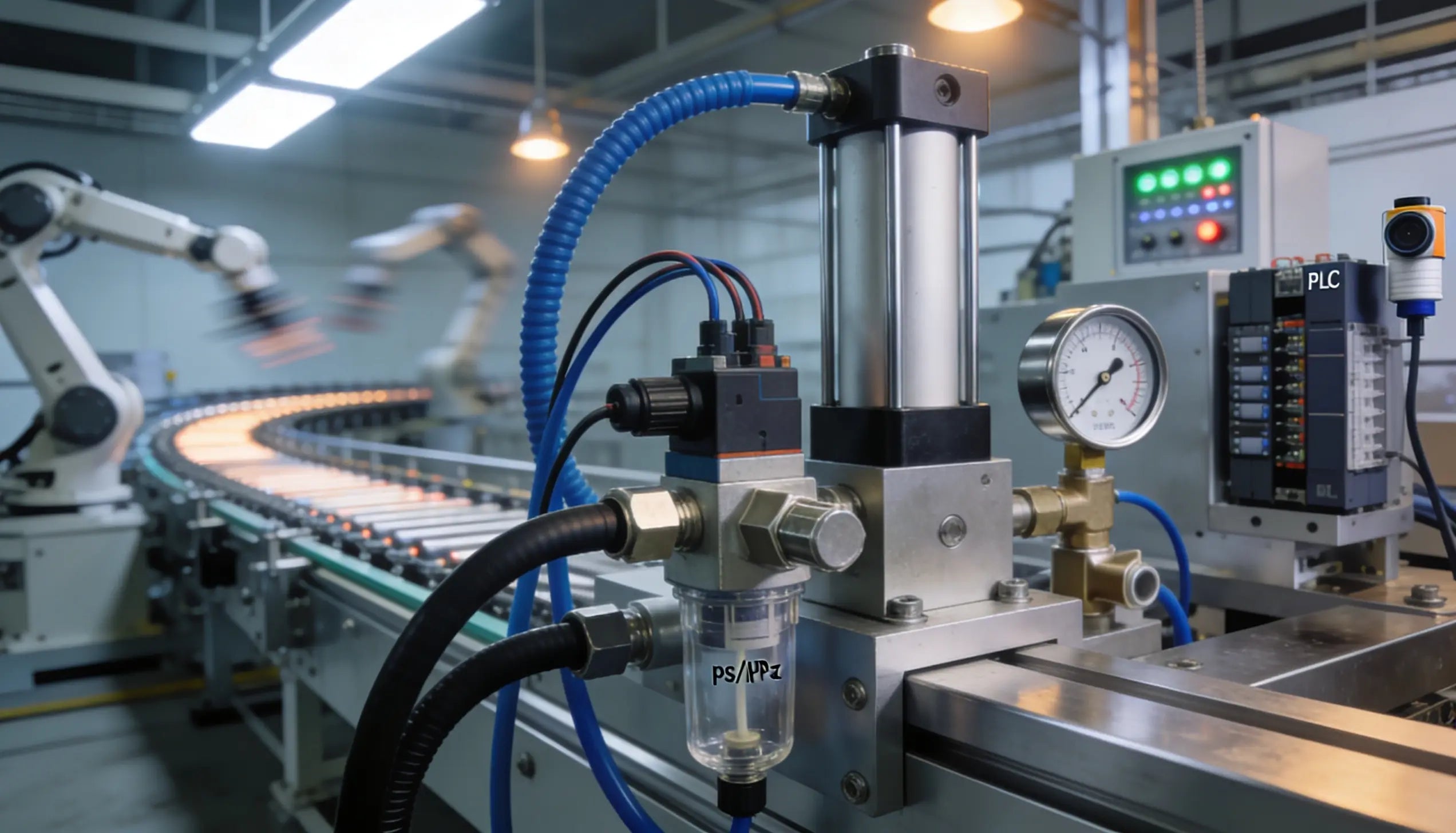
Selecting the right controller is a fundamental decision in industrial automation. While the lines between Programmable Logic Controllers (PLC) and Programmable Automation Controllers (PAC) often blur, understanding their core architectural differences is essential for system reliability. Both controllers serve as the brain of control systems, yet their specific capabilities dictate their suitability for various factory automation tasks.
Understanding the PLC: The Backbone of Discrete Control
A PLC is a specialized industrial computer engineered for rugged environments. It excels in repetitive, high-speed tasks such as assembly line operations and material handling. PLCs strictly adhere to the IEC 61131-3 standard, utilizing languages like Ladder Logic and Structured Text. In my professional experience, the PLC remains the gold standard for discrete manufacturing. Its primary strength lies in its deterministic nature, ensuring that machine cycles repeat with millisecond-level precision every time.
Defining the PAC: Powering Complex Automation Systems
A PAC functions as a more versatile cousin to the traditional PLC. It bridges the gap between basic logic control and enterprise-level computing. Unlike a standard PLC, a PAC handles complex mathematical algorithms and extensive data processing with ease. Furthermore, PACs support high-level languages like C and C++, which allows developers to implement sophisticated motion control and process optimization. Therefore, when your application requires heavy data acquisition or multi-axis synchronization, the PAC provides the necessary processing headroom.
Evaluating Key Similarities in Control Systems
Despite their differences, both devices share a common lineage in industrial automation. Both use modular designs, allowing engineers to scale I/O counts to match specific project requirements. Moreover, they are both built to survive harsh industrial conditions, including extreme temperatures, high humidity, and persistent vibration. They also utilize similar communication protocols to ensure interoperability across the plant floor. As a result, many modern hybrid systems utilize both controllers, letting each perform the tasks it handles best.
Distinguishing Functional Differences and Scalability
The main distinction lies in architecture and connectivity. PACs typically offer advanced networking capabilities, including native support for Ethernet and wireless protocols. This connectivity simplifies integration into larger, distributed control systems (DCS). Conversely, PLCs offer a lower cost-of-entry and a streamlined programming environment for straightforward applications. If your project demands high-speed integration with IT databases or complex human-machine interfaces (HMI), a PAC is often the superior choice. However, for standalone machine control, the simplicity of a PLC is hard to beat.
Selecting the Right Controller for Your Application
Choosing between these technologies requires a clear analysis of your specific operational needs. Use a PLC when you need cost-effective, reliable control for discrete manufacturing tasks. Examples include conveyor sorting, packaging machines, or simple relay replacement. In contrast, deploy a PAC for complex, large-scale systems such as power plant management or advanced multi-axis motion control. These environments require the heavy-duty data processing and fault-tolerant architectures that characterize modern PAC platforms.
Application Scenario: Hybrid Control Strategy
In a large-scale manufacturing plant, we often implement a tiered control strategy. We use high-performance PLCs at the edge to manage discrete machine safety and high-speed sorting. These PLCs then send status data to a central PAC, which oversees the entire production line. The PAC manages process recipes, logs production data to an SQL database, and coordinates communication with the site’s DCS. This hybrid approach optimizes both the cost of hardware and the power of system-wide data management.
About the Author
Li Wei is a seasoned industrial automation expert with over 15 years of field experience. He specializes in the design, commissioning, and optimization of complex control architectures, including PLC, DCS, and mission-critical power protection systems. As a frequent contributor to international automation media and technical forums, he provides expert insights that help manufacturers navigate the evolving landscape of digital industrial transformation. Li Wei is dedicated to advancing the efficiency of global production through rigorous engineering standards and the practical application of next-generation automation technologies.