Navigating Industrial Communication Protocols: A Technical Guide for Modern PLCs
- 〡
- 〡 by WUPAMBO
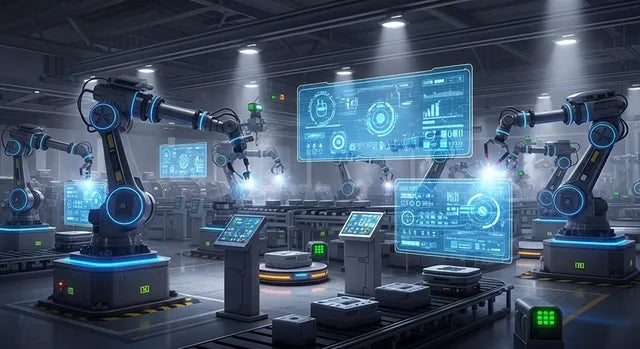
In the realm of industrial automation, the Programmable Logic Controller (PLC) serves as the brain of the factory floor. However, its true power is unlocked through robust communication protocols. These digital pathways ensure seamless data exchange between controllers, sensors, and enterprise-level management systems.
Understanding the Role of Communication in Control Systems
Communication protocols define the rules for data transmission. Without them, complex automation networks would collapse into isolated silos. Understanding these protocols is essential for systems integrators and maintenance engineers. You must grasp the physical layer and the OSI model to troubleshoot issues effectively. Whether you are working with legacy serial lines or modern Industrial Ethernet, the logic remains consistent.
The Rise of Industrial Ethernet: EtherNet/IP and PROFINET
EtherNet/IP has become the industry standard for high-speed connectivity. Built on the Common Industrial Protocol (CIP), it allows for a unified network structure. Rockwell Automation pioneered this technology to solve the limitations of standard commercial Ethernet. Similarly, PROFINET, championed by Siemens, dominates the European market. Both protocols offer high-speed, deterministic data exchange, making them ideal for modern factory automation.
Master-Slave Efficiency: The Modbus Legacy
Modbus remains the most widely deployed protocol in the industry. Its simplicity is its greatest strength. Based on master-slave architecture, it transmits data over serial or Ethernet lines. Whether you utilize Modbus RTU, ASCII, or TCP/IP, the communication is reliable and vendor-neutral. In my experience, Modbus remains the "go-to" protocol when integrating third-party sensors or legacy instrumentation into a new DCS or PLC environment.
Specialized Protocols: From Fieldbus to Sensor-Level Networks
Beyond the giants, several specialized protocols address specific hardware needs. PROFIBUS, another Siemens staple, provides robust serial communication. For sensor-level networking, the Actuator Sensor Interface (ASI) stands out. By using a single two-conductor cable for both power and data, ASI significantly reduces field wiring costs. Moreover, CAN Open excels in high-speed, multi-master environments, particularly in motion control and mobile machinery.
Legacy Systems: Data Highway and Serial Networks
Many facilities still operate with legacy protocols like Data Highway Plus (DH+). While largely considered obsolete, these systems require specialized knowledge for maintenance. DH+ utilized transformer-coupled differential signaling, a technique designed to negate ground potential noise. If you are managing legacy Rockwell systems, understanding these nuances is critical for upgrading to modern EtherNet/IP environments without causing downtime.
Hybrid Intelligence: HART Protocol
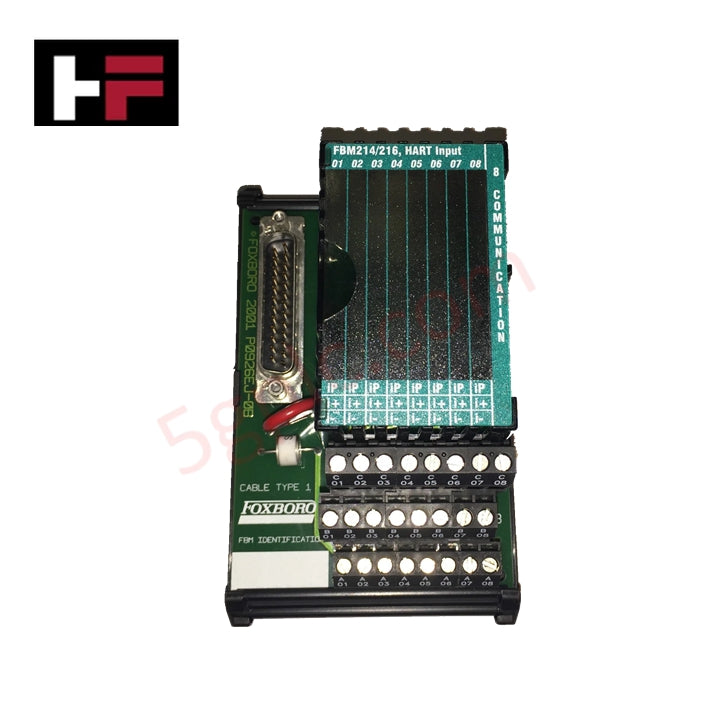
HART (Highway Addressable Remote Transducer) is a masterclass in engineering efficiency. It superimposes digital data on standard 4-20 mA analog signals. As a result, engineers can perform remote calibration and diagnostics without traveling to the field. This hybrid approach adds layers of intelligence to traditional instruments, simplifying the lifecycle management of process sensors.
Strategic Selection for Future-Proofing
Choosing a protocol is not just about compatibility; it is about future-proofing. As we transition toward Industry 4.0, prioritize protocols that support OPC UA and provide native security features. Do not choose a protocol based solely on existing hardware. Instead, analyze your network scalability and bandwidth requirements for the next decade.
Implementation Scenario: Integrated Factory Floor
Consider an automation cell requiring high-speed motion control and basic temperature monitoring. I would recommend using EtherNet/IP for the primary controller-to-drive communication, while utilizing a HART-enabled analog module for temperature inputs. This hybrid network architecture optimizes speed where it counts and provides deep diagnostic visibility where it is required for maintenance.
Author Profile: Zhang Wei
Zhang Wei is a veteran in the industrial automation sector with over 15 years of hands-on experience in PLC programming, DCS integration, and power protection systems. Having worked across major manufacturing and power generation projects, Zhang is dedicated to simplifying complex technical standards into actionable insights. His expertise lies in bridging the gap between legacy control systems and the future of digitalized industrial architectures.