Navigating Industrial Intelligence: PLC vs. RTU in Modern Automation
- 〡
- 〡 by WUPAMBO

Industrial automation relies heavily on robust control systems to manage complex processes efficiently. Engineers often face a critical decision when designing control architectures: should they deploy a Programmable Logic Controller (PLC) or a Remote Terminal Unit (RTU)? While both devices process inputs and manage outputs, their design philosophies serve distinct operational environments.
Core Architecture and Functionality of PLCs
A Programmable Logic Controller is a solid-state control computer designed for factory automation and high-speed machine control. Manufacturers like Rockwell Automation, Siemens, and Schneider Electric design these units to execute deterministic, cyclic code.
PLCs continuously scan field inputs, execute programmed logic—typically written in Ladder Diagram (LD) or Structured Text (ST)—and update outputs. They connect directly to local Human-Machine Interfaces (HMIs) and Supervisory Control and Data Acquisition (SCADA) networks via high-speed physical media, such as industrial Ethernet or Profinet.
Understanding the Role of the RTU
A Remote Terminal Unit is a microprocessor-based device engineered primarily for remote telemetry applications. Unlike factory-based controllers, an RTU excels at monitoring geographically distributed assets over wide-area wireless networks.
RTUs gather data from field sensors, stamp it with precise timestamps, and transmit the information back to a central control room. Because they operate in remote locations like oil fields or water towers, they utilize low-power designs and rely on event-driven communication protocols like DNP3 or Modbus TCP.
Comparing Environmental Ruggedness and Power Efficiency
Environmental resilience represents a primary differentiator between these two control technologies. System integrators typically install PLCs inside climate-controlled electrical enclosures within factory walls.
In contrast, field engineers deploy RTUs in harsh outdoor environments subject to extreme temperatures, dust, and vibration. Furthermore, RTUs feature specialized power-management capabilities. Many remote units operate reliably on solar panels or backup batteries, consuming a fraction of the power required by a standard factory PLC.
Contrasting Data Transmission and Communication Mechanics
Data transmission strategies vary fundamentally between factory automation and remote telemetry systems. PLCs scan their entire program logic in milliseconds, requiring a continuous, high-bandwidth physical cable connection to maintain deterministic control.
Conversely, RTUs operate on an event-driven basis, transmitting data only when an input changes or when the central SCADA system polls the device. This approach conserves valuable bandwidth over cellular, radio, or satellite communication channels.
Analyzing I/O Control Capabilities and Display Independence
PLCs deliver exceptional speed and accuracy for real-time output control, managing high-speed valves, variable frequency drives, and multi-axis motors seamlessly. They frequently operate independently of higher-level software, utilizing local physical buttons or diagnostic screens for operator interaction.
RTUs focus primarily on data acquisition and basic monitoring. Due to intermittent wireless latency, engineers rarely trust an RTU with high-speed, critical closed-loop safety controls. Additionally, RTUs generally lack local built-in displays, relying completely on the central SCADA interface to visualize data.
Expert Insight: The Edge Computing Convergence
The traditional line between PLCs and RTUs is blurring in the era of the Industrial Internet of Things (IIoT). Modern edge controllers now combine the high-speed processing power of a PLC with the ruggedness and advanced wireless capabilities of an RTU.
When choosing between them, analyze your infrastructure topology. If your application demands millisecond-level interlocking logic inside a facility, select a PLC. If your project involves monitoring pipelines or water assets across hundreds of miles, an RTU remains the superior engineering choice.
Industrial Application Scenarios
Scenario A: Factory Floor Automation (PLC Dominance)
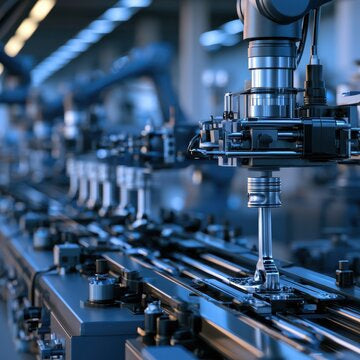
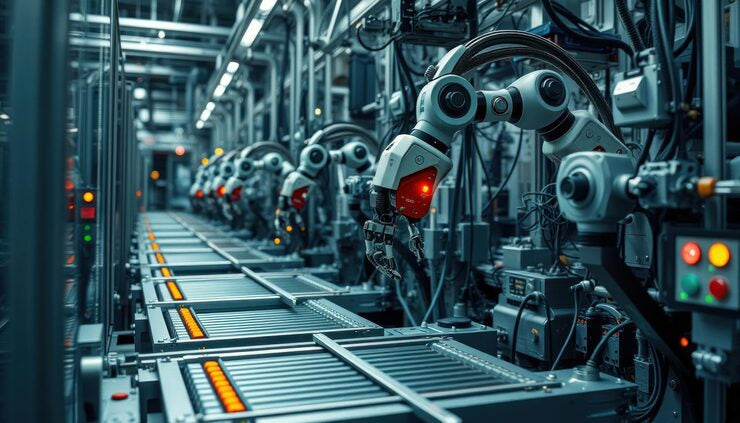
An automotive assembly line requires perfect synchronization between robotic arms, conveyors, and safety light curtains. A high-performance PLC processes thousands of local I/O points in real time over physical fiber-optic networks, ensuring immediate shutdown if a human breaches the safety zone.
Scenario B: Geographically Distributed Water Utility (RTU Dominance)
A municipal wastewater network features thirty pumping stations spread across an entire county. Engineers install rugged RTUs at each station to monitor tank levels, log flow rates with local timestamps, and beam the data over cellular networks to a central SCADA facility, running completely on solar power.
About the Author: Zhang Junhao
Zhang Junhao is a senior automation engineer with over fifteen years of hands-on experience designing control systems for heavy industry. He specializes in designing distributed control architectures, configuring SCADA networks, and deploying rugged telemetry solutions for the oil and gas, power distribution, and water management sectors. His practical field experience guides system integrators in bridging the gap between factory automation and wide-area remote monitoring.
- Posted in:
- control systems
- edge controllers
- factory automation
- PLC
- remote telemetry
- RTU
- SCADA connectivity