Importance of Proper Grounding in Industrial Automation and Electronic Control Systems
- 〡
- 〡 by WUPAMBO

Why Grounding Matters in Industrial Control Systems
Grounding plays a critical role in industrial automation systems. It protects personnel, equipment, and data communication circuits.
In electrical installations, grounding provides a safe path for fault current. It helps circuit breakers and fuses operate quickly. As a result, exposed metal surfaces remain at safe voltage levels.
However, electronic equipment introduces additional challenges. PLC, DCS, and control systems contain sensitive components that react to small voltage disturbances. Even minor electrical transients can disrupt operation.
Therefore, grounding design must address both safety and performance requirements.
Sensitivity of Electronic Equipment to Electrical Disturbances
Modern factory automation systems rely heavily on semiconductor devices. These components operate at high speeds and low signal voltages.
For example, digital signals in control systems may only measure a few volts. In addition, signal rise times often occur within nanoseconds.
Because of this sensitivity, electrical disturbances can easily affect system stability. Surprisingly, lightning impulses often appear slow compared with the switching speed of modern electronics.
As a result, engineers must design grounding and protection systems carefully.
Common Sources of Electrical Disturbances
Industrial facilities experience several types of electrical transients. These disturbances threaten the reliability of industrial control systems.
Common sources include:
Lightning events
Direct strikes and nearby lightning can induce large voltages in power or signal cables.
Switching transients
Power system switching operations often generate voltage spikes.
Static electricity
Electrostatic discharge may damage sensitive circuit boards.
Fast electrical transients
Contactors and relays can produce rapid voltage spikes during switching.
These disturbances can travel through power lines or signal cables.
Basic Methods for Controlling Electrical Transients
Although transient events are difficult to predict, engineers can control their impact.
One common solution involves installing Surge Protective Devices (SPDs) on power circuits. These devices limit overvoltage conditions and protect connected equipment.
Proper cable routing also plays an important role. Engineers should separate power wiring from communication cables.
Moreover, effective grounding and bonding help reduce electrical noise. Good grounding provides a stable reference for electronic signals.
Two Types of Grounding in Electronic Systems
Grounding in electronic installations serves two main purposes.
Safety grounding protects people and equipment from electrical faults. It ensures that protective devices operate quickly during abnormal conditions.
Performance grounding protects data signals and electronic circuits. It reduces noise and improves communication reliability.
Both grounding methods must work together in modern automation control systems.
Interestingly, some systems operate without earth grounding. For example, aircraft electrical systems use internal grounding networks instead of earth connections. However, industrial installations still rely on building grounding systems for safety.
The Role of Grounding in Data Signal Reliability
Signal circuits in PLC and DCS networks often operate with small voltage levels.
A typical digital signal may have an amplitude near five volts. Therefore, electrical noise of only a few volts can disrupt communication.
To prevent this issue, engineers design grounding systems that isolate signal paths from electrical interference.
Isolation transformers, shielded power supplies, and proper bonding techniques help maintain signal integrity.
Lightning as a Major Threat to Control Systems
Among all transient sources, lightning usually produces the most severe disturbances.
Lightning strikes can introduce high voltage surges into power systems and grounding networks. These events often represent the worst-case condition for electronic equipment.
Standards such as ANSI/IEEE C62.41 provide guidance on surge environments and protective design.
Therefore, industrial facilities frequently combine grounding systems with surge protection devices to improve resilience.
Fast Transients Generated by Industrial Equipment
Industrial equipment often generates its own electrical disturbances.
Electromechanical contactors, motor starters, and relays can produce fast transients during switching operations.
These transients occur when magnetic fields collapse or contacts arc.
Engineers commonly install RC snubber circuits across relay contacts or coils to reduce these disturbances. This simple solution improves reliability in factory automation systems.
Harmonics in Industrial Power Systems
Harmonic currents frequently appear in facilities with nonlinear loads. Examples include computers, variable frequency drives, and switching power supplies.
Although harmonics are not strictly grounding problems, they can influence grounding conductors.
In three-phase systems with heavy nonlinear loads, the neutral conductor may carry large harmonic currents. Engineers sometimes increase the neutral conductor capacity to prevent overheating.
This practice follows electrical safety principles defined in the National Electrical Code (NEC).
Surge Protective Devices and Grounding Interaction
Surge protective devices play an essential role in transient protection.
SPDs typically connect between power conductors and the equipment grounding system. When a surge occurs, the SPD diverts energy toward ground.
However, this process temporarily raises the local ground potential. Therefore, engineers must design grounding conductors with low impedance to handle surge currents safely.
Correct SPD installation significantly improves protection for industrial automation equipment.
Practical Grounding Recommendations for Electronic Equipment
Industrial projects often follow several grounding best practices.
Engineers should connect equipment enclosures directly to the facility grounding network. This connection ensures electrical continuity and safety.
Isolation transformers with electrostatic shields can also reduce common-mode noise. These transformers often protect sensitive control panels.
In addition, designers should route communication cables near grounded metal structures or signal reference grids.
These installation techniques improve electromagnetic compatibility in control systems.
Cable Routing and Shielding in Automation Systems
Proper cable routing reduces electrical interference.
Engineers should maintain separation between power cables and signal wiring. Crossing cables at right angles also minimizes electromagnetic coupling.
Metal cable trays or conduits provide additional shielding benefits.
Moreover, bonding these metallic pathways to building grounding systems enhances high-frequency grounding performance.
These techniques support stable communication in industrial networks.
Inspection and Verification After Installation
Grounding systems require careful inspection after installation.
Technicians should verify conductor identification to avoid neutral and grounding wiring errors. Miswiring can create dangerous conditions and unwanted current paths.
They should also confirm bonding continuity across conduits, cable trays, and equipment enclosures.
Additionally, surge protection devices must connect with the shortest possible conductor length.
These inspections ensure both safety and reliable automation system performance.
Ground Current Interference in Display Equipment
Stray grounding currents sometimes generate low-frequency magnetic fields.
These fields can interfere with display devices such as cathode ray tube monitors. Operators may observe distorted or unstable images.
Increasing distance between the source and the display often reduces the problem. Reorienting the display relative to the magnetic field may also help.
Another effective solution involves adding additional bonding paths to distribute grounding currents.
Author Perspective: Grounding as a Foundation of Reliable Automation
Grounding rarely receives attention during automation system planning. Many engineers focus on PLC programming or network configuration.
However, poor grounding often causes intermittent faults that are difficult to diagnose.
In practical automation projects, proper grounding reduces noise, improves communication reliability, and protects expensive equipment.
Therefore, grounding design should be considered a core element of industrial automation engineering.
Practical Application Scenario in Factory Automation
Consider a manufacturing facility with multiple PLC control panels and industrial networks.
Engineers may implement the following grounding strategy:
-
Connect all control cabinets to a facility grounding grid
-
Install surge protection devices on incoming power lines
-
Use isolation transformers for sensitive control equipment
-
Route signal cables through grounded metallic trays
-
Maintain separation between power and communication cables
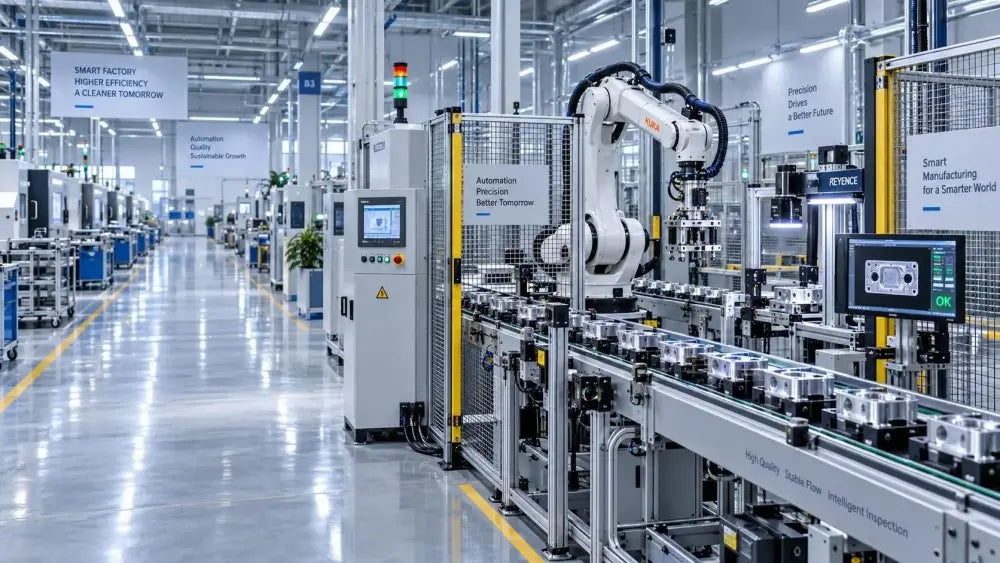
This design helps maintain stable operation of factory automation systems even during electrical disturbances.
Conclusion
Grounding plays a fundamental role in protecting electronic equipment used in industrial automation.
A well-designed grounding system improves safety, protects sensitive electronics, and ensures stable operation of PLC and DCS control systems.
By combining grounding best practices, surge protection, and proper cable routing, industrial facilities can significantly improve the reliability of their automation infrastructure.