Engineering the Future: PLC Programmer Salary and Career Trajectory
- 〡
- 〡 by WUPAMBO
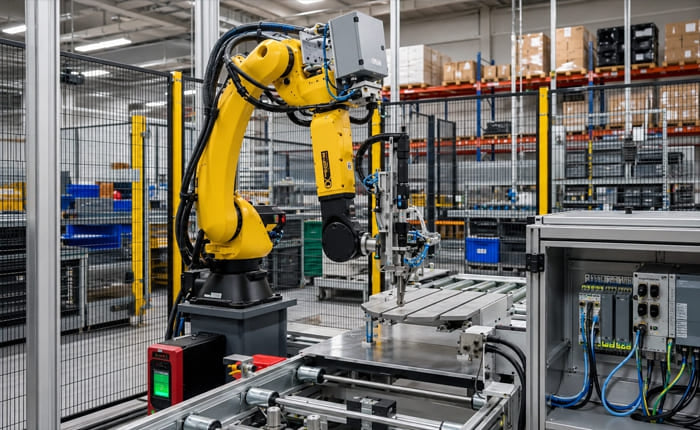
Programmable Logic Controllers (PLCs) form the foundational core of factory automation. For controls engineers entering the field, mastering ladder logic, structured text, and function blocks represents the critical baseline. However, as industrial automation undergoes a massive architectural shift, professionals often reach a crossroad.
This document analyzes the current financial compensation structures for PLC programmers and outlines the strategic paths required to transition from a localized machine programmer into a high-level automation systems architect.
Strategic Market Analysis of Employer Types
An automation professional can navigate four distinct corporate environments. Each ecosystem offers different technical exposure and drastically alters your career trajectory and earning potential.
System Integrators
System integrators design bespoke engineering solutions for diverse clients. Working here exposes a programmer to multi-vendor platforms, such as Rockwell Automation, Siemens, Schneider Electric, or Beckhoff. You quickly develop a highly adaptive engineering mindset. However, entry-level salaries typically sit at the lower end of the market curve due to tight project margins.
Original Equipment Manufacturers (OEMs)
Machine manufacturers focus heavily on standardized, serial production. Programmers in this sector specialize in a fixed machine footprint, optimizing motion control, servo tuning, and localized Human-Machine Interfaces (HMIs). Earning potential remains competitive and stable, though the technical scope narrows over time to specific product lines.
End-User Production Facilities
Working directly for the asset owner, such as a pharmaceutical plant, automotive facility, or oil refinery, places the programmer in an operational technology (OT) maintenance and optimization role. Salaries are solid and frequently supplemented by corporate benefits. The work focuses on minimizing downtime, expanding existing lines, and integrating local PLCs into plant-wide Distributed Control Systems (DCS).
Automation Equipment Manufacturers
Securing a role directly with Tier-1 control systems vendors like Siemens, Emerson, or Honeywell represents the premium tier for pure control loop programming. These corporations focus heavily on deep software research and development. Because these roles demand verified field competence, companies rarely hire fresh graduates, preferring instead to recruit seasoned engineers from system integrators.
Global PLC Programmer Salary Benchmarks
Salaries in the control systems landscape scale exponentially with multi-platform proficiency, functional safety expertise, and regional demand.
Annual Salary Structural Breakdown
| Career Phase | Approximate US Salary Range | Core Competencies Required |
| Entry-Level (0–2 Years) | $57,000 – $68,000 | Basic Ladder Logic, Troubleshooting, Single-Platform familiarity (e.g., Studio 5000). |
| Mid-Career (3–7 Years) | $75,000 – $99,000 | Multi-Platform programming, HMI/SCADA deployment, PID loop tuning, basic fieldbus networking. |
| Senior Engineer (8+ Years) | $99,000 – $135,000+ | Large-scale DCS architecture, safety system design (SIL/TUV), commissioning leadership. |
Expert Insight on Contract Consulting: Senior controls engineers transitioning into independent commissioning contracting often move away from standard annual salaries. Experienced field contractors frequently command premium hourly rates between $78 and $130 per hour, especially within high-compliance sectors like aerospace and pharmaceuticals.
Navigating the IT/OT Convergence Matrix
The traditional barrier separating field-level operational technology (OT) from corporate information technology (IT) has collapsed. To unlock upper-tier compensation packages, a PLC programmer must evolve past basic discrete logic.
[Level 4: Enterprise]       ERP / Cloud (SAP, Azure, AWS)
                                    ▲
                                    │ (REST API / MQTT)
[Level 3: Operations]       MES / SCADA / Historians
                                    ▲
                                    │ (OPC UA / Industrial Ethernet)
[Level 2: Control]           PLC / DCS / Edge Controllers
                                    ▲
                                    │ (PROFINET / EtherNet/IP)
[Level 1: Field Devices]    Sensors, Actuators, Drives
Advanced SCADA and Unified Communication Architecture
Modern Supervisory Control and Data Acquisition (SCADA) platforms are no longer simple graphic interfaces. Systems like Ignition by Inductive Automation rely heavily on modern scripting and unified databases. Programmers must learn:
-
Scripting Languages: Python and JavaScript for complex data manipulation.
-
Database Management: Structured Query Language (SQL) for interfacing with transactional databases like MS SQL or PostgreSQL.
-
Interoperability Standards: Master OPC UA and MQTT protocols to bridge third-party hardware platforms seamlessly.
Enterprise Integration and Industry 4.0 Evolved Platforms
The highest-paid automation architects design systems that feed real-time factory data directly into Manufacturing Execution Systems (MES) and Enterprise Resource Planning (ERP) suites like SAP. This requires a deep understanding of REST APIs, edge computing devices, and cloud infrastructure deployment within Microsoft Azure or AWS.
Integrating machine learning models for predictive maintenance at the edge represents the pinnacle of modern industrial automation engineering.
Industrial Solution Scenario: Unified Edge Architecture
Challenge
A multinational consumer packaged goods (CPG) manufacturer needs to aggregate real-time OEE (Overall Equipment Effectiveness) data from 50 legacy packaging lines running mismatched Allen-Bradley and Siemens PLCs, then push that telemetry to an enterprise cloud dashboard.
Solution Design
An automation engineer resolves this by deploying an edge gateway controller utilizing an OPC UA architecture to ingest data streams from the distinct field PLCs. The engineer writes a custom Python script inside a centralized SCADA system to map the unified data structures. Finally, the system securely transmits the standardized production metrics over MQTT Sparkplug B to an enterprise-level cloud infrastructure, bypassing traditional silos and eliminating manual reporting completely.
About the Author: Zhou Haoran
Zhou Haoran is a senior automation architect and technology consultant with 15 years of industry experience specializing in large-scale DCS deployment, industrial network security, and IT/OT convergence strategies. He has designed and executed complex control topologies for prominent petrochemical and manufacturing facilities globally, ensuring compliance with IEC 61131-3 standards and modern Industry 4.0 frameworks.
- Posted in:
- Control Systems Architecture
- Factory Automation Jobs
- Industrial Automation Careers
- Industry 4.0 Engineering
- IT OT Convergence
- PLC Programmer Salary
- SCADA Engineer