Difference Between DCS, PLC, and RTU in Industrial Automation
- 〡
- 〡 by WUPAMBO
Understanding Control System Architectures
In modern industrial automation, three main types of control systems dominate process and discrete manufacturing: Distributed Control Systems (DCS), Programmable Logic Controllers (PLC), and Remote Terminal Units (RTU).
Although they share similar objectives—monitoring and controlling industrial processes—each system is optimized for specific applications, environments, and communication requirements.
Evolution and Purpose of Modern Control Systems
The origins of DCS and PLC technology date back to the 1970s, when industries began replacing analog instruments and relays with digital control systems. DCS became standard in process industries such as petrochemical plants and power generation, while PLCs took over discrete manufacturing tasks like packaging and assembly lines.
RTUs extended automation to remote or unmanned sites such as oilfields and water reservoirs. Today, these systems often coexist within hybrid architectures, connected through SCADA platforms for centralized monitoring and control.
Distributed Control System (DCS): Process-Centric Automation
A DCS focuses on continuous process control and is designed to handle complex, interdependent operations. It manages hundreds or thousands of analog control loops with precision and consistency.
DCS systems feature redundancy at every level—from controllers and power supplies to I/O cards and communication networks—ensuring uninterrupted operation in critical environments like refineries and chemical plants.
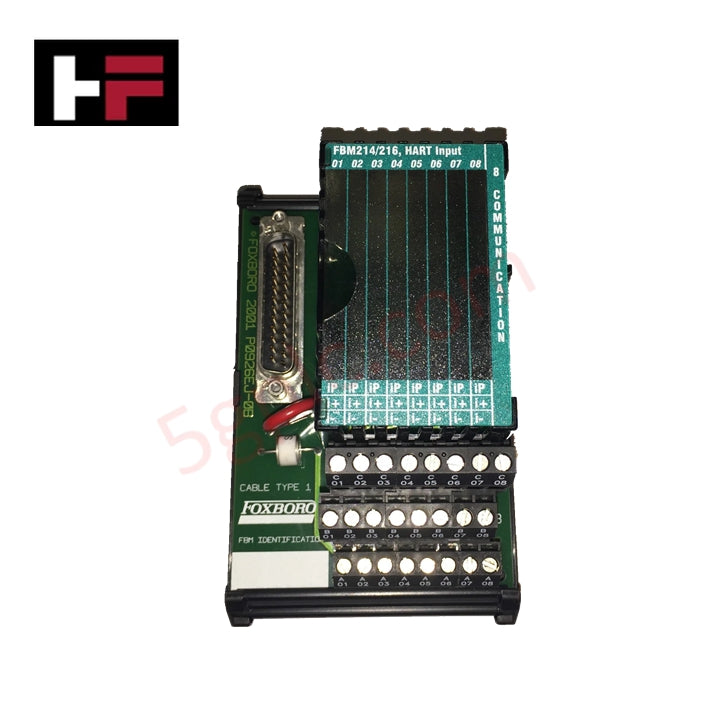
Communication within a DCS occurs through peer-to-peer control networks, typically using proprietary Ethernet-based protocols. Field signals first land on a Field Terminal Assembly (FTA) and are then routed to I/O cards through specialized cables.
Each control loop runs independently with a fixed scan time, often between 100 and 1000 milliseconds, depending on process requirements. This deterministic timing guarantees stable performance for functions such as PID control, flow regulation, and dynamic compensation.
The DCS also provides a unified engineering environment. Once a tag is created, it becomes accessible for control logic, graphics, alarms, and reports without separate database mapping. This single-database structure simplifies configuration, reduces engineering time, and minimizes potential errors.
Common fieldbus protocols used in DCS include FOUNDATION Fieldbus for instrumentation and PROFIBUS-DP for motor control, both natively supported within the system’s configuration tools.
Programmable Logic Controller (PLC): Discrete and Hybrid Control
The PLC is the foundation of factory automation, originally designed for discrete control tasks such as sequencing, interlocking, and motion control. Over time, PLCs have evolved to support analog I/O, PID loops, and industrial communication networks, bridging the gap between discrete and process automation.
Modern PLCs, such as Siemens S7-1500 and Allen-Bradley ControlLogix, offer modular designs with CPU, I/O, and communication modules housed in backplanes. Large PLCs may include redundant CPUs and power supplies, but typically lack redundant I/O unless specifically designed for high availability systems.
Their main advantage lies in fast scan times, allowing real-time response in high-speed production environments. However, when multiple PID loops are added, CPU loading may slow scan performance.
PLC programming and visualization usually require separate software platforms. The control logic is created in the PLC configuration tool, while human-machine interface (HMI) graphics are developed independently. Data is linked using OPC servers, which enable communication between the PLC and HMI. Native OPC integration simplifies this process, but third-party mapping requires additional configuration and validation.
PLCs commonly support communication standards such as PROFIBUS, DeviceNet, Modbus, and EtherNet/IP. At the device level, networks like IO-Link, CompoNet, and ASI connect sensors and actuators. Each manufacturer provides native interface cards for their preferred protocol, while third-party adapters are needed for others.
Remote Terminal Unit (RTU): Automation for Remote Sites
The RTU is designed for remote process monitoring and data acquisition in isolated or unattended locations. Its architecture prioritizes low power consumption, often powered by solar panels or batteries, making it ideal for telemetry applications.
RTUs form the backbone of SCADA systems, enabling operators in central control rooms to monitor remote assets such as oil wells, water reservoirs, and pipelines.
RTUs communicate over radio, cellular, or satellite networks, which can experience interruptions. To address this, RTUs store data locally and automatically upload it once the connection is restored. This “store-and-forward” capability ensures data integrity.
To reduce communication costs, RTUs often use report-by-exception logic, transmitting data only when significant process changes occur.
Configuration is typically handled separately from SCADA or HMI software. As with PLCs, native OPC servers provide smooth integration, while third-party systems require manual data mapping.
Modern RTUs may include HART pass-through capability, allowing direct communication with smart transmitters without additional multiplexers. This feature simplifies setup and reduces overall cost.
RTUs are widely deployed in oil and gas telemetry, water management, and power distribution systems, where reliability, low maintenance, and long-term autonomous operation are essential.
Key Differences in Application
Each system serves a specific role in industrial automation.
A DCS is best suited for continuous, process-oriented industries requiring precision and redundancy.
A PLC is ideal for discrete manufacturing, machinery control, and fast sequential operations.
An RTU excels in remote, low-power environments where communication is intermittent and control requirements are minimal.
In many modern plants, a hybrid control strategy is used. A refinery, for instance, may employ DCS for process control, PLCs for package unit automation, and RTUs for remote tank monitoring. This combination delivers flexibility, resilience, and centralized visibility through integrated SCADA systems.
Expert Insights: The Future of Industrial Control Systems
The distinction between DCS, PLC, and RTU continues to blur as manufacturers add overlapping features. Modern PLCs can handle complex process loops once reserved for DCS, while DCS platforms now support discrete logic and flexible configuration.
Meanwhile, RTUs are becoming more intelligent, with built-in analytics and cloud connectivity, enabling predictive maintenance and data-driven decision-making.
In the era of Industry 4.0, the future lies in interoperable systems that combine the strengths of all three platforms. Seamless integration, cybersecurity resilience, and edge computing capabilities will define the next generation of control systems.
Application Scenario
Consider a modern oil refinery. The DCS controls the main distillation and cracking processes. The PLCs manage compressors, pumps, and safety interlocks. The RTUs monitor remote pipelines and storage tanks, reporting data through a SCADA network. Together, these systems form a unified automation ecosystem that maximizes uptime, safety, and operational efficiency.
Key Takeaways
DCS, PLC, and RTU each address unique automation needs but increasingly complement one another.
DCS offers reliability for process control, PLC provides flexibility for machinery automation, and RTU ensures connectivity for remote assets.
A strategic combination of these systems supports scalable, efficient, and future-ready industrial operations.
- Posted in:
- control systems
- DCS
- factory automation
- PLC
- process control
- RTU
- SCADA