










The Evolution of Programmable Logic Controllers (PLC) in Industrial Automation
- 〡
- 〡 by WUPAMBO

Understanding the Role of PLCs in Modern Control Systems
In industrial automation, every control system consists of three essential components: input devices, controllers, and output devices. Sensors and transmitters collect data, controllers interpret the signals, and actuators execute physical actions.
Among these controllers, the Programmable Logic Controller (PLC) stands out for its versatility and reliability. Unlike single-purpose PID controllers, PLCs can be programmed to execute complex control logic across diverse industrial applications—from assembly lines to wastewater treatment systems.
The Origin of PLC Technology
The PLC emerged in the late 1960s as an electronic alternative to electromechanical relay systems. Traditional relay-based controls required extensive wiring, which made modification and maintenance difficult. In contrast, PLCs introduced a reprogrammable digital platform, enabling engineers to update system logic through software instead of rewiring circuits.
This transition marked a turning point in factory automation, reducing downtime and enabling rapid adaptation to new production requirements.
From Relays to Digital Intelligence
The earliest PLCs mirrored the functionality of relay logic but replaced mechanical contacts with digital inputs and outputs. Their primary goal was to improve system reliability and minimize component wear.
Over time, PLCs evolved into compact industrial computers capable of handling analog signals, PID control, and data communication. This shift allowed seamless integration with supervisory control and data acquisition (SCADA) systems and Distributed Control Systems (DCS), enhancing visibility and coordination across industrial networks.
Ladder Logic: Bridging Old and New
One of the reasons for the PLC’s enduring success lies in its programming language—Ladder Logic.
Designed to resemble electrical schematics, Ladder Logic allowed electricians and engineers familiar with relay diagrams to quickly learn digital control programming. Despite being more limited than modern programming languages like Structured Text or Function Block Diagram, Ladder Logic remains widely used due to its clarity, accessibility, and diagnostic simplicity.
Core Components and Architecture of PLCs
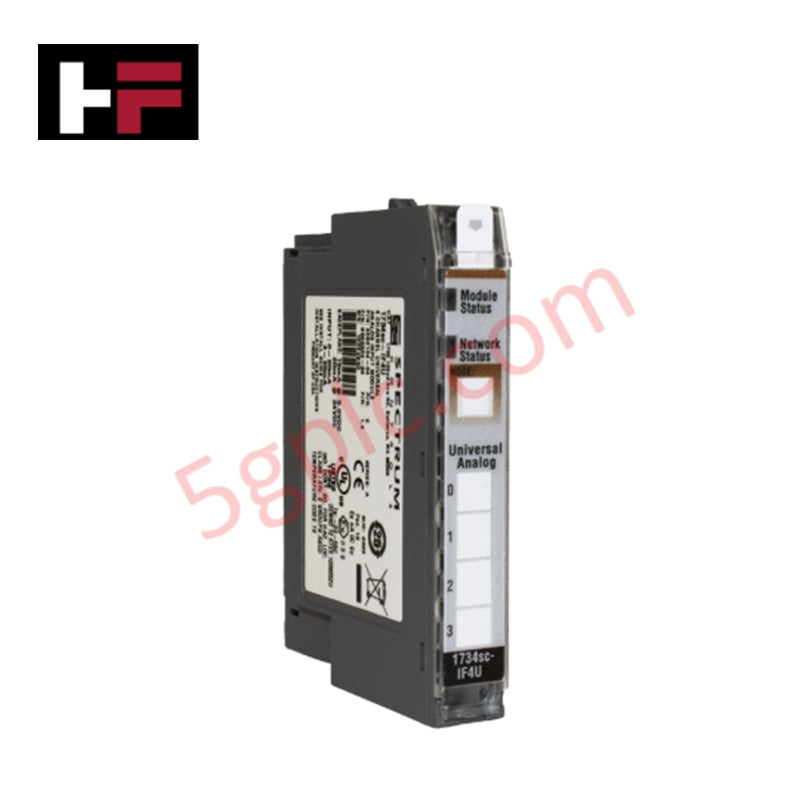
A typical PLC system includes a central processing unit (CPU), input/output (I/O) modules, communication interfaces, and a power supply. Input modules receive signals from field devices such as switches, sensors, and transmitters, while output modules send commands to actuators like relays, valves, and drives.
The CPU executes the control program stored in memory, continuously scanning inputs, processing logic, and updating outputs in real time. This deterministic cycle ensures predictable system performance—a critical requirement in industrial automation.
Modular vs. Monolithic PLC Designs
PLCs come in two primary configurations: modular and monolithic.
-
Modular PLCs—such as the Siemens S7-300 or Allen-Bradley ControlLogix—use individual cards for CPU, I/O, and communication. This allows flexible system expansion and easier maintenance. If one module fails, it can be replaced without shutting down the entire system.
-
Monolithic PLCs, on the other hand, integrate all functions into a single housing. While cost-effective and compact, they offer limited scalability and require full replacement in the event of hardware failure.
Industrial Applications and Case Studies
PLCs are integral to process control, manufacturing automation, power generation, and infrastructure systems. For example:
-
In wastewater treatment plants, PLCs manage pumps, level sensors, and motor-driven trash racks, ensuring efficient debris removal and consistent flow control.
-
In natural gas compressor stations, PLCs monitor pressure, temperature, and vibration parameters, triggering automated safety sequences when anomalies are detected.
-
In pharmaceutical production, PLCs maintain precise water purity and flow rates to comply with strict manufacturing standards.
The Evolution of Leading PLC Brands
Industry pioneers such as Siemens, Rockwell Automation (Allen-Bradley), and Mitsubishi Electric have driven continuous innovation in PLC design.
Legacy systems like the Siemens 505 and Allen-Bradley PLC-5 set early benchmarks for reliability, while newer models such as the S7-1500 and ControlLogix 5000 integrate Ethernet/IP, Profinet, and advanced diagnostic capabilities.
Modern PLCs also support edge computing and IIoT connectivity, bridging traditional automation with digital transformation initiatives.
Advantages of PLC-Based Automation
The success of PLCs in industrial environments can be attributed to several key advantages:
-
High reliability in harsh operating conditions (temperature, vibration, dust).
-
Ease of programming and modification through standardized software tools.
-
Scalability to accommodate both small machines and large process plants.
-
Network connectivity, allowing remote monitoring and data integration with MES and ERP systems.
These characteristics make PLCs indispensable for smart factories and Industry 4.0 initiatives.
Expert Insight: The Future of PLCs in Industrial Automation
As industries embrace digitalization and cyber-physical systems, the PLC’s role continues to evolve.
Future PLCs are expected to combine real-time control with AI-driven analytics, enabling predictive maintenance and adaptive process optimization. Moreover, cloud-based programming and simulation tools are simplifying system design, reducing commissioning time, and improving collaboration among engineers.
While Distributed Control Systems (DCS) may dominate in continuous processes, PLCs will remain the backbone of discrete manufacturing and hybrid automation environments for decades to come.
Practical Applications and Integration Scenarios
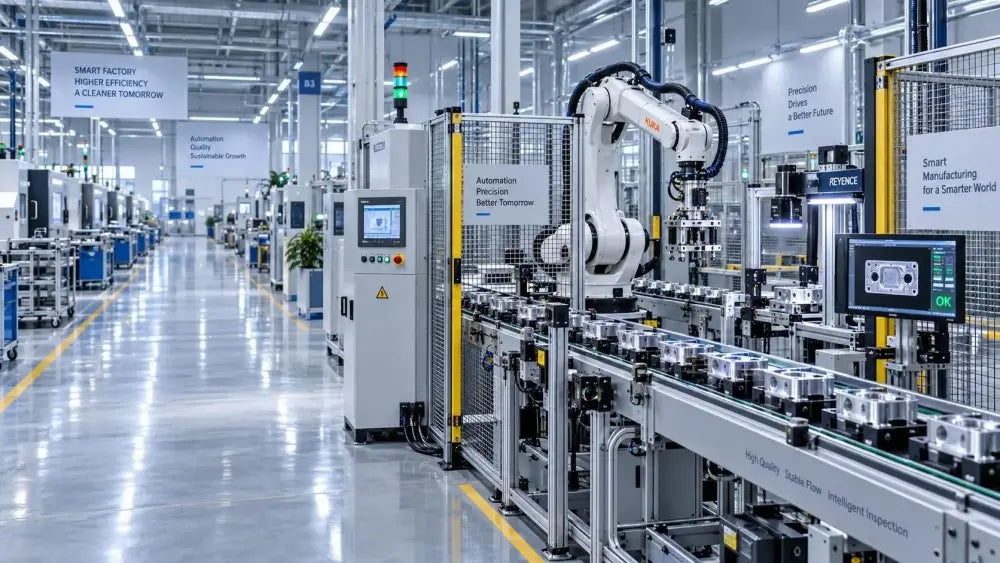
In today’s automation landscape, PLCs are used in:
-
Automotive assembly lines for robotic motion coordination.
-
Energy and utilities for turbine and substation control.
-
Food and beverage manufacturing for batch sequencing and safety monitoring.
-
Building automation for HVAC and lighting systems.
Integrating PLCs with industrial networks, human-machine interfaces (HMI), and data historians creates a fully connected ecosystem, enabling real-time decision-making and continuous improvement.
Key Takeaways
-
PLCs revolutionized industrial automation by replacing mechanical relay systems with reprogrammable digital control.
-
Their rugged design and modular architecture support long-term reliability and scalability.
-
Modern PLCs now combine communication, analytics, and control, forming the foundation of smart manufacturing systems.
- Posted in:
- Allen-Bradley
- control systems
- DCS
- factory automation
- PLC
- programmable logic controller
- Siemens




%20in%20Industrial%20Automation)