Difference Between CompactLogix and ControlLogix PLCs in Industrial Automation
- 〡
- 〡 by WUPAMBO

In industrial automation, choosing the right PLC (Programmable Logic Controller) can significantly influence system performance and scalability. Among Rockwell Automation’s leading PLC families, CompactLogix and ControlLogix stand out for their reliability, modular design, and integration with advanced control systems.
This article explores the key differences between CompactLogix and ControlLogix PLCs, helping automation engineers and system integrators select the best option for their application.
Overview of Rockwell Automation PLC Families
Rockwell Automation, through its Allen-Bradley product line, offers a range of control systems suited for both small and large-scale industrial operations.
-
CompactLogix PLCs are designed for mid-range control systems requiring cost efficiency, compact size, and moderate I/O capabilities.
-
ControlLogix PLCs cater to large-scale, complex applications with high I/O density, advanced motion control, and system redundancy.
Both platforms use Studio 5000 Logix Designer for programming, which simplifies integration and reduces engineering time.
System Classification and Architecture
CompactLogix systems are categorized as small control systems, ideal for standalone machines or process skids.
ControlLogix systems are large control systems, designed for distributed architectures across multiple processes or production lines.
Therefore, ControlLogix provides higher scalability, memory, and modular flexibility compared to CompactLogix.
Model Series and Naming Convention
Rockwell defines both product lines through distinctive model series:
-
CompactLogix 5370 – 1769 series
-
CompactLogix 5380 – 5069 series
-
CompactLogix 5480 – 5069 series with integrated Windows environment
-
ControlLogix 5570 – 1756 series
-
ControlLogix 5580 – 1756 series with enhanced CPU speed
This classification helps users quickly identify compatibility with existing I/O modules and communication networks.
Memory Capacity and Performance
Memory defines how much logic, data, and history a PLC can handle.
ControlLogix offers up to 40 MB of memory, while CompactLogix supports up to 20 MB.
As a result, ControlLogix is better suited for large automation systems involving multiple PID loops, motion control, and data logging.
Network and Communication Capabilities
Both PLCs support EtherNet/IP and DeviceNet, but ControlLogix extends connectivity with additional protocols such as ControlNet, Remote I/O, and SyncLink.
CompactLogix can host up to three embedded Ethernet ports, while ControlLogix supports two.
However, ControlLogix offers more flexibility in modular communication cards for redundant and high-speed networking.
System Redundancy and Reliability
ControlLogix supports controller and communication redundancy, a critical requirement for continuous-process industries like power, oil and gas, and pharmaceuticals.
CompactLogix lacks built-in redundancy, making it more suitable for discrete manufacturing where downtime risk is lower.
Redundancy in ControlLogix ensures uninterrupted operation during hardware failure or maintenance events.
Diagnostics and Display Interface
ControlLogix processors include a built-in display system for status monitoring and diagnostic messages.
CompactLogix units rely mainly on status LEDs, offering limited fault information.
For maintenance personnel, the ControlLogix display significantly reduces troubleshooting time and improves operational awareness.
Motion Control and SERCOS Support
One of the major differences lies in motion control capabilities.
ControlLogix PLCs support the SERCOS motion communication standard, widely used in precision machine automation.
CompactLogix lacks this functionality, which makes ControlLogix the preferred option for synchronized motion or robotics applications.
I/O Capacity and Expansion
ControlLogix PLCs handle up to 128,000 digital I/O points and 4,000 analog I/O points, offering vast scalability.
CompactLogix supports fewer I/Os, making it more appropriate for medium-sized applications.
Moreover, ControlLogix supports remote I/O chassis via fiber or Ethernet links, ideal for geographically distributed processes.
Integrated DisplayPort and Modern Connectivity
Interestingly, newer CompactLogix 5480 models feature an integrated DisplayPort, enabling direct connection to industrial monitors.
ControlLogix does not include this feature but instead emphasizes network-based visualization through HMI and SCADA systems.
This makes CompactLogix appealing for compact machine builders who prefer embedded visualization.
Software Environment and Integration
Both platforms use Studio 5000, offering shared tag databases, structured programming, and modular code reuse.
Integration with Rockwell’s FactoryTalk suite further enhances data exchange between PLC, SCADA, and MES systems.
Therefore, whether a user chooses CompactLogix or ControlLogix, the development workflow remains consistent and user-friendly.
Author’s Insight: Choosing Between CompactLogix and ControlLogix
From an engineering perspective, the choice between CompactLogix and ControlLogix depends on application scale, redundancy needs, and future expansion.
-
For standalone machines or moderate automation cells, CompactLogix delivers cost-effective control with smaller footprints.
-
For continuous or high-availability processes, ControlLogix offers robustness, higher I/O support, and advanced communication.
Moreover, many facilities adopt a hybrid approach—using CompactLogix for local machine control and ControlLogix as the plant-wide supervisory controller.
Application Scenarios and Real-World Use Cases
Scenario 1 – Packaging Line Automation
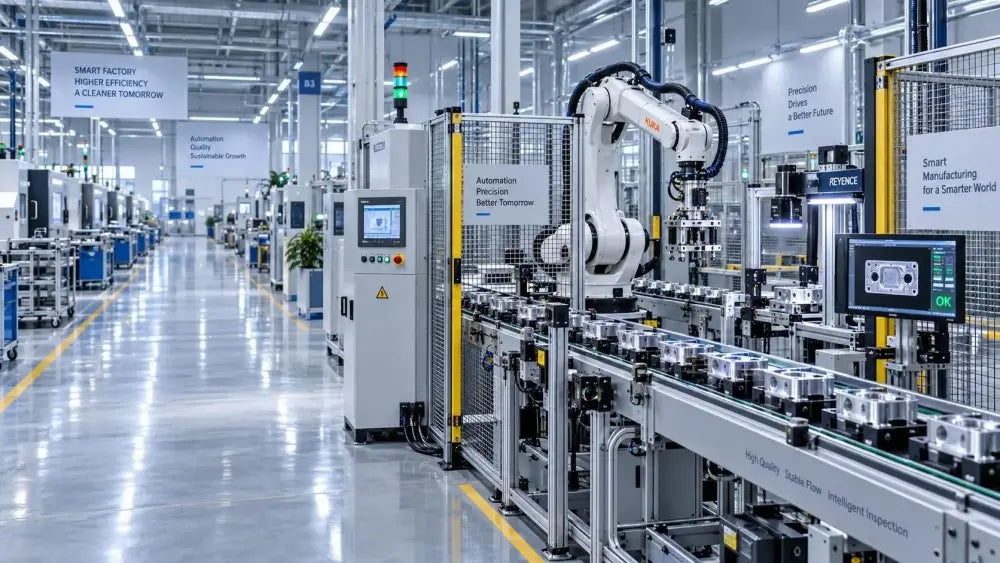
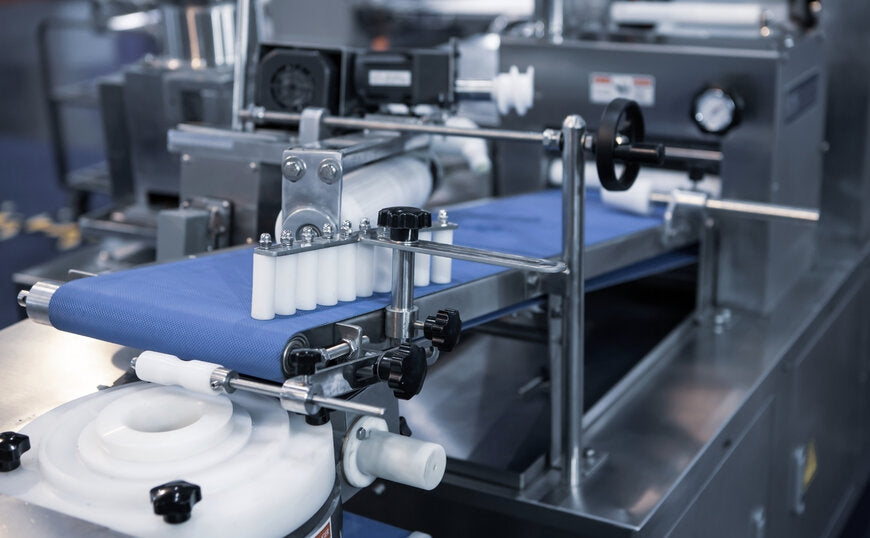
CompactLogix PLCs manage conveyors, labeling, and packaging units, offering precise sequencing at minimal cost.
Scenario 2 – Power Generation Control System
ControlLogix PLCs provide redundant CPU architecture and remote I/O handling for critical turbine control.
Scenario 3 – Automotive Assembly Line
A hybrid system integrates multiple CompactLogix controllers networked to a central ControlLogix unit for plant coordination and data aggregation.
Conclusion
Both CompactLogix and ControlLogix PLCs embody Rockwell Automation’s engineering excellence and adaptability for industrial automation.
CompactLogix is best suited for mid-range, cost-sensitive applications, while ControlLogix excels in high-end, mission-critical environments.
Understanding their differences in memory, redundancy, communication, and scalability allows engineers to make informed decisions that enhance efficiency and reliability in modern factory automation.
- Posted in:
- Allen-Bradley PLC
- CompactLogix
- control systems
- ControlLogix
- factory automation
- motion control
- PLC programming
- redundancy systems
- Rockwell Automation