Why 24 Volts DC is Standard in PLC and Industrial Automation Systems
- 〡
- 〡 by WUPAMBO

In industrial automation, the choice of control voltage plays a crucial role in both performance and safety. Among various options, 24V DC has become the global standard for PLC (Programmable Logic Controller) and DCS (Distributed Control System) applications. This article explores the technical and safety reasons behind this preference and provides professional insight into its widespread use.
Safety: Protecting Equipment and Personnel
The foremost reason for using 24V DC in control systems is safety. High-voltage AC power (230V or 120V) can pose serious shock hazards and increase the risk of accidental equipment damage. In contrast, 24V DC is considered a safe extra-low voltage (SELV) according to IEC and NEC standards.
When working with sensors, relays, and control instruments, which operate on low current, 24V DC ensures reliable operation without endangering personnel. Moreover, using a single DC voltage across the entire control system prevents accidental high-voltage connections that could damage PLC inputs or field devices.
Reliable Semiconductor Switching and Signal Stability
Modern PLCs are built using semiconductors and microprocessors, which operate more efficiently with DC power. DC voltage provides a stable, noise-free switching environment, allowing semiconductors to perform rapid and accurate operations.
When AC voltage is used in high-frequency switching devices such as relays, contact chattering and sparking can occur, reducing lifespan and reliability. By contrast, 24V DC minimizes wear on components, resulting in longer operational life and fewer maintenance interruptions.
Reduced Electromagnetic Noise and Signal Interference
In factory automation and control systems, noise immunity is essential. DC voltage significantly reduces electromagnetic interference (EMI) and harmonic distortion that are common with AC systems.
Because PLCs rely on precise signal transmission from sensors and actuators, stable DC voltage helps maintain signal integrity. This ensures that control commands are executed accurately—an important factor in industries where reliability is non-negotiable, such as oil & gas, chemical processing, and manufacturing.
Simplified Electrical Safety and Maintenance
Another major benefit of 24V DC systems is simplified maintenance. Working with low-voltage DC wiring eliminates the need for heavy protective equipment like insulated gloves or arc-flash suits. Electricians and engineers can safely perform maintenance without the risks associated with high-voltage AC circuits.
This not only enhances safety but also reduces downtime, improving the overall operational efficiency of the control system.
Global Compatibility Through SMPS Technology
With Switch Mode Power Supplies (SMPS), 24V DC has become universally adaptable. An SMPS can accept a wide input range of AC voltages (90–264V) and convert it to a stable 24V DC output.
This simplifies global manufacturing and design. A single PLC model can operate reliably in different countries without requiring voltage-specific versions. As a result, manufacturers standardize on 24V DC to ensure product compatibility and reduce inventory complexity.
Compact Design and Cost Efficiency
Devices operating on 24V DC require smaller insulation clearances and component spacing. This allows engineers to design compact control panels and miniaturized PCBs.
The benefits extend to cost reduction in material usage, assembly, and logistics. For OEMs and system integrators, smaller designs translate into lighter equipment, lower transportation costs, and more flexible installation in tight industrial spaces.
Reduced Heat Generation and Improved System Longevity
High-voltage AC circuits often generate more heat due to higher current flow and switching losses. Excessive heat reduces the lifespan of PLCs and control components, necessitating additional cooling.
In contrast, 24V DC systems produce minimal thermal stress, leading to longer service life and fewer thermal management requirements. This contributes to the energy efficiency and sustainability of industrial automation systems.
Voltage Stability and Consistent Performance
DC voltage provides a steady and predictable output, unlike AC voltage, which fluctuates in cycles. For sensitive electronic circuits, this stability ensures consistent performance.
Fluctuations in AC can introduce errors in analog signals or sensor readings, while 24V DC maintains precise voltage regulation, which is critical for real-time industrial control processes.
Author Insight: The Practical Value of 24V DC in Modern Industry
From an engineering standpoint, 24V DC is not just a design choice—it represents an industry standard for safety, compatibility, and reliability. With the growing trend of smart factories and Industry 4.0, 24V DC continues to support modular, scalable, and energy-efficient system designs.
While some high-power actuators or drives still rely on AC voltage, the control logic layer—the heart of PLC automation—remains firmly DC-based for good reason.
Application Scenarios and Practical Use Cases
-
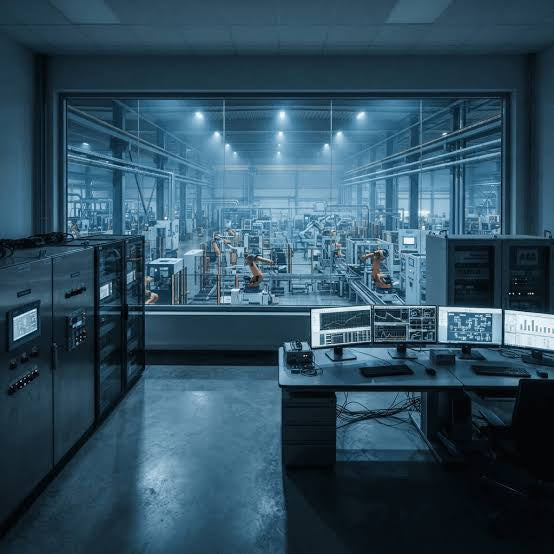
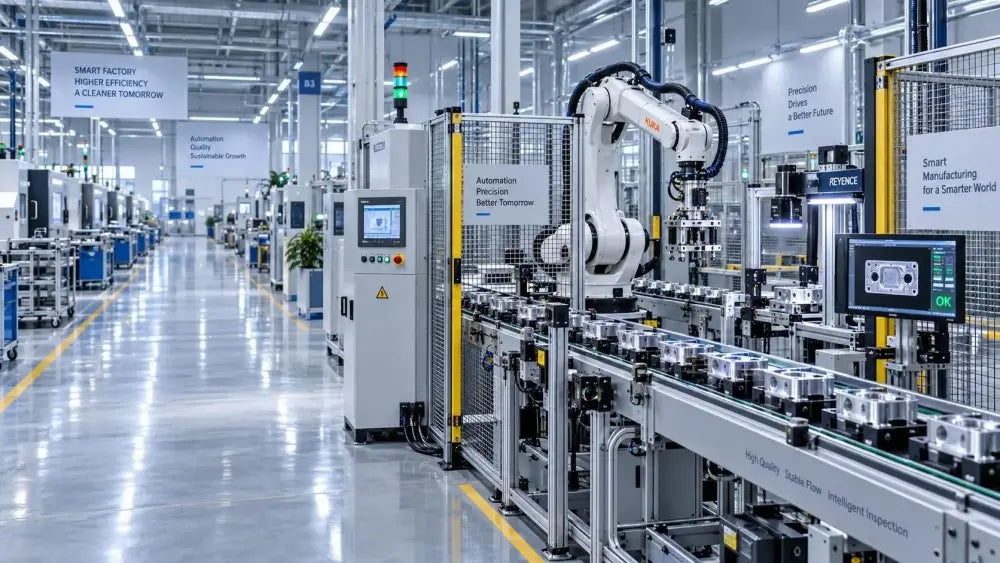
Factory Automation: Machine control panels and safety circuits powered by 24V DC improve operator safety.
-
Process Control Systems: Instruments and transmitters in chemical and oil & gas plants commonly use 24V DC loops.
-
Robotics and Motion Systems: Servo controllers and PLCs share a 24V DC power bus for synchronized operation.
-
Building Automation: HVAC and lighting control systems leverage 24V DC for sensor and controller integration.
These use cases demonstrate the versatility and long-term reliability of 24V DC in modern industrial environments.
Final Thoughts
The adoption of 24V DC in PLC and industrial control systems is the result of decades of engineering optimization. Its balance of safety, stability, and efficiency makes it the cornerstone of modern automation. As factories evolve toward more intelligent and interconnected systems, 24V DC will remain a foundational voltage level for both traditional and next-generation automation architectures.
- Posted in:
- 24V DC
- automation safety
- control systems
- DCS
- factory automation
- PLC systems
- PLC wiring
- power supply
- SMPS