Demystifying Industrial Control Systems: Comparing PLC, DCS, RTU, SCADA, and PAC
- 〡
- 〡 by WUPAMBO
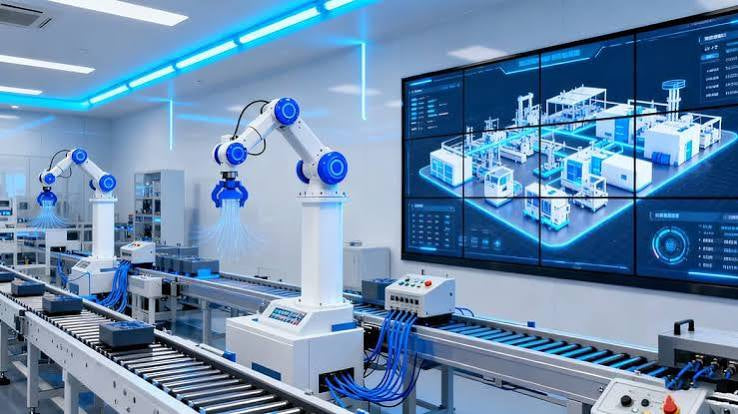
Modern factory automation relies on distinct control architectures to manage complex process environments efficiently. Control engineers often evaluate PLC, DCS, RTU, SCADA, and PAC platforms when designing industrial infrastructure. Understanding the functional boundaries of each technology ensures optimal system performance, high availability, and long-term cost efficiency.
Understanding Programmable Logic Controllers (PLCs) in Machine Control
Programmable Logic Controllers serve as the foundation of high-speed discrete manufacturing and standalone machine automation. A standard PLC consists of a dedicated CPU module, local power supply, and configurable input/output (I/O) cards.
PLCs execute deterministic control loops with ultra-fast scan times ranging from 1 to 100 milliseconds. Facilities deploy dedicated PLCs—such as Siemens S7-1500 or Rockwell ControlLogix—to manage critical equipment like rotating compressors, pumps, and packaging cells.
Expert Insight: Safety PLCs (certified up to SIL 3 under IEC 61508) run redundant dual-processor architectures. They execute emergency trip logic independently to shut down hazardous processes in milliseconds during severe fault conditions.
Exploring Distributed Control Systems (DCS) for Continuous Processing
Distributed Control Systems govern large-scale, continuous processing plants containing thousands of analog loops and interlocks. Unlike localized PLCs, a DCS distributes control task execution across multiple autonomous controllers connected via high-speed system buses.
Platforms like Emerson DeltaV or Honeywell Experion PKS manage entire refineries, power generation plants, and chemical complexes. A DCS features built-in database management, native alarm engineering, and seamless online hardware expansion capabilities.
DCS controllers execute continuous PID loops with typical scan rates between 100 milliseconds and 2 seconds. This architecture provides maximum process availability, allowing engineers to add I/O modules and modify control software without stopping plant operations.
Leveraging Remote Terminal Units (RTUs) for Widely Distributed Infrastructure
Remote Terminal Units monitor and control field assets spread across wide geographic distances. RTUs operate reliably in harsh outdoor environments where extreme temperatures, power instability, and severe electrical noise prevail.
Unlike panel-mounted factory PLCs, ruggedized RTUs—such as Schneider Electric SCADAPack—feature low power consumption for solar-powered field deployments. They process field signals locally and log time-stamped telemetry during long communication outages.
RTUs transmit critical process data back to central SCADA systems using long-range telemetry protocols like DNP3, IEC 60870-5-104, or Modbus. Oil and gas transmission pipelines, municipal water networks, and electrical distribution grids depend heavily on RTU networks.
Integrating Supervisory Control and Data Acquisition (SCADA) Solutions
SCADA represents a software-driven supervisory layer rather than an independent hardware controller. SCADA platforms aggregate real-time data from underlying field devices, including PLCs, PACs, and RTUs, across distributed plant environments.
System software collects high-speed field metrics, manages alarm distributions, presents dynamic graphic interfaces, and archives historical process data. Operators issue high-level control commands through SCADA screens, which then send commands down to local field logic solvers.
Unlike a standalone DCS, pure SCADA software does not execute direct hardware control loops locally. Instead, SCADA relies on distributed field controllers to maintain deterministic loop execution even during complete supervisory network disconnections.
Evaluating Programmable Automation Controllers (PACs) for Advanced Processing
Programmable Automation Controllers bridge the traditional gap between industrial PLCs and enterprise PC architectures. Built on open hardware standards, PACs feature multi-core processors, expanded memory spaces, and multi-protocol communication engines.
Engineers program PACs using standard IEC 61131-3 languages alongside high-level software languages such as C, C++, or C#. Consequently, a single PAC can execute high-speed motion control, complex database logging, vision processing, and web server functions simultaneously.
PAC architectures suit complex manufacturing applications requiring multi-axis motion synchronization, advanced data manipulation, and direct SQL database connectivity. They streamline system architectures by replacing separate control modules with a single controller.
Comparative Technology Matrix: PLC vs. DCS vs. RTU vs. SCADA vs. PAC
Selecting the correct control architecture requires evaluating key operational and structural metrics:
| Control Technology | Primary Domain | Core Architectural Strength | Average Scan Rate | Primary Communication Protocol |
|---|---|---|---|---|
| PLC | Machine control & discrete manufacturing | Fast, deterministic logic execution | 1 ms – 100 ms | PROFINET, EtherNet/IP, Modbus |
| DCS | Large-scale continuous process plants | Native database & process redundancy | 100 ms – 2 s | Foundation Fieldbus, HART, Industrial Ethernet |
| RTU | Geographically remote infrastructure | Environmental ruggedization & low power | Event-driven / Periodic | DNP3, IEC 60870-5-104, Modbus |
| SCADA | Supervisory monitoring & data acquisition | Multi-site visualization & trend archiving | Software dependent | OPC UA, MQTT, DNP3, Modbus TCP |
| PAC | Complex multi-domain factory control | C/C++ programming & motion integration | < 1 ms – 50 ms | OPC UA, EtherCAT, PROFINET |
Real-World Application Scenario: Integrated Water Treatment & Distribution Facility
A regional municipal utility manages a major water treatment plant and a 50-kilometer distribution pipeline network.
Implementation Strategy
- Treatment Facility: Plant engineers deployed a redundant DCS/PAC system to manage chemical dosing, coagulation basins, and filtration beds.
- Pipeline Network: Field teams installed solar-powered RTUs at remote valve stations along the transmission pipeline, communicating with central servers via cellular DNP3.
- Supervisory Layer: A unified enterprise SCADA software suite aggregates telemetry from both the treatment plant DCS and the pipeline RTUs onto a single screen.
Operational Results
The hybrid architecture optimizes plant operations by keeping localized loop control at the site level. The central SCADA platform gives operators total visibility across all remote pipeline sites, cutting field inspection trips by 60% and reducing non-revenue water loss by 25%.
About the Original Author
Xu Ming is a senior automation architect and control systems consultant with over 15 years of field experience across process and discrete industries. He specializes in designing high-availability DCS architectures, SCADA network topologies, and fault-tolerant PLC/PAC control networks for water treatment facilities, chemical processing plants, and power utilities throughout Asia and Europe.
- Posted in:
- DCS process control
- PAC automation controllers
- PLC control systems
- RTU telemetry
- SCADA software architecture