Understanding OPC Servers in Modern Industrial Automation: Principles, Architecture, and Applications
- 〡
- 〡 by WUPAMBO
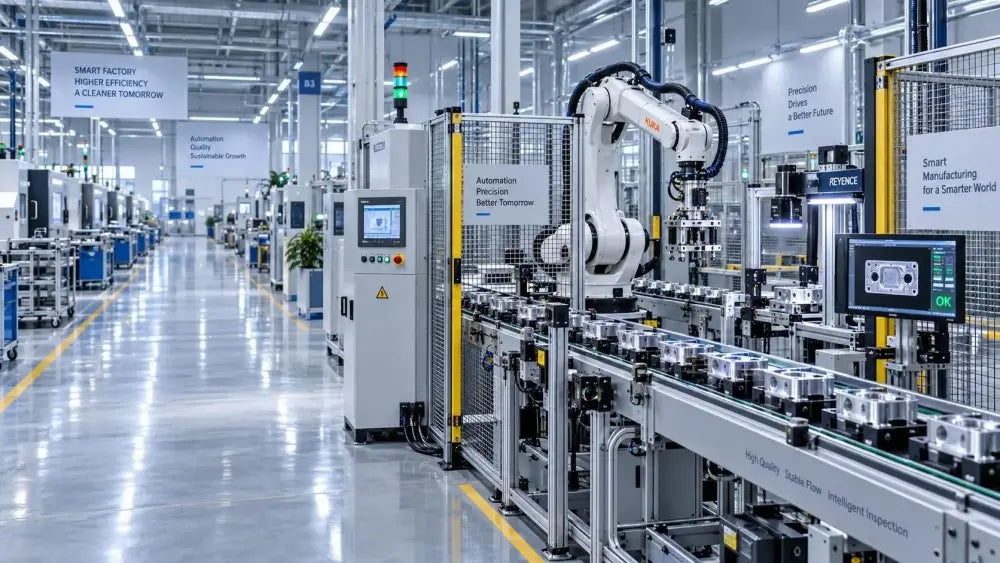
In industrial automation, connecting physical hardware with high-level software remains a primary operational challenge. Factories utilize programmable logic controllers (PLCs), distributed control systems (DCS), human-machine interfaces (HMIs), and smart sensors from diverse vendors. These devices often speak different proprietary protocols. Open Platform Communications (OPC) servers solve this interoperability challenge by standardizing how data flows across factory networks.
What Is an OPC Server in Control Systems?
An OPC Server is a software program that converts proprietary hardware protocols into standardized OPC communications. It acts as a universal translator between physical industrial equipment and software applications like Supervisory Control and Data Acquisition (SCADA) systems.
Historically known as OLE (Object Linking and Embedding) for Process Control, the standard now officially represents Open Platform Communications. By abstracting the hardware layer, the OPC server allows engineers to integrate mixed-vendor environments without writing custom drivers for every device.
The Client-Server Architecture in Factory Automation
OPC technology relies on a classic client-server model to distribute real-time operational data across the control network:
- The OPC Server: Connects directly to field devices (such as PLCs or HMIs), reads raw memory addresses, and converts that information into standardized OPC tags.
- The OPC Client: Requests data from the OPC server for visualization, control, alarms, or logging.
- Data Exchange: The client can also send command signals back through the server to adjust field equipment parameters.
Flexible Topologies for Industrial Data Distribution
While a single server-to-client link is common, modern control architectures require more flexible data topologies.
- OPC Aggregation: A single OPC client connects to multiple OPC servers simultaneously, consolidating scattered field data into one central view.
- OPC Bridging: Two or more OPC servers link directly to exchange parameters between separate control systems without requiring a master client.
- OPC Tunneling: Software tunnels encapsulate OPC traffic to pass securely across local networks, routers, and firewalls without complex DCOM configuration issues.
Integrating an OPC DataHub enhances these architectures further. It manages multiple active connections and exposes field data directly to enterprise software, including web browsers, custom databases, and Microsoft Excel spreadsheets.
Classic OPC Specifications: DA, AE, and HDA
Industrial installations rely on three primary classic OPC specifications to manage distinct operational data types.
| Specification | Full Name | Primary Function & Application |
|---|---|---|
| OPC DA | Data Access | Delivers real-time process values such as pressure, temperature, flow rates, and motor speeds. |
| OPC AE | Alarms & Events | Transmits event notifications, trip states, and operator audit trails to centralized management terminals. |
| OPC HDA | Historical Data Access | Retrieves time-series historical data from databases or historians for trend analysis and reporting. |
Technical Analysis: Key Benefits for Automation Engineers
From a practical system design perspective, implementing OPC servers delivers three key advantages to plant engineers.
Complete Hardware Interoperability
Engineers no longer need to check if a specific SCADA brand natively supports a specific PLC brand. As long as both support OPC specifications, seamless communication is guaranteed.
Improved System Scalability
Adding new sensors, field controllers, or supervisory workstations requires minimal reconfiguration. Engineers simply expose new OPC tags on the server rather than rewriting core communication drivers.
Modern Security with OPC UA
While classic OPC relies on legacy Windows technology, modern plants increasingly adopt OPC Unified Architecture (OPC UA). OPC UA provides platform independence, built-in X.509 certificate encryption, and cross-platform compatibility from embedded microcontrollers to cloud platforms.
Practical Application Scenario: Thermal Power Plant Monitoring
Consider a thermal power plant equipped with an Allen-Bradley PLC for fuel handling, a Siemens S7-1500 PLC for boiler feed pumps, and a Bentley Nevada system for turbine vibration protection (TSI).
Without an OPC server, central control operators would need three separate monitoring tools or custom interface cards to view plant status. By installing an industrial OPC server (such as Kepware or Matrikon), the server gathers data from all three systems using their native drivers.
The server exposes a unified tag list to a single SCADA master screen. Operators monitor feed pump pressures, vibration trends, and fuel valve positions side-by-side in real time, dramatically reducing engineering complexity and maintenance costs.
Author Profile: Zhang Wei
Zhang Wei is a Senior Industrial Automation Architect with over 15 years of hands-on experience in PLC systems, DCS infrastructure, steam turbine protection (TSI), and power distribution networks. Throughout his career, he has successfully commissioned large-scale SCADA systems, industrial networks, and complex OPC communication backbones for heavy manufacturing and power generation facilities across Asia and Europe. He specializes in control system integration, industrial cyber security, and protocol conversions.