Understanding Modern SCADA Systems: Architecture, Communication Topologies, and Industrial Applications
- 〡
- 〡 by WUPAMBO
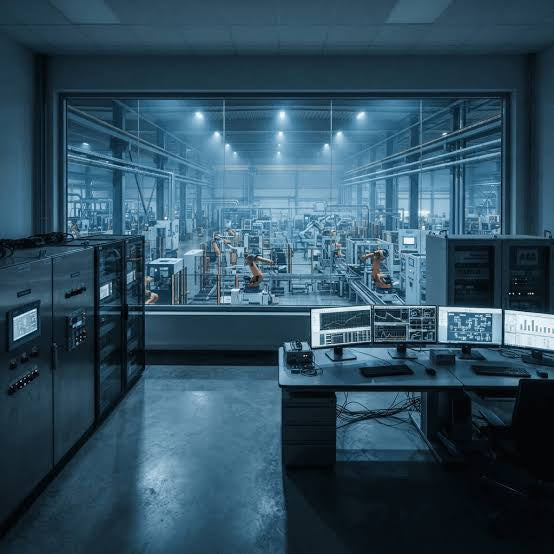
Supervisory Control and Data Acquisition (SCADA) systems form the digital backbone of modern industrial automation. They collect critical field data, transmit signals across vast distances, and empower plant operators with real-time process visibility. Across modern infrastructures, SCADA solutions streamline centralized control and maintain continuous operational uptime.
The Evolution of SCADA Terminology in Factory Automation
The definition of SCADA has evolved alongside industrial automation technologies. Traditionally, engineers defined SCADA as an all-encompassing framework containing hardware sensors, telemetry hardware, and central server software.
However, modern control architectures increasingly separate field execution from supervisory visualization. Today, programmable logic controllers (PLCs) and distributed control systems (DCS) execute low-level process logic. Consequently, many engineers now use the term SCADA to describe the centralized software platform that visualizes operations, handles telemetry data, and records historical events.
Core Architecture and Key Components of SCADA Systems
A robust SCADA infrastructure integrates hardware and software layers to bridge local field devices with supervisory control rooms.
| Component | Hardware / Software | Primary Operational Role |
|---|---|---|
| Control Server | Hardware / Server | Hosts central database applications, processes telemetry algorithms, and routes supervisory commands. |
| HMI Workstation | Software & Screen | Displays real-time graphical process interfaces, historical trend graphs, and active alarm banners to human operators. |
| RTU & PLC | Field Hardware | Gathers raw sensor data, executes local closed-loop logic, and controls physical actuators. |
| IED (Intelligent Device) | Smart Hardware | Performs dedicated tasks like motor protection or power monitoring and communicates directly with the control server. |
| Data Historian | Database Software | Stores high-speed time-series operational data for predictive maintenance and compliance reporting. |
Field Data Acquisition and Distributed Remote Site Control
SCADA platforms excel at controlling geographically dispersed field assets across large utility networks. Field stations utilize Remote Terminal Units (RTUs) or industrial PLCs to monitor local instruments. These field controllers continuously read analog inputs like pressure, flow, and temperature.
In addition, smart devices such as Intelligent Electronic Devices (IEDs) interface directly with high-voltage equipment. The central control server polls these remote field sites over telemetry networks. When process conditions shift outside safe thresholds, the SCADA system immediately generates priority alarms for the operating staff.
Network Topologies for Reliable SCADA Telemetry
Choosing the correct communication topology ensures reliable data transfer across large-scale industrial control systems.
Point-to-Point Topologies
Point-to-point connections establish dedicated direct links between the central control server and each field location. This approach guarantees maximum bandwidth and minimal communication latency. However, installation costs increase significantly as the network expands.
Series and Multi-Drop Configurations
Series and multi-drop topologies connect multiple remote controllers along a single shared telemetry media channel. This design reduces field cabling costs substantially. Nevertheless, sharing channels increases network complexity and limits overall polling efficiency.
Sub-Server Topologies for Large Networks
Large industrial networks with hundreds of RTUs often implement intermediate sub-servers. These sub-servers aggregate telemetry data from local clusters, processing regional traffic before forwarding updates to the primary master server. As a result, they alleviate central processing bottlenecks.
Advanced PLC Control Topologies in Factory Automation
PLCs serve as versatile control building blocks within both SCADA and standalone DCS architectures. In vast SCADA networks, PLCs often replace legacy RTUs to manage field IO. Furthermore, PLCs operate independently on automated assembly lines to deliver deterministic millisecond control loops.
Unlike large-scale SCADA networks, standalone PLC architectures focus primarily on automated closed-loop execution. They store complex user programs to handle logic, counting, timing, and proportional-integral-derivative (PID) loop calculations without requiring continuous server intervention.
Practical Application Scenarios: Infrastructure and Utilities
Oil and Gas Pipeline Monitoring
Petroleum distribution companies deploy SCADA systems across thousands of kilometers of remote pipelines. Field RTUs monitor valve positions, pump pressure drops, and flow rates continuously. The central control server aggregates this data to detect leaks rapidly and isolate damaged pipe segments remotely.
Urban Transit and Rail Operations
Modern electric railway networks utilize SCADA solutions to manage traction power substations, passenger signaling systems, and track switches. The central rail operations center receives continuous telemetry from field devices along the tracks. As a result, dispatchers maintain maximum safety and prevent collision hazards during power anomalies.
Author Profile: Lin Chen
Lin Chen is a Principal Control Systems Consultant with over 15 years of technical field experience across factory automation, power utilities, and heavy process industries. He specializes in designing fault-tolerant SCADA network architectures, commissioning high-availability DCS platforms, and integrating enterprise PLC systems. Throughout his career, he has authored technical guidelines on industrial network resilience, cybersecurity hardening for telemetry links, and advanced PLC control strategies.
- Posted in:
- HMI Visualization
- Industrial Automation
- Industrial Cyber Security
- Process Telemetry
- Remote Terminal Unit