Understanding Fail-Safe Hardware: Core Technical Principles of Safety Relays in Industrial Automation
- 〡
- 〡 by WUPAMBO
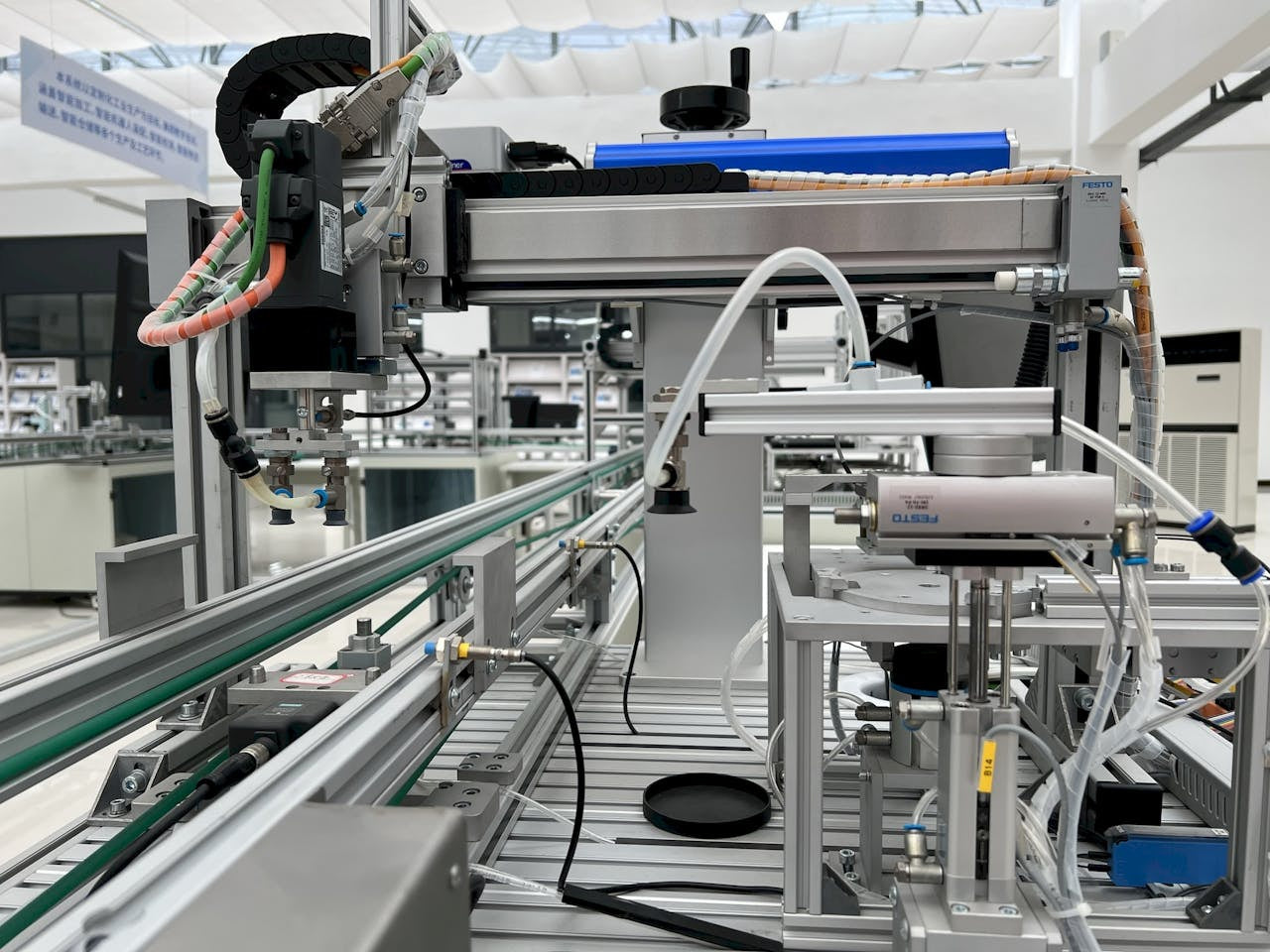
Modern factory automation demands robust risk-reduction strategies to protect personnel and expensive machinery. While standard controllers manage process variables, dedicated safety hardware maintains critical protection layers. This technical overview breaks down why standard switching devices fall short and explains how safety relays establish reliable, fail-safe control systems.
The Limitations of Standard Switching: Why Traditional Relays Fail in Critical Control Systems
A conventional electromechanical relay serves as a basic electrical switch. It uses an internal electromagnetic coil to mechanically move contacts between Normally Closed (NC) and Normally Open (NO) states. This hardware successfully isolates distinct voltage zones and protects minor circuits from electrical feedback.
However, standard relays present a major hidden vulnerability in high-risk industrial automation environments. Heavy cycling, high inrush currents, or electrical arcing can weld or jam mechanical contacts together. If an emergency stop circuit relies on a welded relay, the contact will fail to open when an operator presses the button. Consequently, the machinery keeps running, creating a catastrophic hazard that standard standard PLCs cannot independently detect.
Forcibly Guided Contacts: The Mechanical Foundation of Safety Circuit Integrity
Safety relays eliminate the danger of welded contacts by using a specialized mechanical design known as forcibly guided or captive contacts. This construction ensures that all internal contacts move together simultaneously.
If a single NO contact welds shut due to an overcurrent event, the mechanical linkage physically prevents the corresponding NC contact from closing. This rigid interlocking architecture allows the safety module to instantly identify hardware discrepancies during the next operational cycle. Therefore, the system successfully blocks subsequent startup attempts until maintenance technicians resolve the underlying fault.
In-Built Diagnostics: Monitoring Field Wiring and Detecting Electrical Faults
Unlike basic switches, modern safety relays provide continuous internal self-monitoring and external loop diagnostics. The module sends out rapid, precise electrical test pulses through the connected field wiring.
By accurately monitoring these diagnostic pulses, the safety relay instantly identifies cross-talk shorts, ground faults, and open wire breaks. Moreover, this diagnostic capability meets strict global safety standards like ISO 13849-1 and IEC 62061. This ensures the module maintains a predictable, fail-safe state even during an internal component failure.
System Integration: Interfacing Safety Hardwiring with Enterprise DCS Frameworks
Historically, safety relays operated as fully isolated hardware islands, separated from the primary control system. Modern factory automation trends, however, require tight functional integration between safety devices and plant-wide Distributed
Modern safety modules feature built-in fieldbus interfaces like Modbus TCP, EtherNet/IP, or Profinet. This connectivity allows the relay to stream real-time diagnostic logs, cycle counts, and fault codes to the supervisor PLC. As a result, engineers can easily implement advanced predictive maintenance routines without compromising the independent hardwired safety interlocks.
Expert Commentary: Balancing Dedicated Safety Relays with Integrated Safety PLCs
As an industry expert, I often see engineering teams debate whether to deploy individual safety relays or scale up to a centralized Safety PLC. For small-scale machinery with under five critical safety inputs—like a basic light curtain and an emergency stop loop—individual safety relays remain the most cost-effective solution. They provide unmatched response times, require zero software programming, and simplify proof-testing procedures.
However, when managing large, interconnected factory automation cells with complex zones, standalone relays quickly become unmanageable. Wiring dozens of relays in series creates a complex web that complicates troubleshooting and increases the risk of fault masking. In large-scale applications, choosing a programmable Safety PLC or a modular, configurable safety controller is the best approach. This setup simplifies complex safety logic into verifiable software code, providing superior diagnostics for the control room.
Actionable Solution Scenario: Machine Guarding Interlock with Monitored Reset
This practical blueprint outlines the wiring logic and operational sequence for a high-risk robotic assembly cell. The system integrates a dual-channel safety gate switch with a manual reset function to prevent automated restarts.
Hardware Prerequisites
-
Safety Relay: Dual-channel safety module with monitored manual reset functionality.
-
Input Device: Dual-contact safety interlock switch mounted on the robotic cell access door.
-
Output Actuators: Two redundant, force-guided power contactors wired in series to the main robot drive motor.
Operational Workflow Sequence
The operator closes the physical safety gate. This action closes both independent sensor contacts, sending simultaneous 24VDC signals back to the safety relay input terminals.
The operator presses and releases the external manual reset button. The safety relay verifies the trailing edge of the reset signal, ensuring the button is not jammed or intentionally bypassed.
Upon validating the reset, the safety relay closes its internal output contacts. This action fires both external contactors in series, supplying primary three-phase power to the robotic drive system.
An unauthorized entry trips the safety gate switch. The safety relay instantly detects the broken input loop, opens its output contacts within milliseconds, drops out both contactors, and safely stops the robot.
About the Author: Chen Junyu
Chen Junyu is a Senior Control Systems Engineer and Technical Writer with 15 years of international experience in the industrial automation sector. He specializes in designing functional safety architectures, safety lifecycle assessments, and integrating high-reliability PLC, DCS, and power protection equipment. Over his career, Chen has successfully deployed safety-instrumented systems across the petrochemical, automotive manufacturing, and heavy power generation industries, ensuring full compliance with international safety regulations.
- Posted in:
- DCS system integration
- emergency stop circuit
- factory automation safety
- forcibly guided contacts
- machine guarding solutions
- PLC control systems
- safety relay concepts