Microcontroller vs. PLC: Choosing the Right Control System Architecture
- 〡
- 〡 by WUPAMBO
Selecting the appropriate processing architecture forms a critical milestone in industrial automation design. Engineers must evaluate whether an application requires a highly localized embedded microchip or a rugged, modular control package. Both platforms execute logical routines and process data, yet their hardware structures, environments, and communication capabilities serve entirely different operational tiers.
This technical guide clarifies the distinctions between microcontrollers and Programmable Logic Controllers (PLCs), detailing their specifications, structural differences, and industrial positioning.
The Fundamentals of Microcontroller Architecture
A microcontroller integrates a central processing unit (CPU), volatile memory (RAM), non-volatile flash memory, and peripheral input/output (I/O) pins onto a single silicon integrated circuit. Essentially, it functions as a highly compact, specialized computer encapsulated within a single chip.
Localized Logic Processing
Consider a basic system containing a single push button and a status indicator lamp. If an operator requires the lamp to illuminate exactly five seconds after a button press, a microcontroller can handle this cycle easily. The chip monitors the designated input pin, runs an internal hardware timer, and switches the output pin transistor state.
Therefore, these integrated circuits excel at managing low-power, small-scale control circuits. You will find them embedded inside commercial appliances, handheld diagnostic instruments, and local digital display circuits.
The Dynamics of Industrial PLC Architecture
A PLC represents a ruggedized, modular expansion of basic processor concepts designed specifically for factory automation. Unlike single-chip devices, a PLC comprises separate, interconnected modules housed within an industrial-grade enclosure or chassis.
Scaling for Enterprise Demands
When a facility requires monitoring 50 thermocouple temperature sensors and managing 20 proportional control valves, microcontrollers become impractical. This heavy-duty application demands a PLC.
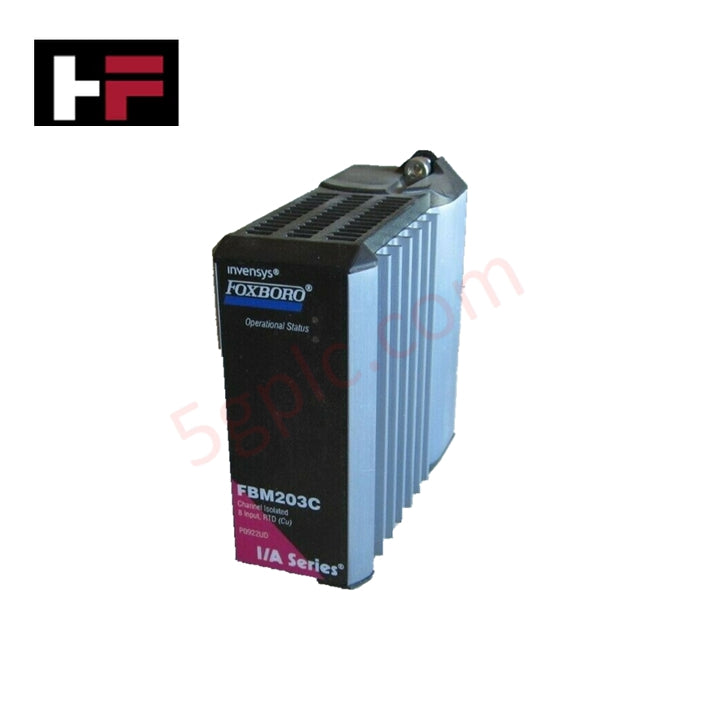
The modular architecture of a PLC splits the system into dedicated segments: a high-speed CPU module, independent digital and analog I/O cards, and specialized communication processors. Furthermore, this design allows engineers to scale the system easily by adding remote I/O drops via deterministic networks.
Advanced Communication Protocols
Industrial control systems must communicate reliably across plant-wide networks. Consequently, PLCs feature integrated physical layers and stacks to support robust fieldbus and industrial Ethernet protocols, including:
-
PROFINET and PROFIBUS
-
EtherNet/IP and DeviceNet
-
Modbus TCP/RTU
-
EtherCAT and CANopen
While microcontrollers support low-level serial communication like UART, I2C, and SPI, they lack the native transceiver hardware and physical layers required to connect directly to factory network backbones.
Core Technical Comparison: Microcontroller vs. PLC
| Technical Parameter | Microcontroller Architecture | Programmable Logic Controller (PLC) |
| Hardware Form Factor | Single integrated circuit (IC) on a PCB. | Modular chassis or DIN-rail mounted enclosure. |
| I/O Capacity | Limited to available physical pins on chip. | High density, expandable up to thousands of points. |
| Programming Language | Low-level C, C++, or Assembly. | IEC 61131-3 standards (Ladder Logic, Structured Text). |
| Environmental Protection | Vulnerable to moisture, dust, and vibration. | Ruggedized; high tolerance for heat and shock. |
| Electrical Isolation | Requires external optocouplers on the board. | Native optical isolation built into all I/O cards. |
| Typical Cost Basis | Low unit cost; high initial development cost. | Higher unit cost; low deployment and engineering cost. |
Expert Developer Insights: Noise Immunity and Lifecycle Reliability
Expert Engineering Advisory: Embedded microcontrollers are highly susceptible to electromagnetic interference (EMI) and high-voltage transients. Deploying a raw microcontroller chip on a factory floor alongside large variable frequency drives (VFDs) and inductive motor starters usually results in frequent processor crashes and corrupted data registers.
PLCs justify their higher initial capital investment through extreme structural ruggedness:
-
Electrical Noise Shielding: Industrial PLCs feature heavy metal casing and extensive internal shielding to block high-frequency electromagnetic noise.
-
Optical Isolation Protection: PLC I/O modules isolate internal processing lines from field wiring using optical couplers, safely withstanding voltage spikes up to several kilovolts.
-
Long-Term Maintainability: Maintenance technicians can swap out a faulted PLC I/O card in minutes without disturbing the master control program, minimizing expensive plant downtime.
Industrial Application Scenarios
Microcontroller Scenario: Smart Field Instruments
In process automation, an electronic differential pressure transmitter utilizes an internal microcontroller. The embedded chip reads raw capacitive sensory data, applies compensation algorithms for ambient temperature, and outputs a standardized 4-20mA signal. Here, the low power consumption and tiny footprint of the microcontroller are ideal for explosion-proof field housings.
PLC Scenario: Automotive Assembly Line Control
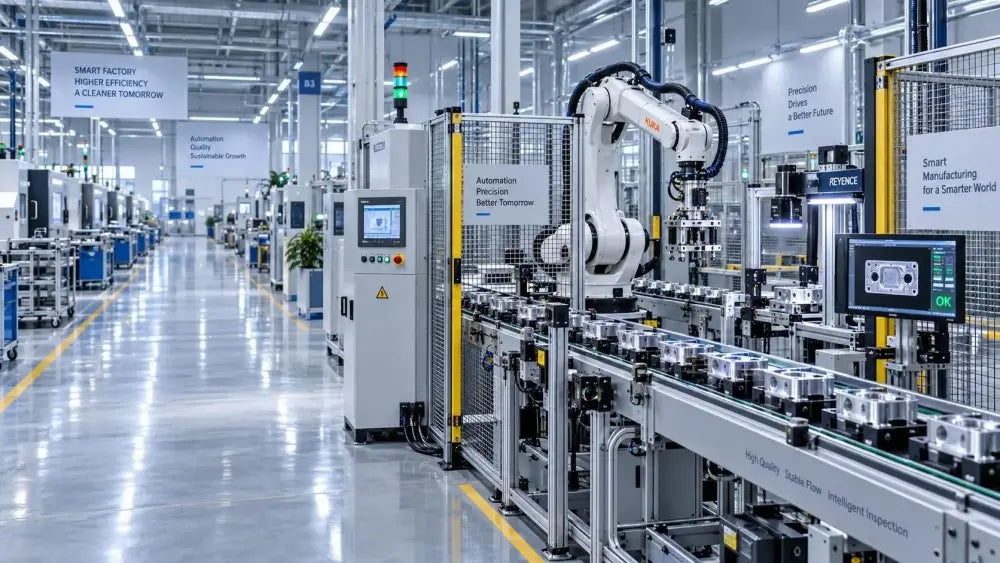
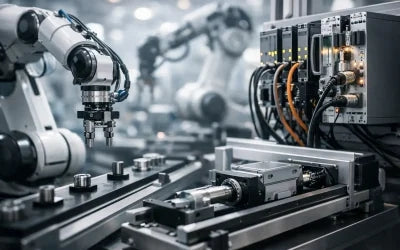
An automotive assembly line utilizes a centralized PLC to manage a complex network of proximity sensors, pneumatic cylinders, safety light curtains, and robotic arms. The PLC processes thousands of discrete I/O states simultaneously, executing safe interlocking sequences and communicating real-time performance metrics to the factory Manufacturing Execution System (MES).
About the Author: Wang Boran
Wang Boran is a senior industrial automation architect with 15 years of technical expertise specializing in large-scale control systems design, electrical noise mitigation, and embedded hardware integration. He has successfully engineered and deployed robust automation architectures for major automotive manufacturing plants, thermal power stations, and petrochemical facilities across the globe.
- Posted in:
- Embedded Systems Engineering
- Industrial Automation
- Microcontroller vs PLC
- Modular PLC Architecture