










Product Details
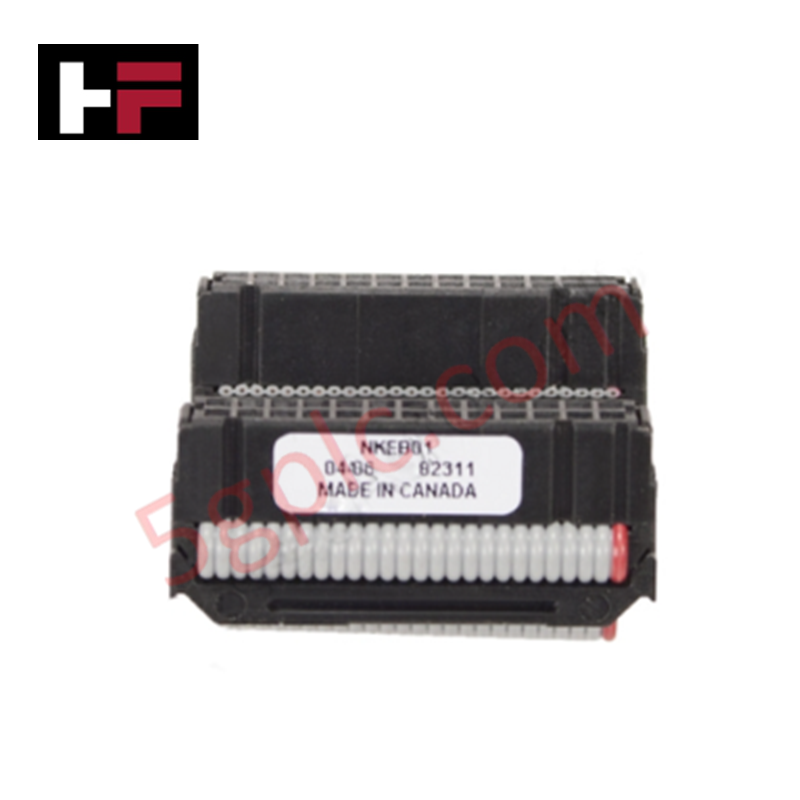
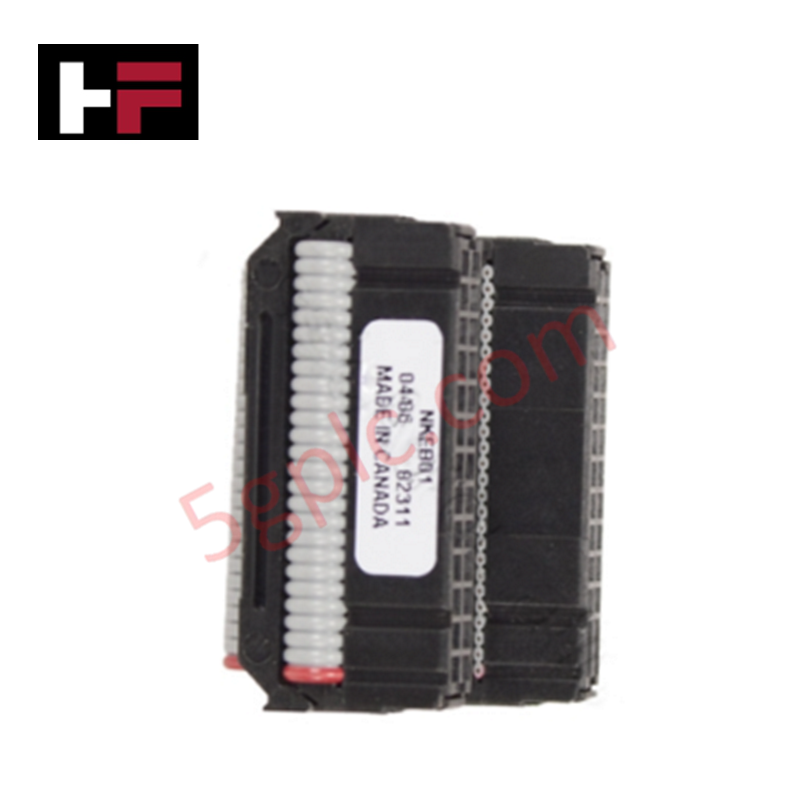
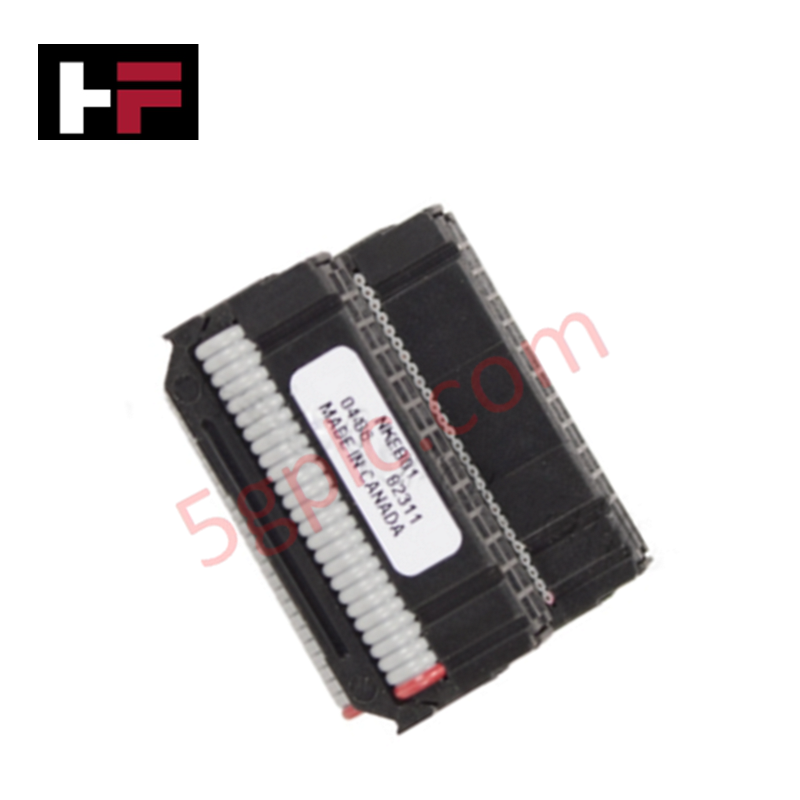
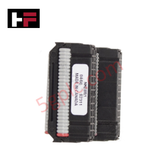
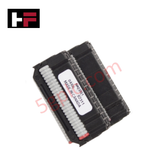
The ABB NKEB01, also cataloged as the NKEB01 Expander Bus Interconnect Cable, operates as a dedicated hardware component for high-speed parallel backplane extension within ABB Bailey Infi 90 distributed control system topologies. The hardware establishes physical path bridging between adjacent Module Mounting Units (MMUs), enabling unhindered data word mapping across local rack segments. Engineered as a 38 mm flat ribbon assembly, this connection link routes synchronized clock and logic level communication frames between target chassis modules like the IEMMU11, IEMMU12, IEMMU21, and IEMMU22.
Hardware Specifications
| Parameter | Specification |
|---|---|
| Model | NKEB01 |
| Brand | ABB Bailey |
| Origin | United States |
| Weight | 0.1 kg |
| Dimensions | 5.1 cm x 5.1 cm x 2.5 cm |
| Operating Temp | 0 to +60 deg C (Standard industrial parameters apply) |
| Power Consumption | Passive component (Zero operational load) |
| Cable Type | Expander Bus Interconnect Ribbon Cable |
| Cable Length | 38 mm (1.5 in.) |
| System Compatibility | Bailey Infi 90 / Net 90 Module Mounting Units (IEMMU11/12/21/22) |
Backplane Bus Communication Velocity Licences
The NKEB01 interconnect assembly maintains transmission line impedance criteria necessary to sustain rated backplane bus communication velocity licences across multiple processing segments. The parallel conductor tracing layout suppresses signal propagation reflections and skewing between sequential rack slots. This physical synchronization prevents transmission time-outs during high-density I/O density scaling routines, verifying that expanded logic controllers poll data frames within deterministic microsecond windows.
Frequently Asked Questions
Q: Can the NKEB01 cable assembly be disconnected or replaced while the host Module Mounting Units are energized?
A: No. Removing the expander bus connection under power breaks the active backplane parallel logic architecture, inducing immediate CPU bus errors, state synchronization failure, and potential voltage-transient damage to adjacent communication transceivers.
Q: What structural checks must be verified regarding the 38 mm ribbon layout during deployment?
A: The short ribbon form factor is tuned for minimized trace resistance. It must remain free of sharp creases, superficial insulation punctures, or twists that could compromise parallel conductor alignment and induce localized signal crosstalk.
Q: How does this passive interconnect module impact master controller loop processing latencies?
A: The NKEB01 introduces negligible transmission gate delays. It acts strictly as a low-impedance physical extension trace, allowing the system to maintain its target synchronous bus speeds across separate hardware mounting frames.
Field Installation Guidelines
The NKEB01 ribbon cable must be aligned flat with the matching multi-pin expander bus pin headers located on the rear panels of the target Module Mounting Units. Press the female connector square onto the header pins until the locking side tabs lock fully into place to avoid partial connection profiles. Cable routing path sweeps must not cross close to heavy power conductors, contactors, or alternating-current line paths to mitigate common-mode electromagnetic noise coupling. Grounding is handled via the structural chassis frame contact points of the integrated MMU backplane layers.
Additional Information
- 100% Genuine Parts: All products are original and authentic, ensuring reliable industrial performance.
- 30-Day Refund Guarantee: Return any in-stock item within 30 days in original, unopened packaging for a full refund (excluding shipping and fees).
- 12-Month Warranty: Covers defects in materials or workmanship; excludes misuse, normal wear, or unauthorized modifications.
- Worldwide Shipping: We ship via USPS, UPS, FedEx, and DHL. Delivery times vary by country and may be subject to customs or import fees.
- Support & Contact: Technical and warranty assistance is available anytime. Contact us here: Contact.
- Purchase Guidance: Check product specifications and compatibility carefully before ordering to ensure proper application.






Tech & Buying Guide

Redefining Control Systems: The Rise of Flexible I/O Modules in Industrial Automation
Conventional input-output architectures often limit engineering agility and inflate long-term inventory costs. Today, Flexible Input/Output Modules (FIOM) are transforming how control system engineers design, commission, and maintain automation infrastructure. By allowing individual channel software configuration, FIOM technology bridges the gap between rigid hardware design and dynamic plant requirements.

Understanding Modern SCADA Systems: Architecture, Communication Topologies, and Industrial Applications
Supervisory Control and Data Acquisition (SCADA) systems form the digital backbone of modern industrial automation. They collect critical field data, transmit signals across vast distances, and empower plant operators with real-time process visibility. Across modern infrastructures, SCADA solutions streamline centralized control and maintain continuous operational uptime.

Understanding OPC Servers in Modern Industrial Automation: Principles, Architecture, and Applications
In industrial automation, connecting physical hardware with high-level software remains a primary operational challenge. Factories utilize programmable logic controllers (PLCs), distributed control systems (DCS), human-machine interfaces (HMIs), and smart sensors from diverse vendors. These devices often speak different proprietary protocols. Open Platform Communications (OPC) servers solve this interoperability challenge by standardizing how data flows across factory networks.