










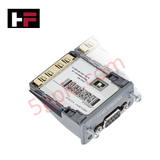
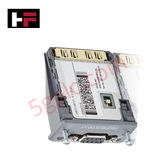
Product Details
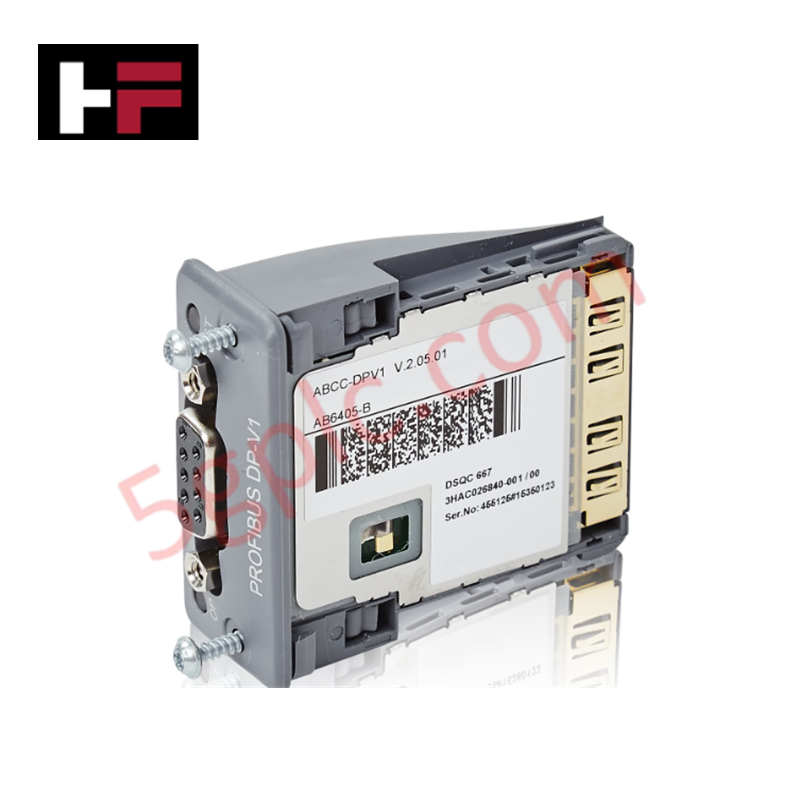
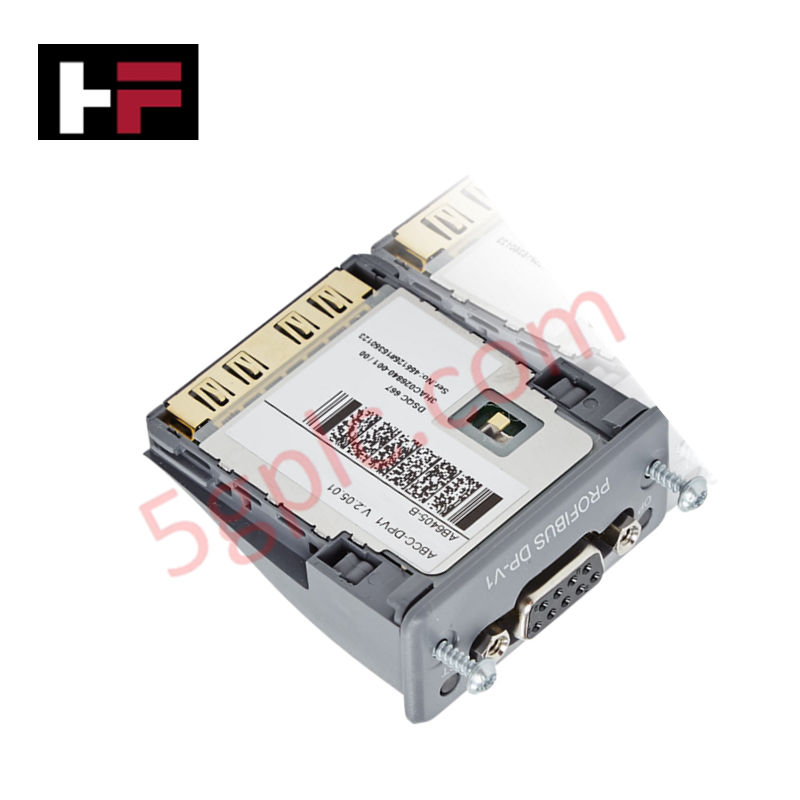
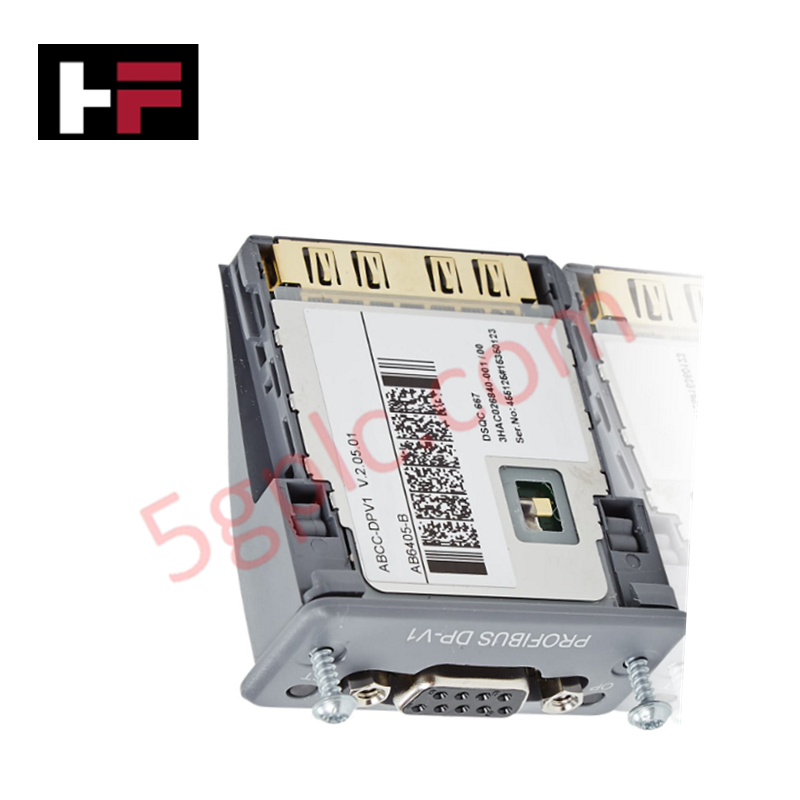
Configured for Profibus communication interfacing in IRC5 controller platforms, the ABB DSQC 667 (3HAC026840-001 Profibus Board) provides direct physical signal processing for fieldbus integration.
Hardware Specifications
| Parameter | Specification |
|---|---|
| Model | DSQC 667 |
| Brand | ABB |
| Part Number | 3HAC026840-001 |
| Origin | Sweden |
| Weight | 0.028 kg |
| Dimensions | 50.5 mm x 22.3 mm x 56.5 mm |
| Operating Temp | Standard industrial ambient |
| Power Consumption | System backplane dependent |
| Interface Type | Profibus |
Profinet / EtherNet/IP deterministic networks
The DSQC 667 acts as the communication interface layer for the controller, enabling deterministic data exchange between the robot controller and connected Profibus DP field devices. The hardware utilizes standardized bus signaling to ensure frame synchronization and data integrity across the network segment. Firmware flash compatibility is determined by the installed RobotWare version; users must confirm that the system software supports the specific GSD file requirements of the board. The board operates within the deterministic constraints of the fieldbus, requiring accurate baud rate configuration and proper bus termination to maintain stable communication cycles.
Frequently Asked Questions
Q: Can the DSQC 667 be hot-swapped while the IRC5 controller is powered?
A: No. The board must be installed or removed only when the control system is de-energized to prevent damage to the backplane communication pins and internal logic circuits.
Q: What is the primary cause of cyclic data communication errors with this board?
A: Communication errors typically result from incorrect GSD file integration, impedance mismatches in the Profibus cable, or missing termination resistors at the ends of the bus segment.
Field Installation Guidelines
- ESD Protection: Utilize an antistatic wrist strap and maintain a clean work environment during installation to prevent electrostatic discharge from damaging the board circuitry.
- Mechanical Seating: Insert the board into the designated slot on the communication backplane. Verify that the locking mechanism is fully engaged to prevent vibration-induced disconnections.
- Bus Termination: Install a 220 ohm termination resistor at both physical ends of the Profibus cable to prevent signal reflections that induce data frame corruption.
- Cable Shielding: Ensure that the Profibus cable shield is connected to the common ground at the controller entry point to minimize noise ingress and maintain signal-to-noise ratio.
- Baud Rate Matching: Confirm that the network baud rate configuration in the controller software aligns precisely with the parameters of the slave nodes to prevent "bus-off" diagnostic conditions.
Additional Information
- 100% Genuine Parts: All products are original and authentic, ensuring reliable industrial performance.
- 30-Day Refund Guarantee: Return any in-stock item within 30 days in original, unopened packaging for a full refund (excluding shipping and fees).
- 12-Month Warranty: Covers defects in materials or workmanship; excludes misuse, normal wear, or unauthorized modifications.
- Worldwide Shipping: We ship via USPS, UPS, FedEx, and DHL. Delivery times vary by country and may be subject to customs or import fees.
- Support & Contact: Technical and warranty assistance is available anytime. Contact us here: Contact.
- Purchase Guidance: Check product specifications and compatibility carefully before ordering to ensure proper application.






Tech & Buying Guide

Understanding Marshalling Cabinets in Industrial Automation and Control Systems
Marshalling cabinets serve as the crucial connection hub between field instruments and centralized processing units. In large DCS and PLC control system architectures, hundreds of multipair field cables run from local junction boxes to the central instrument equipment room. The marshalling cabinet houses field terminal blocks, surge arresters, intrinsic safety isolation barriers, and interposing relays. By segregating field field-wiring terminations from sensitive processor hardware, engineers protect expensive controller backplanes from high-voltage transients. Consequently, this modular separation dramatically streamlines maintenance workflows and simplifies system expansion.

Essential Best Practices for PLC Wiring and Installation in Industrial Automation
Successful control system deployment begins with thoroughly reviewing manufacturer technical documentation. Controllers from major brands like Allen-Bradley, Siemens, and Schneider Electric feature unique terminal layouts. Engineers must verify voltage requirements before connecting power cables to prevent catastrophic equipment damage. Standard line connections require strict adherence to regional electrical codes and proper wire color coding. Furthermore, panel builders should always establish a robust low-impedance ground connection using at least 16-AWG copper conductor tied directly to the main plant grounding grid.

Demystifying Programmable Logic Controllers: Comprehensive Guide to PLC Classification and Selection in Industrial Automation
Modern industrial automation heavily relies on Programmable Logic Controllers (PLCs) to drive factory floor efficiency. Over my 15 years as an industrial automation expert working with DCS, TSI, and control systems, I have seen PLCs evolve into the central nervous system of modern manufacturing. Selecting the right controller requires a deep understanding of PLC types based on physical size, hardware architecture, and power supply configurations.