










Product Details
Product Overview
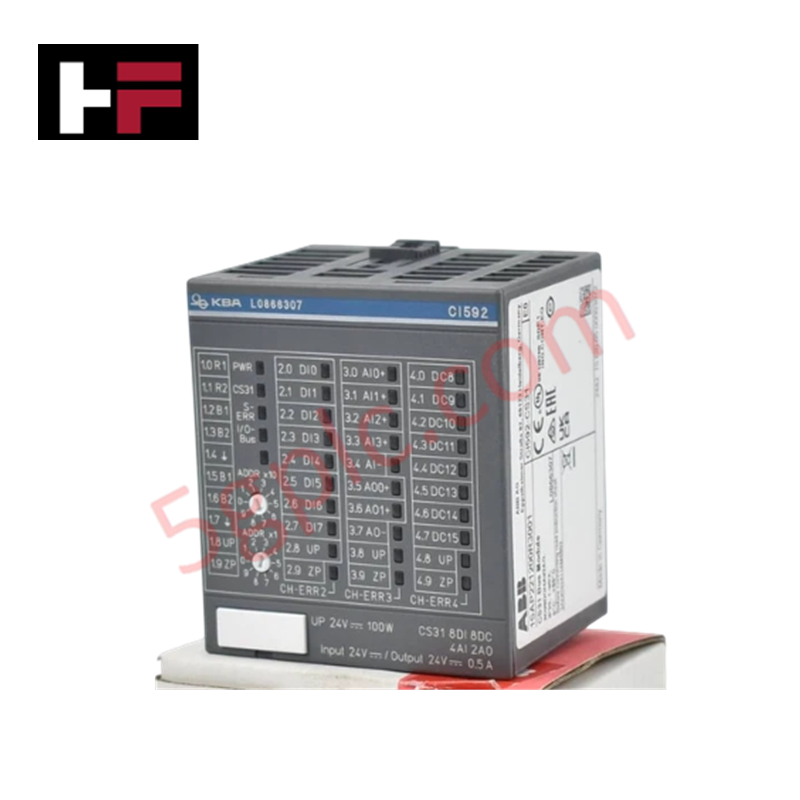
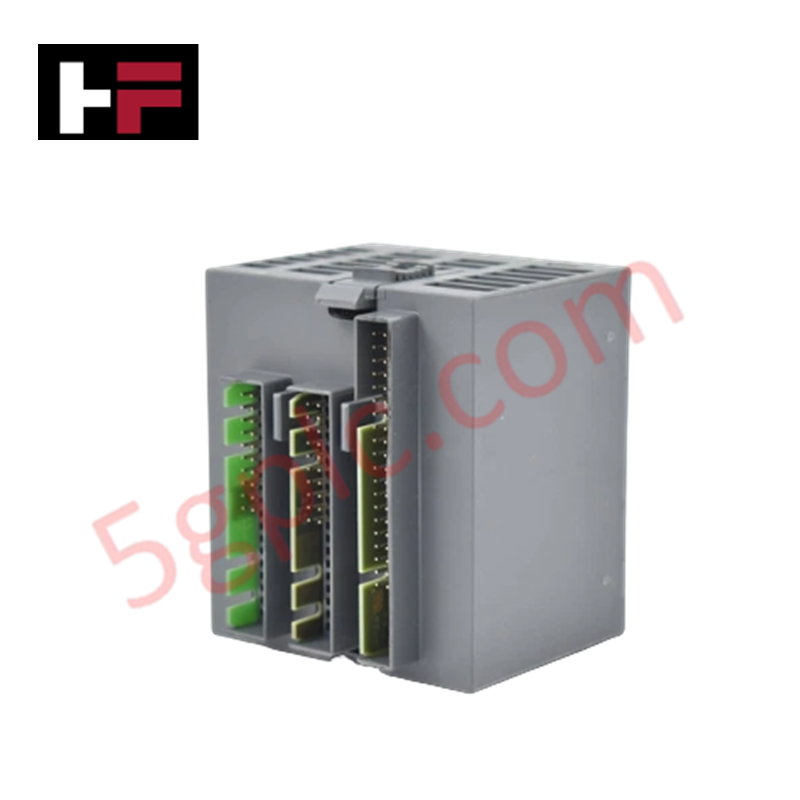
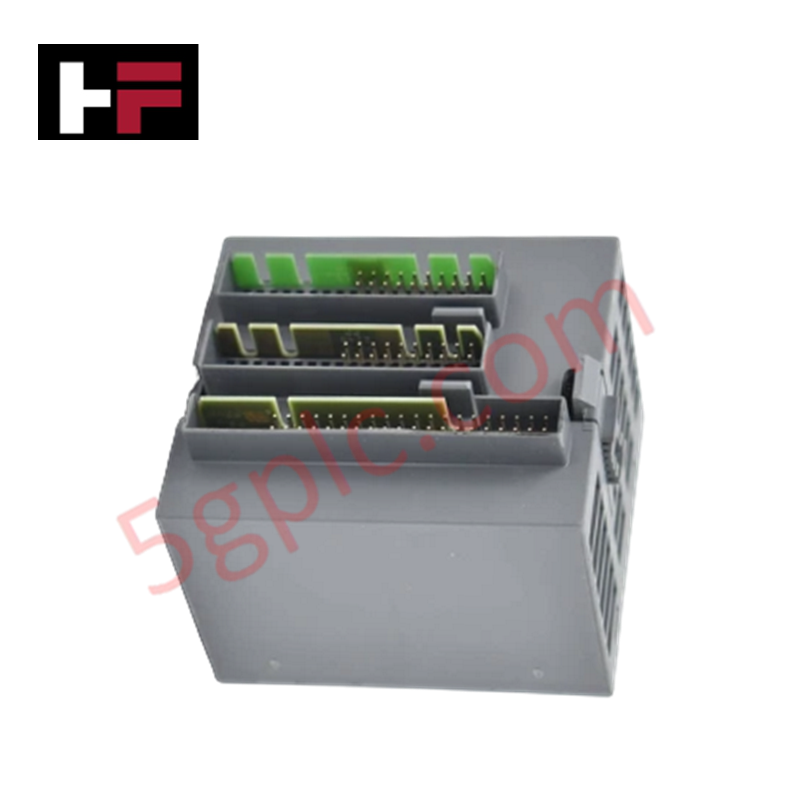
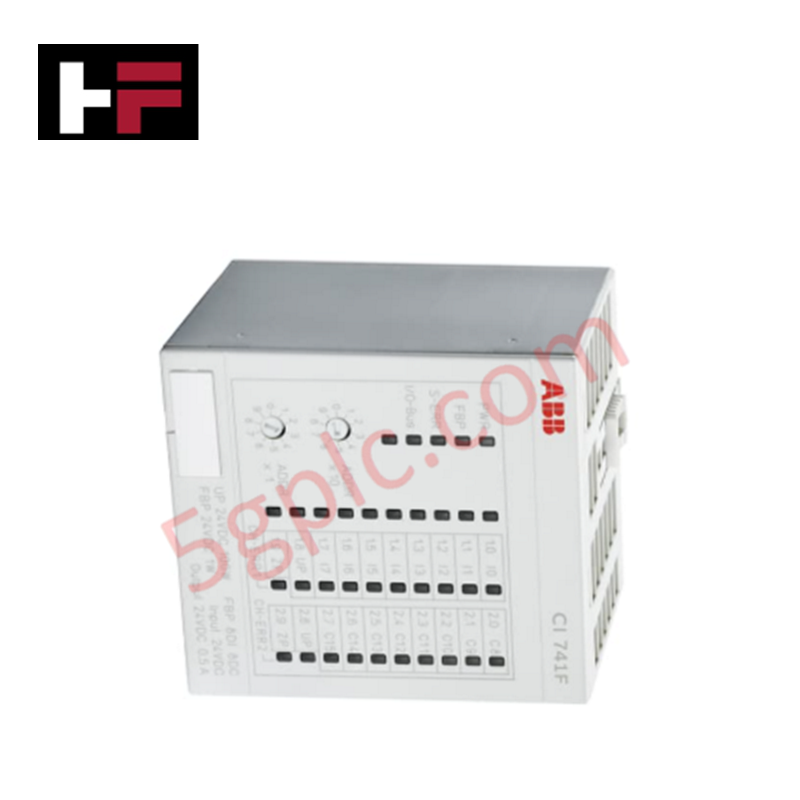
The ABB CI592-CS31 (1SAP221200R3001) functions as a high-performance bus interface module within the S500 distributed I/O platform. Operating as a slave on the CS31 fieldbus, this module provides a versatile hybrid I/O configuration, integrating 8 digital inputs, 8 digital outputs, and 8 configurable digital I/O channels into a single unit. It acts as a decentralized node that bridges field-level signals to the master controller with deterministic timing. We supply this component as 100% Brand New and Original, ensuring your automation architecture utilizes factory-certified hardware for maximum system availability.
Technical Specifications
The CI592-CS31 manages high-density discrete signals through the following technical parameters:
-
Protocol: CS31 Fieldbus (Slave)
-
Digital Inputs: 8 Channels (24V DC, 5mA)
-
Digital Outputs: 8 Channels (Transistor, 24V DC, 0.5A)
-
Configurable I/Os: 8 Channels (Selectable as DI or DO, 0.5A)
-
Input Delay Time: Adjustable from 0.1 ms to 32 ms
-
Output Type: High-side transistor with short-circuit protection
-
Supply Voltage: 24V DC (Range: 20.4 to 28.8 V DC)
-
Dimensions: 67.5 mm (W) x 76 mm (H) x 62 mm (D)
-
Net Weight: 0.125 kg
-
Degree of Protection: IP20
Engineering Advantages
-
Optimized I/O Versatility: The 8 configurable DI/DO channels allow for precise hardware tailoring. This flexibility reduces the need for multiple module variants, as engineers can adapt the I/O mix via software to match specific field requirements on-site.
-
High-Speed Signal Response: Adjustable input filters allow for delay times as low as 0.1 ms. This responsiveness captures rapid signal transitions, essential for high-frequency counting and synchronized machinery where timing is critical.
-
Robust Output Protection: Each transistor output provides up to 0.5A and includes integrated protection against overloads and short circuits. This hardware-level safety prevents damage to the module during field wiring errors or actuator failures.
-
Compact High-Density Design: At only 67.5 mm wide, the module packs 24 total I/O points plus bus logic into a minimal DIN rail footprint. This compact profile facilitates installation in narrow decentralized control boxes or machine-mounted panels.
-
Deterministic Fieldbus Performance: The module utilizes the proven CS31 protocol, offering a cost-effective and reliable fieldbus solution for small-to-medium distributed systems without the overhead or complexity of Ethernet-based systems.
FAQs
-
Does the CI592-CS31 require a specific Terminal Base for installation?
Yes. You must mount the CI592-CS31 on a compatible S500 Terminal Base (such as the TU5xx series). The base provides the physical mounting, the CS31 bus connection terminals, and the interface for any attached expansion modules.
-
Can I expand the I/O capacity beyond the on-board channels?
Yes. The CI592-CS31 supports the connection of up to 10 additional S500 I/O expansion modules on its local bus, allowing you to scale the field station to meet complex signal requirements.
-
How do I set the CS31 station address on this module?
You set the station address using the hardware switches located on the module. Ensure each module on the CS31 network has a unique address before powering up the system to avoid communication conflicts.
-
What happens to the outputs if the CS31 communication link fails?
The module supports a "Safe State" configuration. You can program the outputs to either hold their last value or switch to a predefined "Off" state to ensure the machinery enters a safe condition during a bus failure.
Additional Information
- 100% Genuine Parts: All products are original and authentic, ensuring reliable industrial performance.
- 30-Day Refund Guarantee: Return any in-stock item within 30 days in original, unopened packaging for a full refund (excluding shipping and fees).
- 12-Month Warranty: Covers defects in materials or workmanship; excludes misuse, normal wear, or unauthorized modifications.
- Worldwide Shipping: We ship via USPS, UPS, FedEx, and DHL. Delivery times vary by country and may be subject to customs or import fees.
- Support & Contact: Technical and warranty assistance is available anytime. Contact us here: Contact.
- Purchase Guidance: Check product specifications and compatibility carefully before ordering to ensure proper application.






Tech & Buying Guide

Understanding Safety Relays in Industrial Automation: Architecture, Operation, and Functional Safety
Standard electromechanical relays provide basic electrical isolation between low-voltage control circuits and high-power output loads. A traditional switching relay features a magnetic coil driving mechanical Common (COM), Normally-Open (NO), and Normally-Closed (NC) contacts. However, standard relays pose severe functional risks when deployed in critical safety interlock circuits. High current inrush or mechanical wear can weld contacts together permanently. If contact welding occurs in an emergency stop circuit, pressing the button fails to halt hazardous machinery movements. Consequently, global functional safety standards prohibit standard relays for critical machine guarding functions.

Mastering Wire Identification in Industrial Automation: The Power of Ferrules and Cross-Ferruling
Proper wire labeling forms the cornerstone of reliable control system installation and long-term maintenance. In complex industrial automation environments, technicians terminate thousands of conductor ends inside control panels, marshalling racks, and field junction boxes. Ferrules serve as individual tube-shaped sleeve markers slipped onto conductors before final termination. While technicians historically relied on pre-printed individual letter rings, modern control panel builders utilize automated ferrule printing machines. These thermal-transfer printers generate durable, single-sleeve heat-shrink tags directly matching approved wiring schematics, significantly accelerating cabinet assembly workflows.

Understanding Marshalling Cabinets in Industrial Automation and Control Systems
Marshalling cabinets serve as the crucial connection hub between field instruments and centralized processing units. In large DCS and PLC control system architectures, hundreds of multipair field cables run from local junction boxes to the central instrument equipment room. The marshalling cabinet houses field terminal blocks, surge arresters, intrinsic safety isolation barriers, and interposing relays. By segregating field field-wiring terminations from sensitive processor hardware, engineers protect expensive controller backplanes from high-voltage transients. Consequently, this modular separation dramatically streamlines maintenance workflows and simplifies system expansion.