Variable Speed Drives in Industrial Automation: How VSD Technology Improves Motor Efficiency and Process Control
- 〡
- 〡 by WUPAMBO

Understanding Variable Speed Drives in Industrial Control Systems
In modern industrial automation, electric motors power most mechanical processes. However, many motors traditionally operate at a fixed speed determined by supply frequency. A Variable Speed Drive (VSD) solves this limitation by adjusting the motor speed according to process demand.
A VSD sits between the electrical power supply and the motor. It regulates how much electrical energy reaches the motor. As a result, the system runs only at the speed required for the task.
This approach improves efficiency in factory automation, PLC systems, and DCS-controlled processes. It also reduces unnecessary power consumption.
How a Variable Speed Drive Works
A variable speed drive controls power using three main internal stages: rectification, DC filtering, and inversion.
First, the drive converts incoming AC power into DC power using a rectifier. Next, capacitors stabilize the DC voltage and smooth electrical fluctuations. Finally, an inverter converts the DC power back into controlled AC output.
This output allows precise adjustment of frequency and voltage delivered to the motor. Therefore, the motor speed and torque can match the real-time requirements of the industrial process.
In many control systems, this function integrates with PLC or DCS platforms for automated operation.
Why Motor Speed Control Matters in Industrial Processes
Electric motors often run continuously at full speed. However, many industrial processes rarely require maximum output.
For example, pumps, fans, and compressors typically operate under varying loads. Traditional systems regulate flow using valves or dampers. Unfortunately, this method wastes energy because the motor still runs at full speed.
A variable speed drive eliminates this inefficiency. It directly adjusts the motor speed instead of restricting output mechanically.
As a result, plants can significantly improve energy efficiency and process stability.
Different Names for the Same Technology
In the automation industry, several terms describe similar motor control technology.
Variable Speed Drive (VSD)
Variable Frequency Drive (VFD)
AC Drive
Although terminology varies, the operating principle remains the same. The drive controls motor speed by regulating the frequency and voltage of the electrical supply.
Manufacturers such as ABB, Siemens, and Rockwell Automation provide widely used drive technologies for industrial control systems.
Energy Efficiency and Cost Savings with VSD Technology
Electric motors account for nearly 70% of industrial electricity consumption. Therefore, improving motor efficiency can produce major cost savings.
When drives control motor speed, the motor consumes only the energy required for the process. In pump and fan applications, energy consumption may decrease by up to 50 percent.
In addition, variable speed drives provide several operational benefits:
Improved process control and stability
Lower electricity costs
Reduced mechanical wear during startup
Less vibration and noise in production facilities
From my experience working with automation systems, drive-based control also simplifies PLC and SCADA integration. Engineers can monitor speed, torque, and load parameters directly from the control interface.
Speed Control vs. Torque Control in Drive Systems
Variable speed drives can operate in two primary control modes.
Speed control mode maintains a defined motor speed. The load determines the torque requirement.
Torque control mode maintains a specific torque level. In this case, the load determines the motor speed.
Engineers select the appropriate mode based on process requirements. Conveyor systems typically use speed control. Meanwhile, winding or tension systems often rely on torque control.
Operational Benefits for Industrial Automation Systems
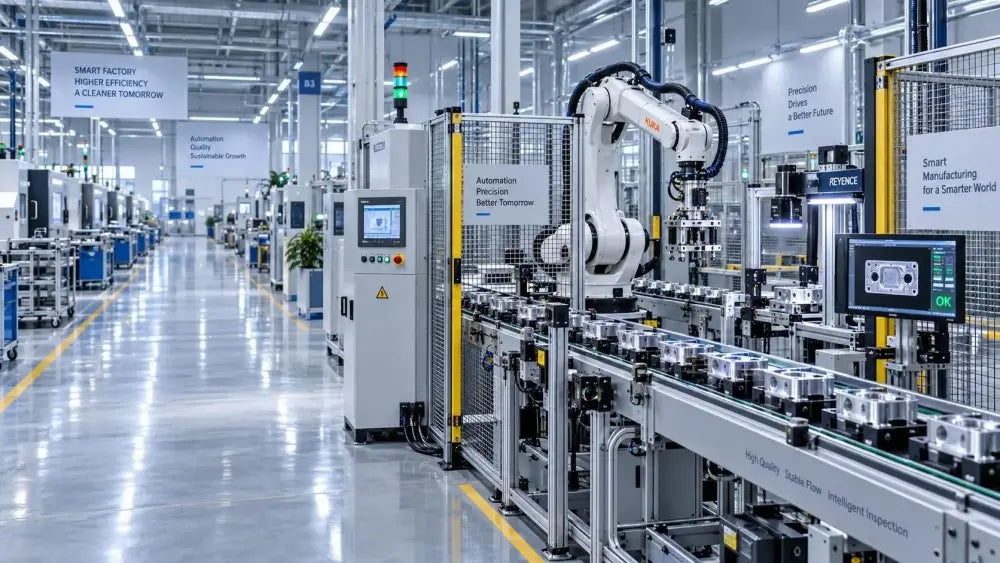
Drive technology plays a critical role in modern factory automation and digital manufacturing.
Automated motor control reduces manual intervention. Operators no longer adjust valves or dampers physically. Instead, control systems regulate the process electronically.
This capability reduces labor costs and improves safety. It also enables remote operation of equipment in distributed industrial sites.
Moreover, reduced mechanical stress extends the service life of pumps, compressors, and conveyor systems.
Author Insight: Why VSD Technology Is Becoming Standard in Smart Factories
In recent years, the adoption of variable speed drives has accelerated across industrial sectors. Energy efficiency regulations and carbon reduction goals drive this trend.
In my view, VSD technology will become even more important as Industry 4.0 evolves. Drives now integrate with IoT-enabled monitoring systems, predictive maintenance platforms, and digital twins.
For companies operating large motor-driven systems, implementing drive technology is often one of the fastest ways to reduce operational costs and energy usage.
Application Scenarios in Industrial Automation
Variable speed drives are widely used in many industrial environments:
Pump Systems
Water treatment plants use drives to regulate pump flow and pressure.
Fan and HVAC Systems
Factories use VSDs to optimize ventilation and reduce energy consumption.
Conveyor Systems
Production lines use speed-controlled drives to synchronize material movement.
Compressors
Drive-controlled compressors adjust output based on air demand.
These applications demonstrate how VSD technology improves both process control and energy management.
Practical Example: Pump Station Energy Optimization
Consider a municipal pumping station using traditional fixed-speed motors. Operators control water flow by manually adjusting valves.
After installing variable speed drives, the system regulates pump speed automatically. As a result, energy consumption decreases significantly.
Maintenance requirements also decline because mechanical stress during startup reduces.
This example illustrates how automation and intelligent motor control deliver measurable operational improvements.
Conclusion
Variable speed drives are essential components in modern industrial automation and control systems. By regulating motor speed and torque, they improve efficiency, reduce energy consumption, and extend equipment life.
For industries relying heavily on electric motors, VSD technology provides both immediate savings and long-term operational advantages. As automation systems continue to evolve, drives will remain a key technology in efficient and sustainable manufacturing.