Applications of SCADA in Industrial Automation
- 〡
- 〡 by WUPAMBO

Overview of SCADA Applications
A SCADA (Supervisory Control and Data Acquisition) system integrates hardware and software to monitor, control, and optimize industrial operations remotely. It provides real-time visibility into processes, generates analytical insights, and ensures precise control of distributed assets.
Through continuous data acquisition, historical logging, and alarm management, SCADA improves operational efficiency, safety, and productivity in critical infrastructure sectors.
Core Functions of SCADA in Process Control
In industrial automation, SCADA enables:
-
Real-time remote monitoring of process parameters.
-
Data analysis and generation of control signals based on process conditions.
-
Historical data logging for performance tracking and maintenance planning.
-
Alarm management to detect anomalies and ensure timely response.
-
Recipe management for batch and chemical processing industries.
-
Automated reporting for compliance and operational review.
Author Insight: The integration of SCADA with MES and ERP software allows manufacturers to unify plant-level data with enterprise management, enhancing visibility from shop floor to top floor.
SCADA in Power Generation and Distribution
One of the most critical applications of SCADA lies in electric power systems. Utilities rely on SCADA for generation control, transmission monitoring, and distribution management.
Typical uses include:
-
Load dispatch control and economic dispatch for cost optimization.
-
Fault detection, isolation, and system restoration.
-
Volt/VAR regulation and demand-side management.
-
Substation automation for remote switching, tagging, and event reporting.
Author Comment: With the rise of renewable energy, SCADA systems are essential for grid integration of solar and wind power, supporting real-time balancing of distributed energy resources.
Benefits for power utilities include:
-
Enhanced reliability and reduced downtime.
-
Lower operating costs and deferred infrastructure investments.
-
Improved quality of service and customer satisfaction.
-
Better decision-making through data-driven insights.
SCADA in Water and Wastewater Management
In municipal and industrial water systems, SCADA enables continuous monitoring of reservoir levels, pipeline pressure, and treatment processes. Operators can remotely control pumps, valves, and chemical dosing systems to maintain optimal flow and quality.
Moreover, data trending and historical archiving help predict demand fluctuations and detect leakages early.
Example: A city water authority can use SCADA to manage multiple treatment plants from a single control room, reducing energy consumption and manpower costs.
SCADA in Manufacturing and Factory Automation
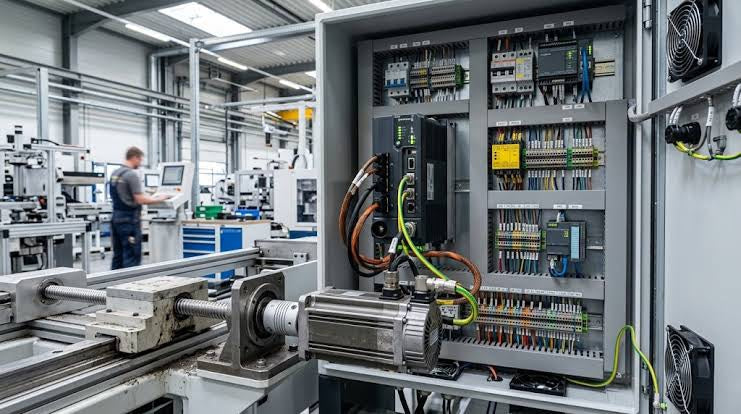
In factory automation, SCADA provides complete visibility of production processes, inventory flow, and machine performance.
It synchronizes multiple PLC-based control systems to optimize cycle time and reduce downtime. By integrating with production scheduling software, SCADA ensures that materials, machines, and manpower operate in harmony.
Manufacturers also use SCADA for quality control, batch tracking, and predictive maintenance.
Expert Insight: Implementing SCADA with Ignition or Wonderware platforms enables seamless scalability and data analytics for multi-site factories.
SCADA in Transportation and Traffic Systems
SCADA systems play a key role in transportation infrastructure by automating operations and ensuring passenger safety.
Applications include:
-
Railway traction and signaling systems for smooth train operations.
-
Traffic light management and real-time congestion control.
-
Subway power regulation and tunnel ventilation monitoring.
In mass transit networks, SCADA helps track and control train movement, monitor substations, and maintain service reliability.
SCADA in Oil, Gas, and Energy Networks
In the oil and gas sector, SCADA is indispensable for managing long-distance pipelines, refineries, and offshore installations.
It monitors pressure, flow rate, and temperature, while ensuring leak detection, compressor control, and energy optimization.
Integration with edge computing and IIoT technologies enables remote diagnostics, predictive maintenance, and real-time energy analytics.
Author Perspective: As digital oilfields evolve, modern SCADA systems with AI-driven fault analysis improve asset uptime and environmental compliance.
SCADA in Buildings and Facility Management
Facility managers use SCADA to automate HVAC systems, lighting, and access control within commercial buildings.
By analyzing energy consumption trends, SCADA systems support smart building initiatives, reducing utility costs and carbon footprints.
Example: In data centers, SCADA continuously monitors server room temperatures and adjusts cooling systems to maintain energy efficiency and reliability.
Power Network Utility Software and Distribution Automation
Power Network Utility (PNU) software integrates with SCADA systems to enhance grid operation and reliability.
Using real-time SCADA data, PNU tools support:
-
State estimation and contingency analysis.
-
Fault isolation and load shedding strategies.
-
Voltage scheduling and short-circuit analysis.
These advanced analytical capabilities empower utilities to manage distributed energy resources while maintaining stability and minimizing energy losses.
Objectives and Strategic Advantages
The primary objectives of implementing SCADA systems include:
-
Improved overall system efficiency and energy management.
-
Integration of renewable energy resources.
-
Reduced energy losses across generation and transmission.
-
Enhanced reliability of power supply and process continuity.
Industry Trend: As Industry 4.0 and smart grid technologies mature, SCADA continues to evolve from a monitoring tool into a central hub for intelligent automation and decision-making.
Application Scenario: Smart Power Grid
In a modern smart power grid, SCADA systems coordinate distributed substations, solar farms, and load centers. Real-time data from sensors and RTUs enables dynamic voltage regulation and automatic load balancing.
Operators can forecast demand, optimize power flow, and instantly isolate faults—significantly improving reliability and operational transparency.
- Posted in:
- control systems
- DCS
- energy management
- factory automation
- PLC systems
- process control
- SCADA applications