











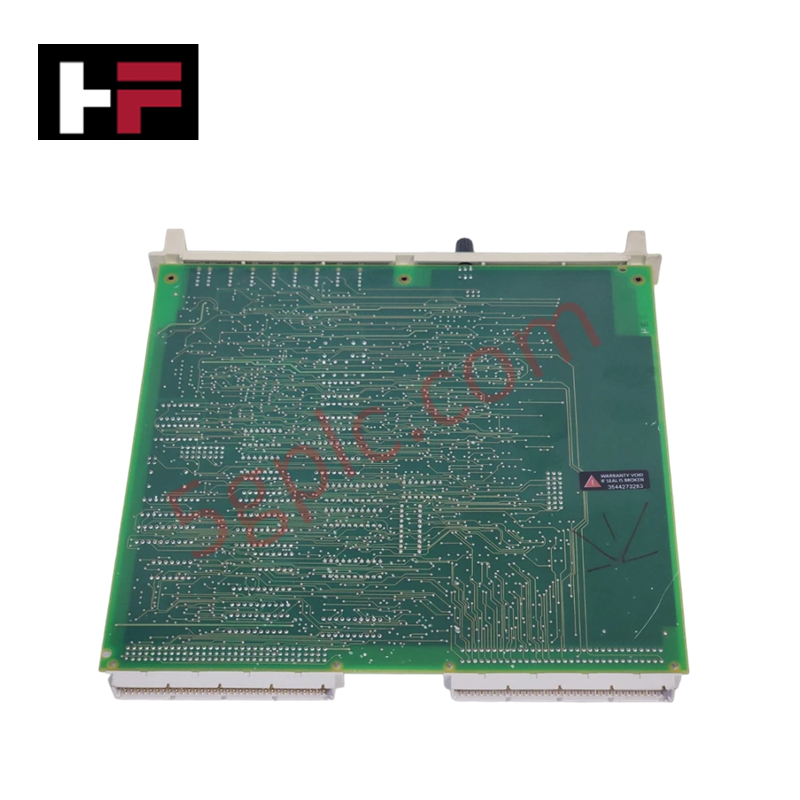
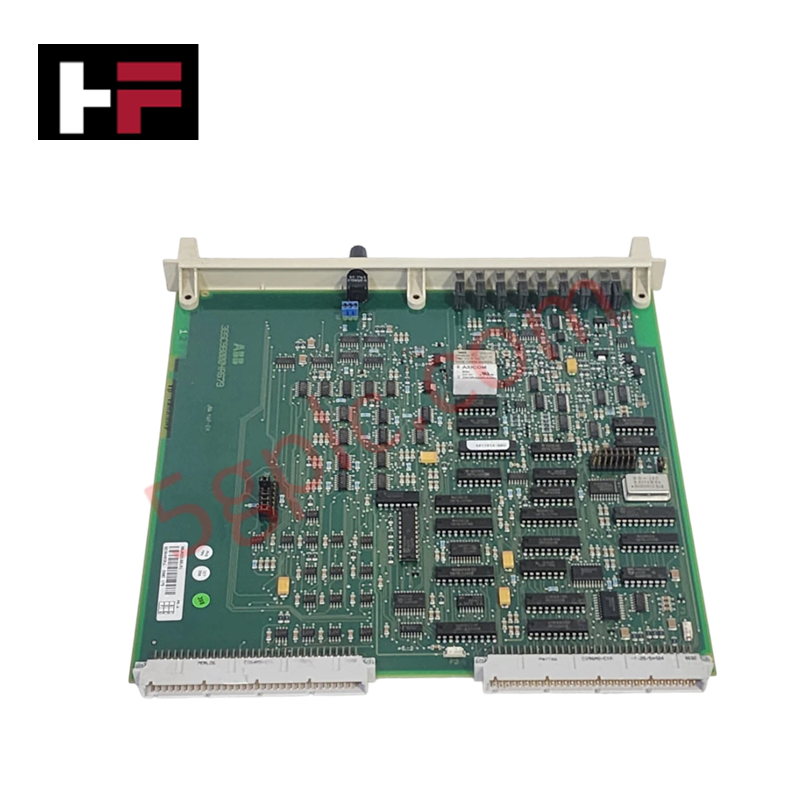
Product Details
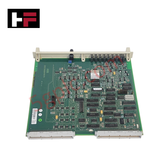
The ABB DSBC 175 3BUR001661R1 serves as the primary DSBC 175 Communication Modules utilized to execute redundant data interface bridging across S100 I/O bus platforms.
Hardware Specifications
| Parameter | Specification |
|---|---|
| Model | DSBC 175 |
| Order Code | 3BUR001661R1 |
| Brand | ABB |
| Origin | Sweden |
| Product Type | Communication Modules |
| Functionality | Redundant S100 I/O Bus Coupler |
| Weight | 0.355 kg |
| Dimensions | 234 mm x 324 mm x 22.5 mm |
| Operating Temp | 0 to 55 deg C |
| Power Consumption | Subrack backplane bus powered |
| WEEE Category | 5. Small Equipment (No External Dimension More Than 50 cm) |
Backplane Bus Communication & Deterministic Networks
The ABB DSBC 175 establishes a dual-channel interface for redundant S100 I/O bus communication lines, executing signal switching and bus arbitration without interrupting control loops. Built-in logic circuits validate signal transmission speeds across active and standby channels to prevent signal attenuation during master controller switchovers. Firmware flash compatibility ensures synchronized communication cycles and steady signal propagation delay across all connected rack segments.
Frequently Asked Questions
Q: What operational protection does the DSBC 175 coupler provide on the S100 I/O bus?
A: The module manages redundant signal lines across the S100 I/O backplane, facilitating automatic bus line switchover if an active communication channel suffers signal degradation or hardware faults.
Q: Is the DSBC 175 module hot-swappable during active control processing?
A: Module replacement should only occur after isolating subrack power or ensuring the redundant backup bus channel is active to avoid communication loss on the connected S100 I/O bus segment.
Field Installation Guidelines
- Power down the designated subrack section before inserting or removing the DSBC 175 module.
- Align the module card edges with the subrack guide rails and insert until the backplane connectors link securely.
- Tighten the front panel locking screws to complete chassis grounding and lock the assembly in place.
- Verify that bus termination units on the extended S100 I/O bus lines are properly installed to suppress signal reflections.
- Ensure shield grounding contacts on all interconnecting bus cables make direct contact with the cabinet earth bar.
Additional Information
- 100% Genuine Parts: All products are original and authentic, ensuring reliable industrial performance.
- 30-Day Refund Guarantee: Return any in-stock item within 30 days in original, unopened packaging for a full refund (excluding shipping and fees).
- 12-Month Warranty: Covers defects in materials or workmanship; excludes misuse, normal wear, or unauthorized modifications.
- Worldwide Shipping: We ship via USPS, UPS, FedEx, and DHL. Delivery times vary by country and may be subject to customs or import fees.
- Support & Contact: Technical and warranty assistance is available anytime. Contact us here: Contact.
- Purchase Guidance: Check product specifications and compatibility carefully before ordering to ensure proper application.






Tech & Buying Guide

Master Acceptance Testing: Understanding FAT and SAT in Industrial Control Systems
Factory Acceptance Testing (FAT) and Site Acceptance Testing (SAT) serve as critical quality assurance gateways in complex industrial control systems. Both procedures verify that programmable logic controllers (PLCs), distributed control systems (DCS), and associated field devices meet strict functional specifications. However, executing these tests effectively requires clear delineation between off-site staging and final field commissioning.

Industrial Networking Essentials: Demystifying Hubs, Switches, and Routers in Control Systems
Industrial automation relies heavily on robust networking infrastructure to connect programmable logic controllers (PLCs), distributed control systems (DCS), and human-machine interfaces (HMIs). Modern factory automation environments generate vast amounts of real-time operational data across deterministic networks. Understanding the structural differences between hubs, switches, and routers ensures optimal traffic segmentation, minimizes latency, and maintains high network availability.
Safety Relays in Industrial Automation: Fundamentals, Design Standards, and Fail-Safe Architecture
Safety relays form the bedrock of functional safety in modern factory automation, preventing catastrophic equipment failure and protecting plant personnel. While standard electromechanical relays handle basic load switching, they lack the redundant diagnostics required for high-risk industrial environments. Modern industrial automation platforms—including programmable logic controllers (PLCs) and distributed control systems (DCS)—rely on specialized safety relays to monitor field devices and isolate hazards instantly.