










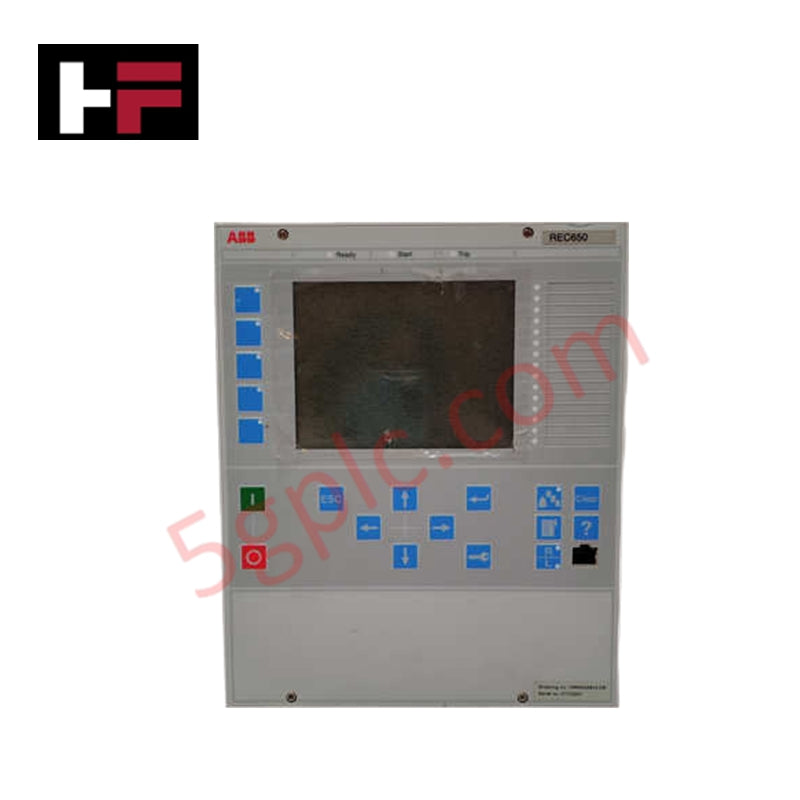
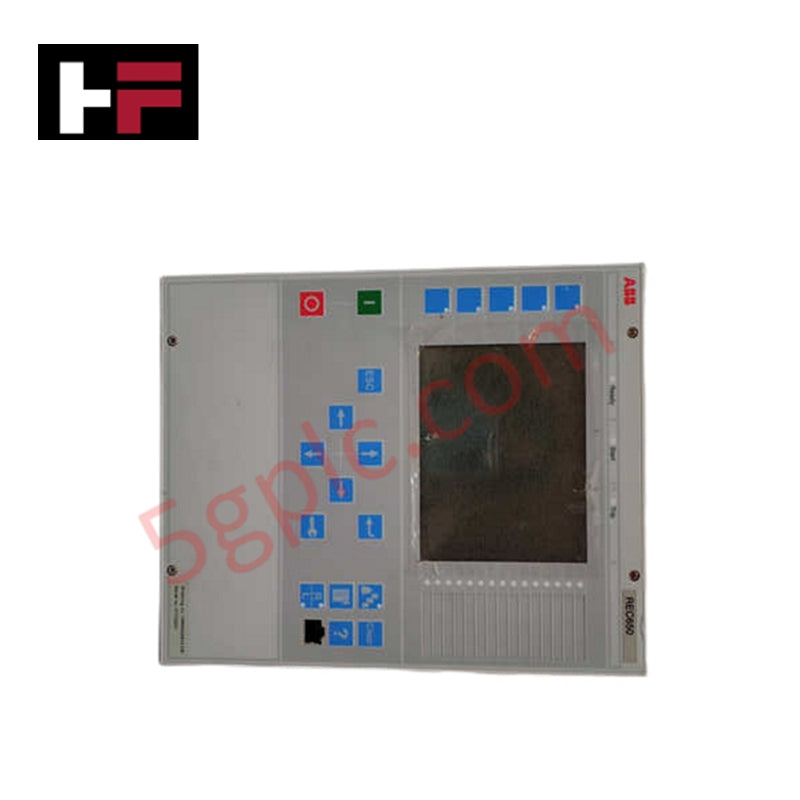
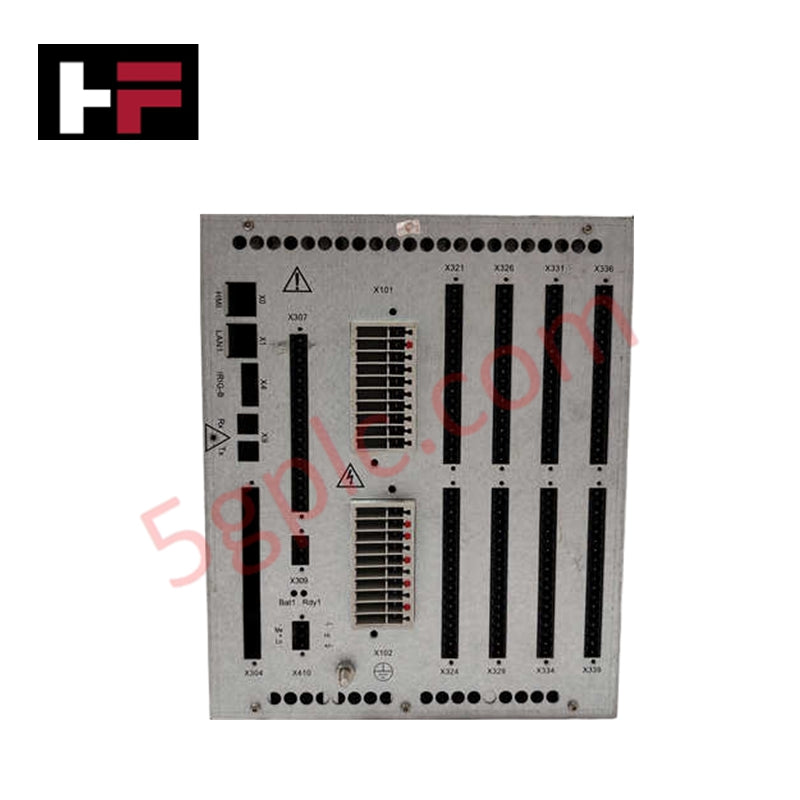
Product Details
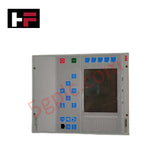
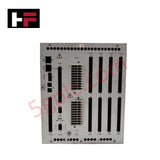
The ABB 1MRK008514-AB, also cataloged as the REC650 Data Network Module, operates as a dedicated hardware component for programmable condition monitoring within industrial device networks. The module interfaces physical instrumentation signals via onboard serial and CAN ports to compute real-time machine telemetry and route parameter streams directly to central monitoring frameworks.
Hardware Specifications
| Parameter | Specification |
|---|---|
| Model | 1MRK008514-AB |
| Brand | ABB |
| Origin | Sweden |
| Product Type | Programmable condition monitoring and data network module |
| Core Protocols | OPC technology mapping, CAN port (J1939 capability) |
| Serial Interfaces | RS-232, RS-422, or RS-485 configuration |
| Safety Logics | Automatic overcurrent protection, programmable monitoring profiles |
| Operating Temp | -40 to +80 deg C |
| Power Consumption | Dependent on active serial transit speeds and CAN bus termination |
| Dimensions | Standard Relion series internal communication housing footprint |
| Weight | Standard network interface card weight assembly |
Profinet / EtherNet/IP Deterministic Networks Performance
To sustain high-speed data rendering for external OPC web interfaces without degrading loop priority, the internal data translation engines map system registers across predefined paths. The hardware layout allocates serial-to-packet framing sequences in alignment with variables regulated by host backplane bus communication velocity Licences. Continuous registration updates depend on precise I/O density scaling routines to handle incoming serial arrays, requiring complete firmware flash compatibility between the communications module microchip and the main execution controller to prevent buffer overflow or transmission dropouts.
Frequently Asked Questions
Q: Can the 1MRK008514-AB communication links be safely modified while the terminal block is energized?
A: No. Disconnecting active serial or CAN bus pins during active communication states is prohibited. Doing so can cause local transceivers to short-circuit or trigger signal reflections that corrupt adjacent network registries.
Q: How does the -40 to +80 deg C thermal range affect internal data processing stability?
A: The wide-band industrial components operate with zero thermal-drift degradation across the complete thermal range, ensuring uninterrupted clock speeds and constant data validation metrics.
Q: What response occurs if the serial protocol conversion settings do not match the system firmware?
A: A firmware flash compatibility error occurs, forcing the network module into a diagnostic shutdown mode that interrupts the web interface feed and flags an external bus fault.
Field Installation Guidelines
- Serial Bus Shield Termination: Ground the outer shielding braid of all RS-485 and CAN lines at a single point inside the master cabinet to block ambient electromagnetic noise from entering the data registers.
- CAN Network Line Termination: Mount standard 120 ohm resistors across the physical ends of the J1939 CAN network runs to suppress data reflection anomalies.
- Low-Impedance Chassis Grounding: Connect a short copper grounding lead from the module mounting chassis to the main copper earth bar, keeping the connection path as straight as possible.
Additional Information
- 100% Genuine Parts: All products are original and authentic, ensuring reliable industrial performance.
- 30-Day Refund Guarantee: Return any in-stock item within 30 days in original, unopened packaging for a full refund (excluding shipping and fees).
- 12-Month Warranty: Covers defects in materials or workmanship; excludes misuse, normal wear, or unauthorized modifications.
- Worldwide Shipping: We ship via USPS, UPS, FedEx, and DHL. Delivery times vary by country and may be subject to customs or import fees.
- Support & Contact: Technical and warranty assistance is available anytime. Contact us here: Contact.
- Purchase Guidance: Check product specifications and compatibility carefully before ordering to ensure proper application.









Tech & Buying Guide

Mastering the Siemens PLC Scan Cycle: How the CPU Executes Automation Programs
Industrial automation relies heavily on programmable logic controllers (PLCs) to manage complex manufacturing processes. Many engineers dive straight into programming without mastering the underlying architecture. However, understanding how a PLC CPU executes a program ensures reliable system design. Therefore, mastering the scan cycle optimizes both performance and troubleshooting in modern control systems.

How to Connect to Siemens S7 PLCs: 5 Essential Communication Methods
Establishing a reliable hardware link between a programming terminal and a Siemens SIMATIC controller is essential for engineering workflows. Field engineers rely on distinct physical layers, ranging from legacy serial connections to high-speed Industrial Ethernet protocols. Modern factory automation environments prioritize fast data transfer and seamless driver integration. Selecting the correct connection method simplifies program downloads, online monitoring, and system troubleshooting in complex control systems.

Will PLCs Become Obsolete? The Future of Control Systems in Industry 4.0
Modern manufacturing is undergoing a rapid technological transformation driven by Industry 4.0 innovations. Technologies like Artificial Intelligence (AI), Machine Learning (ML), and the Industrial Internet of Things (IIoT) are dominating discussions across the factory automation sector. Consequently, many engineers wonder if these advanced digital tools will eventually replace traditional Programmable Logic Controllers (PLCs). However, evaluating the core physics of industrial operations reveals a very different reality for control systems.