










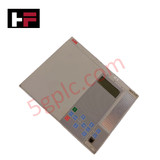
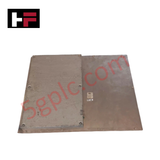
Product Details
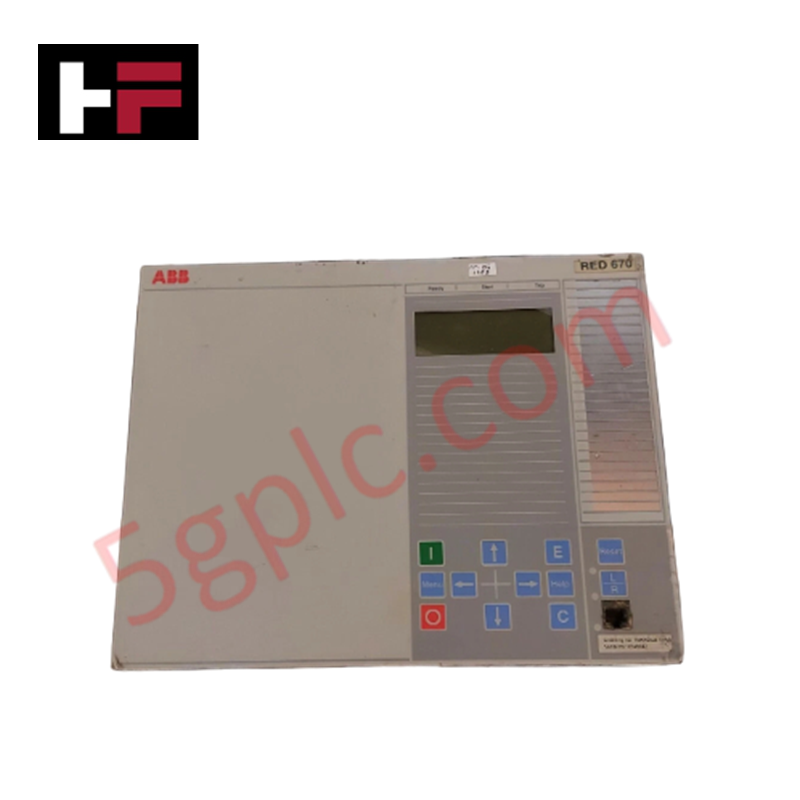
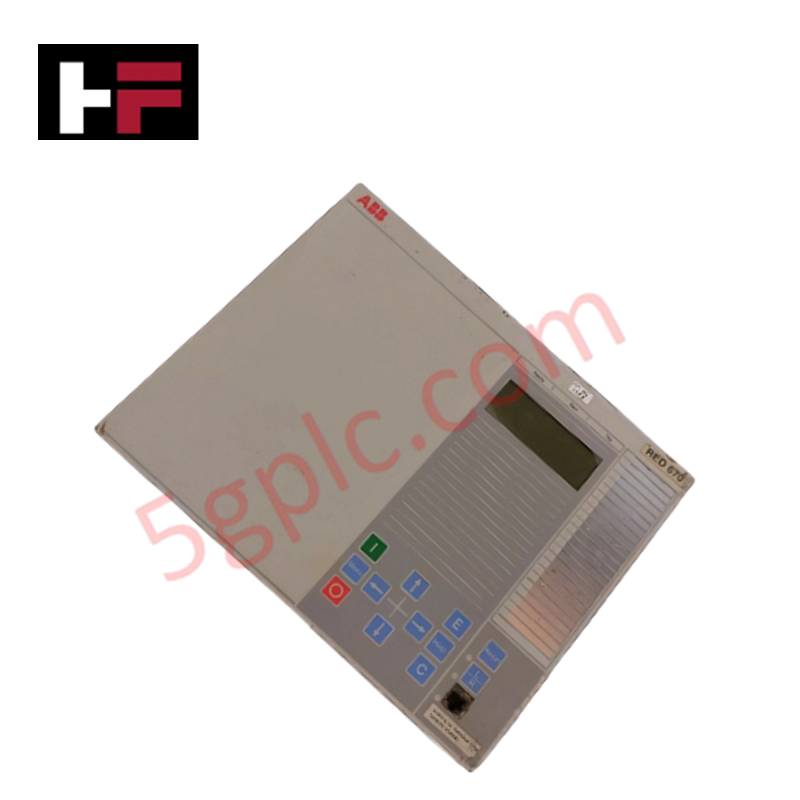
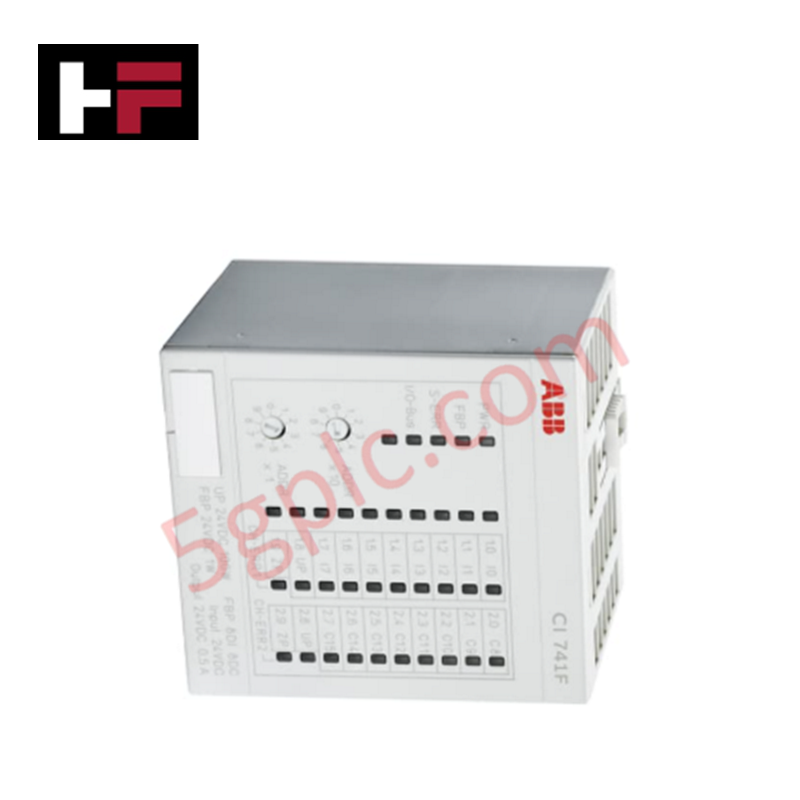
Configured for high-voltage line differential protection and bay control in power transmission systems, the ABB 1MRK000008-PB (RED 670 Line Differential Module) provides direct physical/electrical execution.
Hardware Specifications
| Parameter | Specification |
|---|---|
| Model | 1MRK000008-PB |
| Brand | ABB |
| Origin | Sweden |
| Product Series Family | Relion 670 Series Architecture |
| Device Classification | High-Voltage Line Differential Protection & Bay Control IED |
| Maximum Grid Voltage Rating | Up to 765 kV transmission networks |
| Maximum Main Current Rating | Up to 5 000 A continuous feed |
| Measurement & Protection Accuracy | 0.2% variance profile |
| Automation Protocol Compatibility | IEC 61850-8-1 Compliant (Native GOOSE & Client-Server MMS) |
| Operating Temp | -40 to +70 deg C |
| Relative Humidity Tolerance | 5% to 95% RH (Non-condensing) |
| Power Consumption | Station battery powered (standard internal logic board draw) |
| Dimensions | 160 mm x 230 mm x 100 mm |
| Weight | 3.5 kg |
Profinet / EtherNet/IP Deterministic Networks
The Relion 670 series architecture relies on high-velocity substation automation protocols to enforce phase-segregated line differential calculations across wide-area networks. The embedded communications processor utilizes integrated Ethernet mapping to execute native IEC 61850-8-1 GOOSE messaging and client-server MMS transactions directly over deterministic station buses. This software-driven physical mapping eliminates the internal propagation delays typical of non-deterministic backplane bus conversion interfaces. The resulting deterministic data stream guarantees that real-time current vectors are synchronized and compared with remote end terminals with minimal jitter, enabling high-speed tripping matrix execution during multi-phase fault scenarios.
Frequently Asked Questions
Q: How does the device maintain phase synchronization across distant substation terminals?
A: The RED670 utilizes continuous echo-method path delay calculations or external GPS clock inputs over its Ethernet communications link to synchronize current vector sampling across the line, eliminating time-base drift errors.
Q: What are the power requirements and power consumption behavior during a station supply drop?
A: The internal power supply module operates off standard substation DC auxiliary battery banks. Internal capacitive storage provides necessary ride-through latency to execute fail-safe trip commands during brief DC supply interruptions.
Field Installation Guidelines
- Substation Panel Mounting: Install the unit within a grounded, vibration-free control panel cutout matching the 160 mm x 230 mm x 100 mm footprint. Ensure adequate ventilation gaps are maintained around the heat-dissipating surfaces of the enclosure.
- Current Transformer (CT) Secondary Wiring: Ring terminals must be securely fastened to the terminal block. Open-circuiting active CT secondaries during operation will generate lethal high-voltage spikes; isolate all CT inputs prior to device maintenance.
- Communication Port Fiber Minimum Curvature: Route all optical or copper Ethernet communication cables inside the panel following standard minimum bend radius constraints to preserve signal transition velocities and prevent packet dropped connections.
- Shielding and Grounding Requirements: Connect the chassis rear grounding lug directly to the substation solid copper ground grid utilizing a short, low-impedance conductor to suppress high-frequency electrical switching transients.
Additional Information
- 100% Genuine Parts: All products are original and authentic, ensuring reliable industrial performance.
- 30-Day Refund Guarantee: Return any in-stock item within 30 days in original, unopened packaging for a full refund (excluding shipping and fees).
- 12-Month Warranty: Covers defects in materials or workmanship; excludes misuse, normal wear, or unauthorized modifications.
- Worldwide Shipping: We ship via USPS, UPS, FedEx, and DHL. Delivery times vary by country and may be subject to customs or import fees.
- Support & Contact: Technical and warranty assistance is available anytime. Contact us here: Contact.
- Purchase Guidance: Check product specifications and compatibility carefully before ordering to ensure proper application.






Tech & Buying Guide

Mastering the Siemens PLC Scan Cycle: How the CPU Executes Automation Programs
Industrial automation relies heavily on programmable logic controllers (PLCs) to manage complex manufacturing processes. Many engineers dive straight into programming without mastering the underlying architecture. However, understanding how a PLC CPU executes a program ensures reliable system design. Therefore, mastering the scan cycle optimizes both performance and troubleshooting in modern control systems.

How to Connect to Siemens S7 PLCs: 5 Essential Communication Methods
Establishing a reliable hardware link between a programming terminal and a Siemens SIMATIC controller is essential for engineering workflows. Field engineers rely on distinct physical layers, ranging from legacy serial connections to high-speed Industrial Ethernet protocols. Modern factory automation environments prioritize fast data transfer and seamless driver integration. Selecting the correct connection method simplifies program downloads, online monitoring, and system troubleshooting in complex control systems.

Will PLCs Become Obsolete? The Future of Control Systems in Industry 4.0
Modern manufacturing is undergoing a rapid technological transformation driven by Industry 4.0 innovations. Technologies like Artificial Intelligence (AI), Machine Learning (ML), and the Industrial Internet of Things (IIoT) are dominating discussions across the factory automation sector. Consequently, many engineers wonder if these advanced digital tools will eventually replace traditional Programmable Logic Controllers (PLCs). However, evaluating the core physics of industrial operations reveals a very different reality for control systems.