Redefining Control System Design: The Evolution of Flexible Input/Output Modules (FIOM) in Industrial Automation
- 〡
- 〡 by WUPAMBO
Introduction to Modern Control Systems and IO Limitations
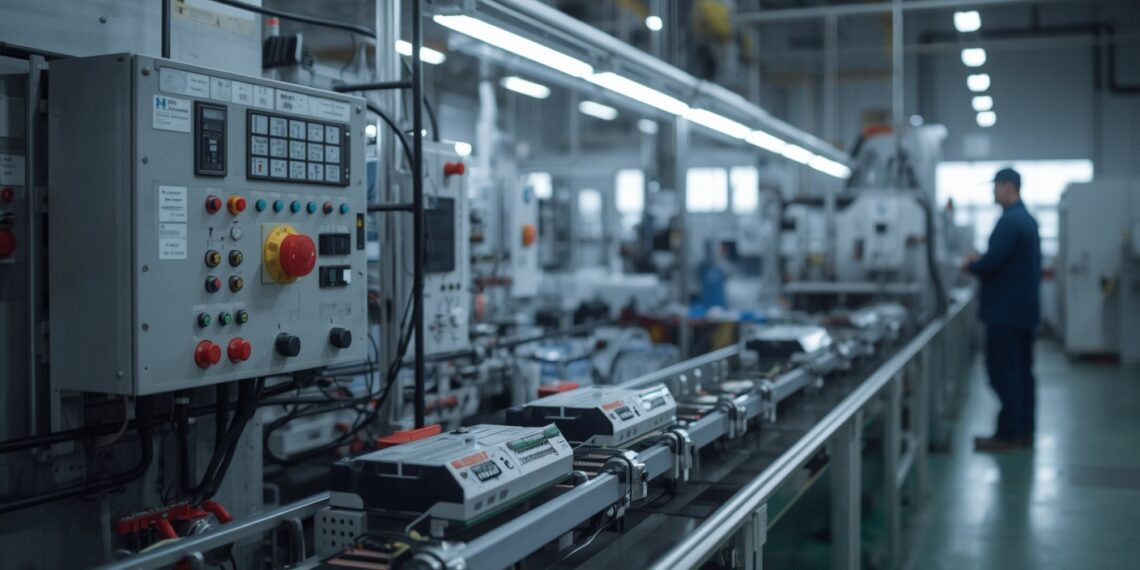
Traditional industrial automation relies heavily on dedicated input-output (IO) modules. In a standard distributed control system (DCS) or programmable logic controller (PLC) setup, design engineers assign specific cards to distinct signal types. For instance, a traditional 16-channel digital input (DI) card exclusively processes digital signals. However, engineering projects frequently encounter last-minute changes in signal counts. Therefore, discovering a missing analog input (AI) channel late in the design phase forces engineers to purchase and install an entirely new, dedicated AI card. Consequently, this rigidity drives up hardware expenses, wastes cabinet space, and delays commissioning schedules.
The Engineering Challenge of Signal Variations
Engineering teams often struggle with unpredictable signal variations throughout a plant's lifecycle. During initial engineering phases, late scope changes force costly re-engineering efforts. Furthermore, maintenance departments face heavy burdens when managing large inventories of specialized spare parts. Maintaining four distinct types of spare cards—AI, AO, DI, and DO—increases operational overhead and ties up capital. To solve these persistent challenges, leading control system manufacturers introduced Flexible Input/Output Modules (FIOM).
What Are Flexible Input/Output Modules?
Flexible Input/Output Modules represent a major technological leap in factory automation. Unlike traditional hardware, a single FIOM channel can be software-configured as an analog input, analog output, digital input, or digital output. Therefore, automation professionals no longer need to calculate exact channel ratios prior to procurement. Instead, engineers simply focus on the total number of physical signals. If project requirements shift during construction, technicians simply reconfigure the channel software without rewiring the cabinet.
Industry Implementations and Vendor Solutions
Major industrial automation vendors have successfully commercialized this technology under proprietary names. Honeywell pioneered universal signal conditioning with its Universal IO (UIO) technology, which requires pure software configuration. Conversely, other industry leaders utilize modular architectures that combine software setup with minor hardware adjustments:
- Honeywell: Universal IO (UIO) featuring pure software configuration.
- Yokogawa: Network IO (N-IO) architecture.
- Emerson: CHARMs (Characterization Modules) technology.
- Rockwell Automation: FLEX IO platforms.
- ABB: Flexible and scalable I/O solutions.
As an expert with 15 years in control systems, I observe that pure software configuration offers superior flexibility during plant commissioning compared to solutions requiring physical base-module changes.
Key Advantages of Flexible IO Technology
Adopting flexible IO architecture delivers profound operational and financial benefits across industrial facilities:
- Cost Reduction: Minimizes spare parts inventory by consolidating four module types into a single universal hardware platform.
- Schedule Acceleration: Eliminates the procurement delays associated with ordering rare or unexpected signal cards.
- Space Optimization: Reduces physical footprint requirements inside control room marshalling cabinets.
- Engineering Agility: Adapts seamlessly to late-stage design modifications without requiring layout re-engineering.
Practical Application Scenario: Plant Modernization
Consider a brownfield oil refinery modernization project with extreme space constraints in the central control room. Engineers must replace a legacy DCS while utilizing existing field cabling. By deploying flexible IO modules, the project team eliminates intermediate marshalling panels. Furthermore, when unexpected shutdown signals emerge during pre-commissioning, technicians instantly map those signals to existing spare channels via the engineering workstation. As a result, the plant achieves on-time startup while cutting cabinet hardware costs by 25 percent.
Author Biography
The author, Zhang Wei, is a senior global industrial automation and control systems expert with 15 years of extensive industry experience. He has served as a senior system architect and technical consultant for several internationally renowned automation enterprises, specializing in PLCs, DCS, TSI, and industrial network security architectures. Zhang Wei has dedicated his career to the digital transformation and intelligent upgrading of traditional industrial control systems, accumulating deep practical experience in engineering design and field commissioning for large-scale petrochemical, power energy, and intelligent manufacturing projects.
- Posted in:
- control systems
- DCS
- factory automation
- FIOM
- flexible IO modules
- hardware configuration
- instrumentation engineering
- PLC
- process control