Multi-Touch HMI Technology: Transforming Interaction in Industrial Automation
- 〡
- 〡 by WUPAMBO
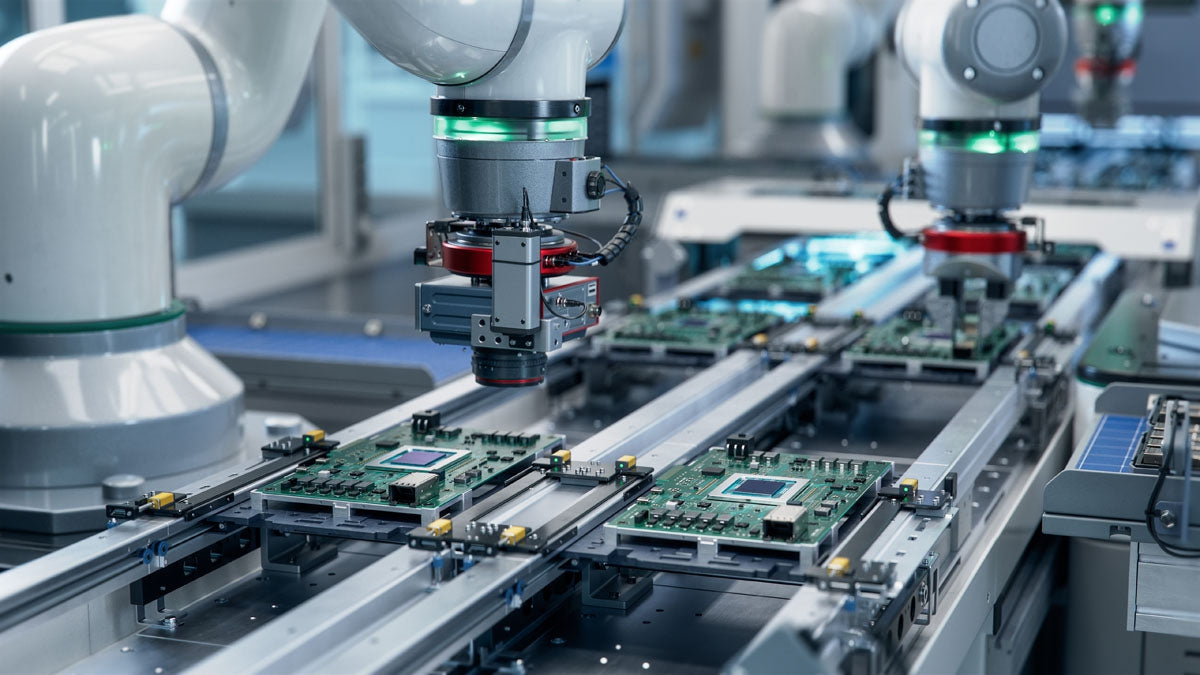
Modern human-machine interfaces (HMIs) are evolving rapidly across factory floors worldwide. Traditional resistive touchscreens allowed operators to register only a single touch point at a time. Today, multi-touch HMI panels enable intuitive multi-finger gestures and concurrent multi-operator inputs in demanding industrial automation setups.
Overcoming Single-Touch HMI Limitations in Factory Automation
Legacy industrial HMIs rely heavily on single-touch resistive technologies. These systems process only one contact point and ignore subsequent inputs. As a result, operators must execute repetitive, menu-heavy navigation sequences to manage complex manufacturing tasks.
Moreover, single-touch screens often require peripheral input devices like physical keyboards and mice. Integrating extra hardware increases panel cutout sizes, complicates enclosure sealing, and raises long-term maintenance overhead. Modern manufacturing plants require more versatile interface solutions to maintain high productivity.
The Underlying Mechanics: Projected Capacitive Touch (PCT)
Multi-touch capability relies primarily on Projected Capacitive Touch (PCT or PCAP) sensor technology. A micro-fine grid of Indium Tin Oxide (ITO) conductive electrodes covers the display along the X and Y axes. A micro-controller continuously monitors the electrostatic field across this grid at fixed frequencies.
When an operator touches the screen, the finger distorts the local electrostatic field and alters the mutual capacitance. The internal processor instantly calculates precise multi-point coordinates across the matrix grid. Therefore, the system seamlessly tracks complex multi-finger gestures such as pinching, zooming, rotating, and swiping simultaneously.
Expert Insight: Unlike consumer smartphones, industrial PCAP panels feature thickened, chemically hardened glass covers. Industrial manufacturers tune the controller firmware to ensure reliable touch detection even when operators wear heavy nitrile, leather, or insulated work gloves.
Core Operational Advantages for Industrial Control Systems
Multi-touch technology streamlines plant operations and lowers total cost of ownership through key engineering benefits:
- Accelerated Operator Onboarding: Operators interact with industrial screens using familiar consumer gestures like pinch-to-zoom. Consequently, plant managers shorten training schedules for new engineering staff.
- Streamlined HMI Design: Developers consolidate multiple sub-menus into single interactive screens with dynamic pop-ups. Therefore, engineers write lighter, cleaner HMI application programs.
- Hardware Consolidation: Multi-touch displays eliminate external keypads, trackballs, and mechanical pushbuttons. As a result, panel builders save physical enclosure space and lower assembly expenses.
- Enhanced Environmental Durability: Solid-state PCAP screens feature seamless glass surfaces resistant to dust, oils, chemical splashes, and mechanical wear.
Comparative Analysis: Single-Touch vs. Multi-Touch HMI Systems
Selecting the proper interface architecture requires evaluating specific operational capabilities:
| Feature Criteria | Legacy Single-Touch HMI | Modern Multi-Touch HMI |
|---|---|---|
| Touch Detection Mechanism | Resistive pressure-sensitive layers | Projected Capacitive Touch (PCT/PCAP) |
| Simultaneous Inputs | Strictly one touch point | Multiple touch points and complex gestures |
| Glove & Fluid Compatibility | Works with any stylus or glove; susceptible to wear | Requires tuned controller firmware; highly durable glass |
| Peripheral Dependency | Frequently requires external keyboards or trackballs | Fully self-contained touch interaction |
| Maintenance & Longevity | Flexing plastic surface wears out over time | Scratch-resistant tempered glass withstands harsh environments |
Industry Application Scenario: Multi-User SCADA Supervision in Chemical Plants
Consider a complex chemical distillation plant managed by a distributed control system (DCS) and high-resolution industrial PCAP panels.
Implementation Strategy
- Safety Verification: The control system requires a two-hand safety gesture—holding a safety key icon with one hand while tapping an actuation toggle with the other—to initiate hazardous valve sequences.
- Detailed Monitoring: Engineers pinch-to-zoom into detailed piping and instrumentation diagrams (P&ID) to inspect real-time pressure loops without losing overall process context.
Operational Results
The dual-touch safety confirmation completely eliminates accidental valve activations. Furthermore, plant engineers isolate process alarms up to 40% faster by instantly zooming into affected system segments.
About the Original Author
Chen Ming is a principal automation engineer and human-machine interface specialist with over 15 years of field experience in industrial control systems. He specializes in designing ruggedized operator interfaces, SCADA visual architectures, and high-availability control architectures for automotive assembly lines, chemical refineries, and power generation utilities across Asia and North America.
- Posted in:
- factory automation graphics
- human-machine interface
- multi-touch HMI
- PLC control systems
- projected capacitive touch