Centralized vs Decentralized Automation Systems: Architectural Trade-Offs in Modern Industrial Control
- 〡
- 〡 by WUPAMBO
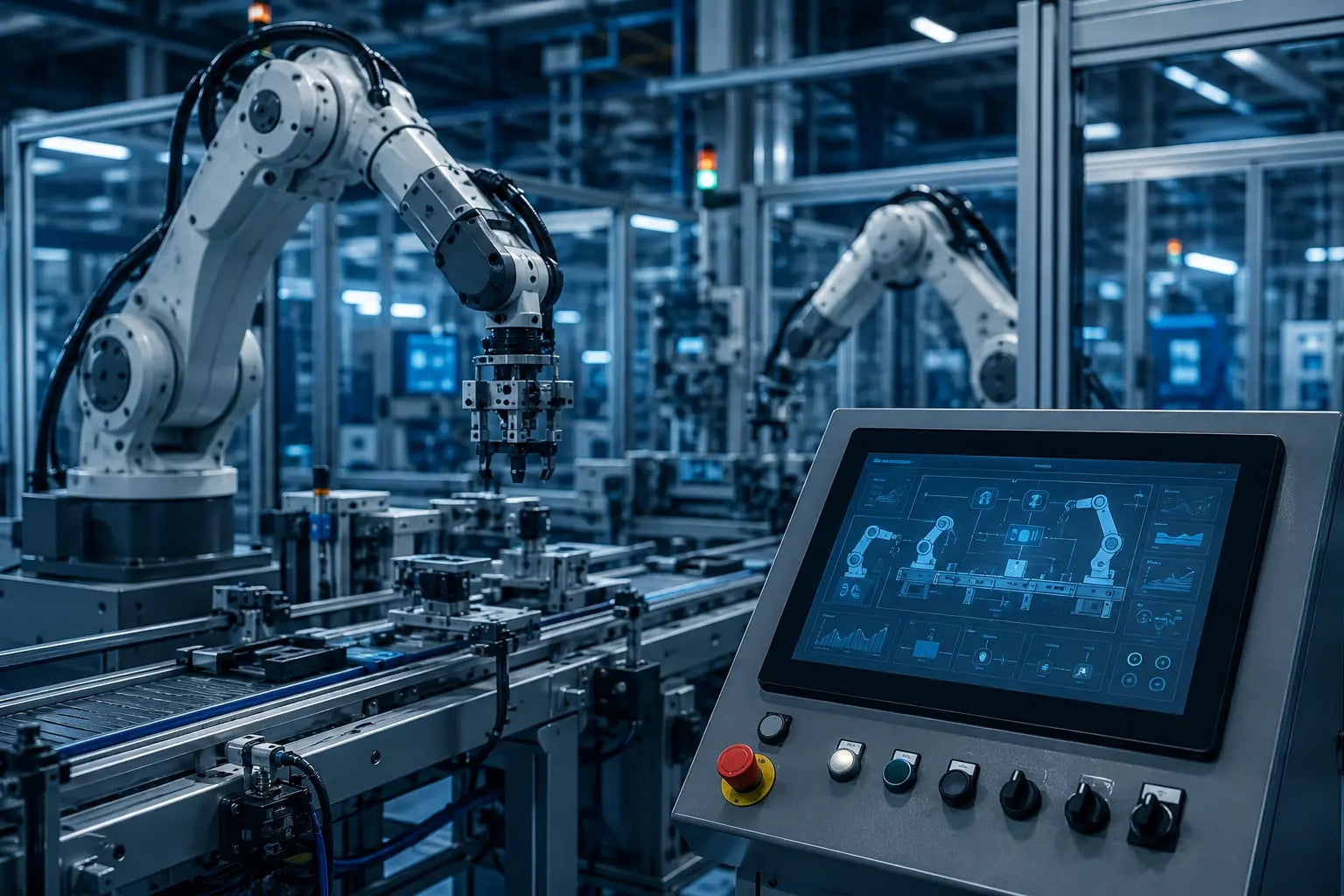
Industrial automation relies heavily on robust control architectures to manage complex processes efficiently. Engineers must choose between centralized and decentralized topologies when designing plant automation. This decision directly impacts system reliability, scalability, and long-term maintenance costs.
Defining Centralized Automation Architectures
A centralized automation system uses a single primary controller to handle all process logic. In this setup, field devices send raw signals directly to one powerful PLC or DCS controller. The central processor executes all algorithms, manages safety interlocks, and sends commands back to field actuators.
Historically, facilities relied on centralized PLCs like the Siemens S7-400 or Allen-Bradley ControlLogix to govern entire production lines. Centralized architectures streamline project engineering because developers write code within a single, unified software project. Engineers can monitor every process variable from one central location without managing cross-controller communication protocols.
Expert Insight: While centralized architectures simplify initial code development, they create a single point of failure (SPOF). If the central CPU fails or loses power, the entire production facility stops immediately.
Understanding Decentralized Control Networks
Decentralized control systems distribute processing tasks across multiple localized controllers placed near specific machinery. Each local controller manages its designated subsystem independently using dedicated I/O modules. These distributed nodes communicate over industrial Ethernet networks such as PROFINET, EtherNet/IP, or Modbus TCP.
For instance, modern dairy processing plants deploy separate compact PLCs—such as Siemens S7-1200 or CompactLogix—for pasteurization, separation, and packaging stations. These local processors execute their respective control loops independently. They exchange high-level status data with adjacent controllers or SCADA systems only when necessary.
Decentralized designs isolate faults effectively. If a local controller experiences a hardware fault, adjacent machinery continues to operate safely. This fault isolation significantly reduces unplanned downtime across large manufacturing facilities.
Architectural Comparison: Centralized vs Decentralized
Evaluating these architectures requires analyzing key operational metrics:
| Performance Metric | Centralized Automation Systems | Decentralized Automation Systems |
|---|---|---|
| Control Logic Execution | Single high-performance CPU | Distributed local PLCs/PACs |
| System Reliability | High risk (Single point of failure) | High availability (Isolated fault zones) |
| Scalability | Limited by CPU load and I/O rack limits | Modular expansion via networked nodes |
| Wiring & Installation Cost | High (Long runs of parallel field cabling) | Low (Distributed I/O and fieldbus trunk lines) |
| Troubleshooting & Maintenance | Centralized diagnostics; higher risk during fixes | Localized diagnostics; isolated field maintenance |
| Data Processing Bottlenecks | Common at the central controller during peak loads | Distributed processing prevents network bottlenecks |
Selecting the Right Topology for Industrial Applications
The choice between centralized and decentralized designs depends on process complexity and physical layout. Centralized architectures suit compact, highly synchronized processes where high-speed execution matters most. Applications like high-speed motion control or packaging cells benefit from centralized memory spaces and zero-latency interlocks.
Conversely, geographically distributed facilities favor decentralized architectures. Infrastructure projects, water treatment plants, and large chemical refineries utilize decentralized control to minimize field cabling costs. Remote I/O drops and smart transmitters process data locally, transmitting only essential telemetry back to the main control room.
Real-World Application Scenario: Food & Beverage Manufacturing
Consider a large beverage bottling and packaging facility.
Implementation Strategy
- Processing & Mixing: Managed by a centralized control system to maintain precise batch recipes and safety interlocks across mixing tanks.
- Packaging & Conveyance: Uses a decentralized network. Conveyors, palletizers, and labeling machines run on independent smart controllers linked via PROFINET.
Operational Results
During a routine maintenance window, engineers can service or reconfigure the labeling machine PLC independently. The upstream filling lines continue running uninterrupted, buffer inventory builds up on accumulation conveyors, and overall plant productivity remains high.
About the Original Author
Zhang Wei is a senior automation consultant and control systems specialist with over 15 years of experience in industrial field applications. He specializes in designing programmable logic controller (PLC) networks, distributed control systems (DCS), and fault-tolerant safety architectures for heavy industry, chemical manufacturing, and power generation facilities across Asia and Europe.
- Posted in:
- decentralized automation
- factory automation architecture
- PLC control systems
- SCADA industrial ethernet