Mastering Electrical Ground Loop Mitigation in Industrial Automation and Control Systems
- 〡
- 〡 by WUPAMBO

Understanding Ground Loops in Industrial Signal Circuits
Ground loops represent one of the most persistent challenges in industrial automation, PLC networks, and distributed control systems (DCS). According to IEEE Std. 100-1991, a ground loop forms when two or more points nominally at ground potential connect through a conducting path, creating potential differences. In sensitive analog and digital signal circuits, this unwanted conductive path allows noise currents to superimpose directly onto process signals.
Unbalanced signal configurations, such as coaxial cables with double-ended shields or RS-232 serial links utilizing shared common returns, suffer severely from this phenomenon. When interfering frequencies overlap with desired signal bandwidths, data corruption, erratic PLC behavior, and costly downtime occur. Engineers must adopt proactive mitigation strategies rather than relying on reactive troubleshooting after commissioning.
Proven Engineering Strategies to Eliminate Ground Loops
Industrial facility designers can deploy several robust techniques to neutralize ground loop interference across factory floors.
Clustering Equipment Around Signal Reference Grids (SRG)
Engineers cluster interconnected electronic equipment into zones served by a single, unified Signal Reference Grid (SRG). Connecting adjacent rooms to the same SRG maintains a low-impedance reference across a broad frequency spectrum from direct current to tens of megahertz.
Ensuring Low-Impedance Equipment Bonding
Technicians effectively bond every metallic frame and enclosure directly to the SRG. This uniform grounding reference eliminates potential gradients across cabinet doors, PLC racks, and instrumentation housings, suppressing common-mode noise effectively.
Dedicating Clean Power Branch Circuits
Facility electricians power sensitive work areas and local control panels from dedicated branch circuits originating from a single panelboard. Limiting shared electrical loads prevents high-power machinery from injecting transient noise into delicate automation hardware.
Deploying Fiber Optic Data Transmission
Optic fiber represents the gold standard for data communication in high-noise environments. Because glass fibers carry light rather than electrical current, they eliminate galvanic continuity, making ground loops and lightning surge currents physically impossible.
Utilizing Opto-Isolators and Protocol Converters
Control engineers integrate optical isolators into legacy data paths to provide several kilovolts of galvanic isolation. Furthermore, converting vulnerable single-ended protocols like RS-232 into balanced differential standards such as RS-485 drastically improves noise immunity in harsh industrial settings.
Enhancing Cable Shielding and Metallic Conduits
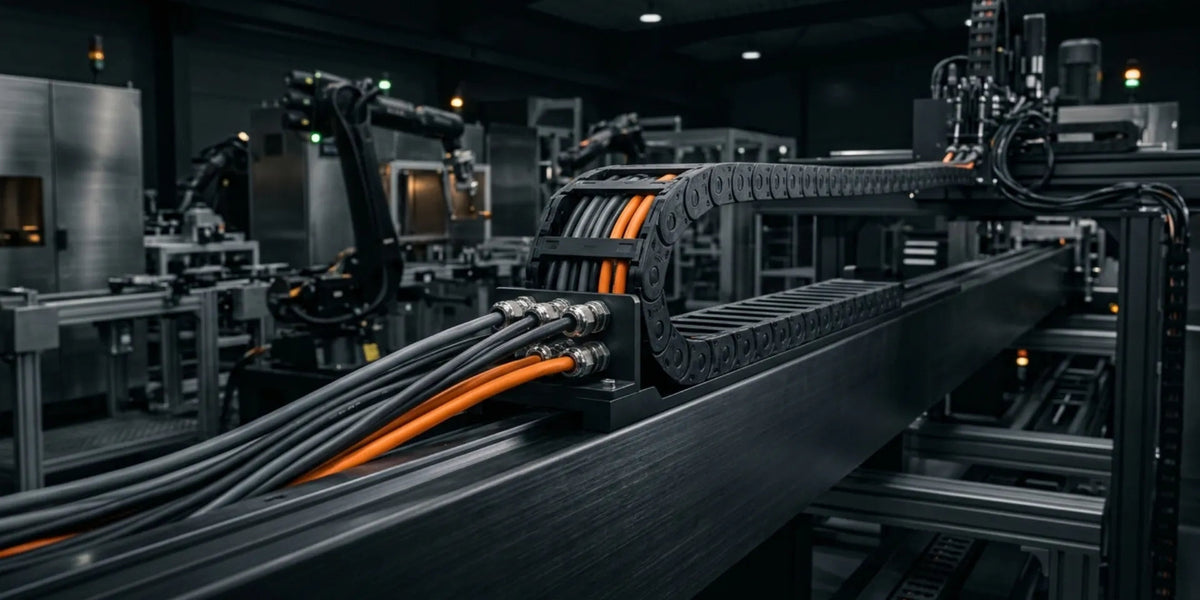
Installers route sensitive signal cables through grounded metallic conduits or cable trays. Proper 360-degree shield termination at cable entry points prevents electromagnetic interference (EMI) from coupling into low-level analog loops.
Managing Grounding Across Widely Separated Plant Areas
In massive industrial plants, equipment spans multiple floors and remote buildings, creating severe potential differences due to separate branch circuits and lightning discharge currents.
Plant engineers conquer this challenge by establishing localized SRGs at each separated area. They interconnect these independent grids using wide-spaced structural steel columns or multiple parallel bonding conductors. Wide spacing prevents mutual inductance from merging parallel conductors into a single high-impedance inductor. Additionally, local isolation transformers and surge protection devices (SPDs) safeguard long-run signal cables against high-energy transients.
Expert Insights and Industry Commentary
In my fifteen years commissioning PLC and DCS architectures across heavy manufacturing plants, I find that cutting corners on grounding design always backfires. Facility owners often view SRGs and fiber optic cabling as unnecessary capital expenses. However, chasing intermittent communication faults and analog signal drift during production runs costs exponentially more in lost output.
Investing in a rigorous grounding framework from day one ensures long-term system reliability. Modern factory automation demands high-speed, noise-free data exchange; robust grounding provides the silent foundation that makes this possible.
Practical Application Scenarios in Modern Plants
Industrial facilities routinely encounter ground loop challenges in specific operational areas:
- Distributed PLC I/O Networks: Long analog 4-20 mA current loops spanning from remote valve actuators back to the main control room frequently pick up ground potential differences, causing erratic valve positioning.
- Variable Frequency Drives (VFDs): High-frequency switching noise from large motor drives couples into nearby encoder and communication cables unless proper grounding and shielding protocols are strictly enforced.
- Multi-Building SCADA Systems: Wide-area manufacturing complexes linking water treatment units to central monitoring stations face lightning-induced ground differentials, requiring fiber optic isolation to protect network switches.
About the Author
Zhang Wei is a Senior Industrial Automation Specialist with over 15 years of hands-on global field experience in PLC programming, DCS commissioning, turbine supervisory instrumentation (TSI), and electrical protection systems. He frequently publishes technical guides and industry analyses for leading automation engineering communities.
- Posted in:
- control systems
- DCS
- factory automation
- ground loop troubleshooting
- industrial networking
- PLC