Layer-2 vs. Layer-3 Network Switches in Industrial Control Systems
- 〡
- 〡 by WUPAMBO
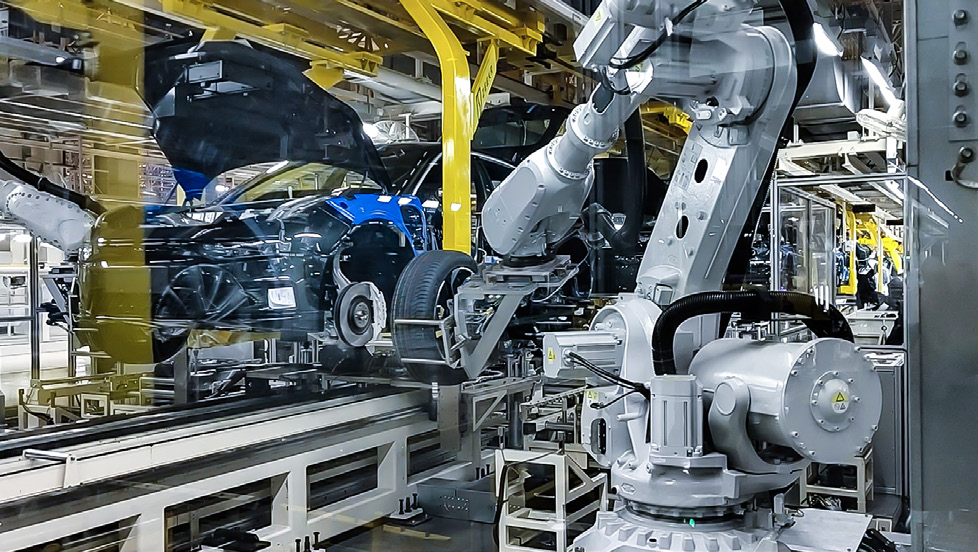
Modern factory automation relies heavily on robust Industrial Ethernet communications. Control system engineers deploy managed Ethernet switches to connect programmable logic controllers (PLCs), distributed control systems (DCS), human-machine interfaces (HMIs), and field I/O devices. Selecting between Layer-2 and Layer-3 switching architecture directly impacts network throughput, routing capabilities, and overall cybersecurity defense in operational technology (OT) networks.
Fundamentals of Ethernet Switching in Factory Automation
An Ethernet switch acts as a central communication node within a control system architecture. Point-to-point wiring between individual industrial controllers quickly creates complex cabling loops and hardware bottlenecks. Ethernet switches eliminate these routing challenges by managing multi-device traffic across a single physical network infrastructure. Switches examine incoming data packets and route them directly to designated hardware interfaces, ensuring deterministic communications across plant floor equipment.
Understanding Layer-2 Switches and MAC Address Forwarding
Layer-2 switches function at the Data Link layer of the Open Systems Interconnection (OSI) model. These devices route data traffic strictly using Media Access Control (MAC) addresses burnt into physical network interface cards. When a PLC transmits I/O messaging, the Layer-2 switch inspects the destination MAC address and forwards frames to the designated port.
However, Layer-2 switches operate exclusively within a single broadcast domain and subnet range. For instance, a device on IP address 192.168.1.10 cannot communicate with a device on 192.168.2.10 through a pure Layer-2 switch. Consequently, these switches suit localized control cells that share identical IP addressing schemes.
Understanding Layer-3 Switches and IP Routing Performance
Layer-3 switches operate at the OSI Network layer and combine switching speed with IP routing functions. These switches process logical IP addresses alongside hardware MAC addresses. Therefore, Layer-3 switches route packets across distinct subnets and virtual local area networks (VLANs) without requiring separate external routers.
Furthermore, Layer-3 industrial switches manage advanced networking features like static routing, dynamic routing protocols, and access control lists (ACLs). This capability enables control engineers to link disparate subnets across large-scale manufacturing facilities while maintaining high packet forwarding rates.
Comparing Operational Differences in Industrial Applications
Key architectural differences differentiate Layer-2 and Layer-3 switches across industrial networks:
| Parameter | Layer-2 Industrial Switch | Layer-3 Industrial Switch |
|---|---|---|
| OSI Layer | Layer 2 (Data Link) | Layer 3 (Network) |
| Addressing Method | Hardware MAC Address | Logical IP Address |
| Routing Capability | Within single subnet only | Cross-subnet / Inter-VLAN routing |
| Packet Forwarding Speed | Ultra-low latency switching | Slightly higher processing overhead |
| Security Features | Port security, basic VLANs | ACLs, firewalling, traffic isolation |
| Cost & Complexity | Cost-effective, simple setup | Higher cost, advanced configuration |
Technical Insights on Network Architecture Design
In my 15 years of engineering large-scale DCS and PLC deployments, choosing between Layer-2 and Layer-3 switches comes down to proper segment boundaries. Engineers often over-specify networks by placing Layer-3 switches directly at the machine skid level. Localized machine cells rarely require routing capabilities, and simple Layer-2 managed switches provide faster wire-speed forwarding with minimal setup overhead.
However, deploying Layer-3 switches at the OT core or enterprise edge remains essential. Segmenting plant operations into isolated VLANs limits broadcast storms and restricts unauthorized lateral movement across control networks. Implementing Layer-3 switches at the supervisory level allows tight control over inter-VLAN routing while maintaining low latency across critical automation processes.
Application Scenario: Multi-Cell Plant Network Architecture
Consider a large automotive manufacturing facility operating three distinct production cells: Stamping (Subnet 10.10.10.0/24), Welding (Subnet 10.10.20.0/24), and Assembly (Subnet 10.10.30.0/24). Each individual cell uses local Layer-2 switches to connect PLCs, drives, and robot controllers within its own IP range.
To allow a central SCADA server on Subnet 10.10.100.0/24 to aggregate diagnostic data from all three cells, engineers connect the local Layer-2 switches to a central Layer-3 industrial switch at the control room rack. The Layer-3 switch routes data traffic across subnets while applying Access Control Lists (ACLs) to block direct, unauthorized inter-cell traffic, ensuring network isolation and operational safety.
About the Author
Chen Ming is a Senior Automation Engineer with over 15 years of experience in industrial network design, DCS integration, and power system protection. He specializes in designing resilient Operational Technology (OT) infrastructures, IEC 61850 substation automation, and high-availability Ethernet networks for heavy manufacturing and process industries.
- Posted in:
- DCS Communication
- Industrial Ethernet
- Layer-2 vs Layer-3 Switches
- PLC Network Architecture