

The Future of Industrial Automation and Control Systems: Driving Global Efficiency in Manufacturing
- 〡
- 〡 by WUPAMBO

As global industries continue to evolve, the adoption of industrial automation and control systems (IACS) has accelerated. With innovations in technology, rising labor costs, and a push towards Industry 4.0, automation is at the heart of the transformation of manufacturing, energy, pharmaceutical, and other industrial sectors. From robotics to artificial intelligence (AI) and the Internet of Things (IoT), these systems enable real-time communication between machines, predictive analytics, and optimized operations—essentially redefining industrial efficiency. According to Renub Research, the global IACS market is expected to grow from $202.22 billion in 2024 to $419.65 billion by 2033, representing a compound annual growth rate (CAGR) of 8.45%.
What Are Industrial Automation and Control Systems?
Industrial automation and control systems (IACS) are the backbone of modern manufacturing. They consist of hardware, software, and communication technologies that work together to monitor and manage industrial processes with minimal human intervention. IACS typically includes:
-
Sensors and actuators for real-time data collection
-
PLCs and DCS for process control and automation
-
Supervisory software for monitoring, visualizing, and analyzing operations
-
Communication networks for seamless machine-to-machine and enterprise connectivity
By reducing human error and increasing operational uptime, IACS solutions improve safety, efficiency, and productivity. These systems also enable predictive maintenance, making industries more agile and responsive to changing market conditions.
Key Drivers of IACS Market Growth
1. Technological Advancements: AI, IoT, and Machine Learning
Recent technological developments, especially the integration of AI, IoT, and machine learning (ML), have played a pivotal role in reshaping industrial automation. The IoT enables continuous real-time data acquisition from various industrial devices. Meanwhile, AI and ML analyze this data, offering predictive maintenance, adaptive production, and real-time quality control. These capabilities are rapidly moving from high-end solutions to mainstream applications, thereby enhancing flexibility and productivity for manufacturers.
2. The Shift Towards Industry 4.0
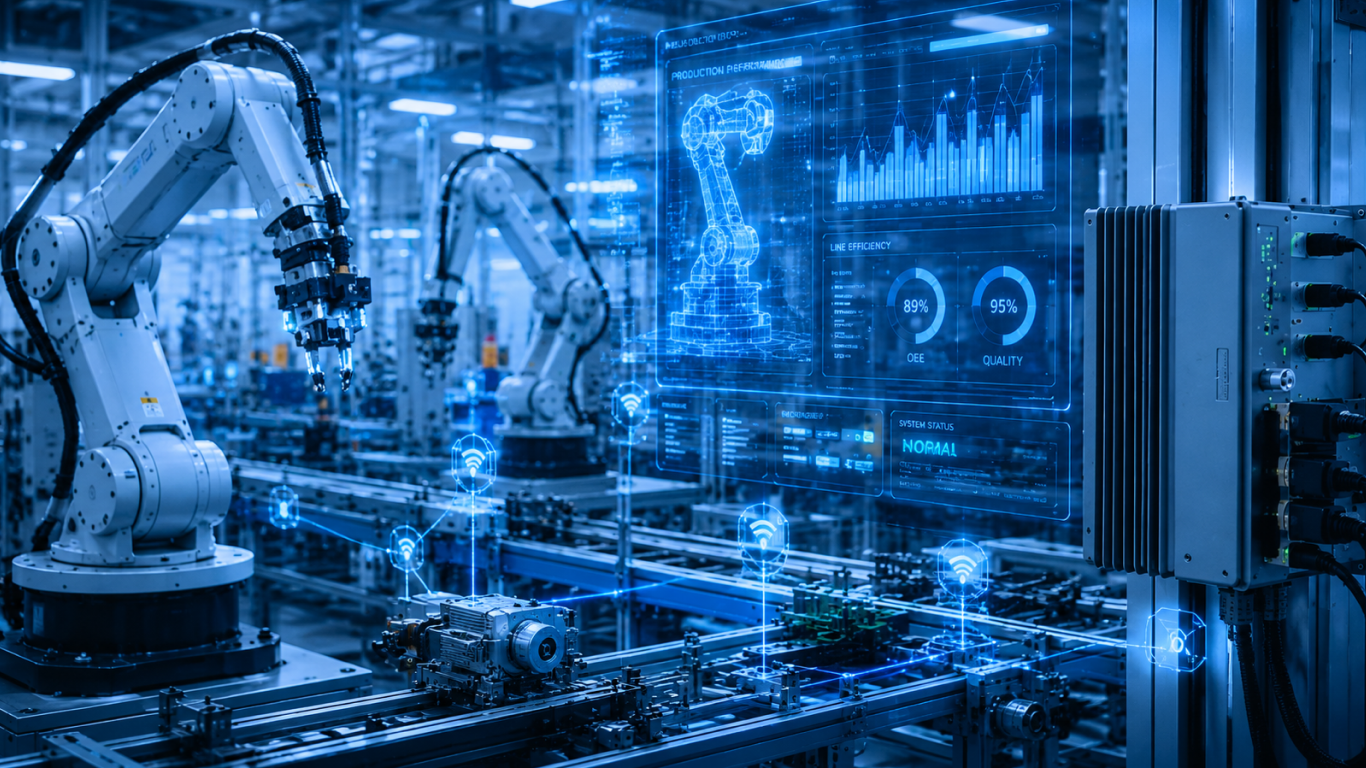
The transition to Industry 4.0 has fueled the need for interconnected systems, or smart factories, where machines, robots, and human workers work collaboratively. This shift is characterized by real-time data exchange, cloud computing, and big data analytics, helping businesses enhance decision-making processes and optimize their operations. As a result, smart factories are no longer a futuristic vision, but a practical reality that manufacturers are increasingly adopting worldwide.
3. Rising Labor Costs and Skills Shortages
In many regions, the cost of labor is rising, and industries are struggling with a shortage of skilled workers. Automation offers a solution by reducing dependency on human labor while improving precision, safety, and consistency. In sectors such as automotive, electronics, and food processing, automation not only increases efficiency but also enhances operational stability, which is crucial for meeting global demands.
4. Government Initiatives and Smart Manufacturing Policies
Government-driven initiatives are playing a key role in accelerating industrial automation. National policies supporting digital transformation, energy efficiency, and smart manufacturing are driving investments into automation technologies. For example, "Made in China 2025" and Vision 2030 in Saudi Arabia focus on enhancing advanced manufacturing, thereby increasing the adoption of robotics, AI, and IoT systems.
Regional Market Trends
United States: Innovation and Industry Leadership
The U.S. remains a leader in industrial automation, with a strong manufacturing base and early adoption of cutting-edge technologies. AI, IoT, and machine learning are widely integrated into manufacturing processes, especially in sectors like pharmaceuticals and healthcare, where efficiency and precision are crucial. Investments in smart manufacturing infrastructure further support this market growth.
Germany: A Hub for Engineering and Industry 4.0
Germany has long been at the forefront of industrial automation, driven by a commitment to Industry 4.0 and its engineering expertise. Industries such as automotive, pharmaceuticals, and machinery heavily rely on DCS, PLCs, and robotics to meet their precision requirements. Germany's government has invested heavily in digital infrastructure, providing a strong foundation for automation's continued growth.
China: Scaling Smart Manufacturing
As the world’s largest manufacturer, China is quickly modernizing its production systems through robotics, AI, and IoT technologies. Government initiatives such as Made in China 2025 are driving the integration of smart manufacturing in industries like electronics, automotive, and textiles. Rising labor costs and the demand for higher-quality products are accelerating automation adoption across the country.
Industrial Automation Systems by Component and Application
By System Type
-
Distributed Control Systems (DCS): Used predominantly in process industries like oil & gas, chemicals, and power generation, DCS provide centralized control.
-
Programmable Logic Controllers (PLC): Essential for discrete manufacturing, PLCs offer machine-level control for automated operations.
-
Supervisory Control and Data Acquisition (SCADA): SCADA systems enable real-time data monitoring and remote control across operations.
By End-Use Industry
-
Manufacturing
-
Food & Beverage
-
Healthcare
-
Automotive
-
Oil & Gas
-
Energy & Utilities
These industries have fully embraced automation technologies, using them to streamline operations and enhance performance.
Competitive Landscape: Key Industry Players
The IACS market is highly competitive, with a mix of traditional and emerging players. Leading companies include:
-
Siemens AG
-
Rockwell Automation
-
Honeywell International
-
Schneider Electric
These companies are driving innovation by focusing on software integration, scalability, and industry-specific solutions to enhance their product offerings.
Recent Developments:
-
Rockwell Automation launched its FactoryTalk Analytics Framework to unify industrial data across enterprise operations.
-
Siemens introduced the MindSphere Industrial IoT platform, offering cloud-based industrial data management.
-
Schneider Electric acquired AVEVA Group to bolster its IACS software portfolio.
Strategic Trends Shaping the Future
1. Digital Twins and Simulation
A growing number of manufacturers are adopting digital twins—virtual replicas of physical assets used to simulate performance and optimize operations. This technology enhances predictive maintenance and speeds up innovation, allowing manufacturers to test new ideas without risk.
2. Cybersecurity Integration
As industrial systems become more interconnected, cybersecurity has become a critical concern. Leading automation vendors are embedding security features directly into IACS solutions, ensuring that these systems remain secure against cyber threats.
3. Sustainability and Energy Efficiency
As sustainability goals and regulatory pressures increase, companies are leveraging automation to reduce energy consumption, lower waste, and achieve sustainable manufacturing practices. IACS solutions play a central role in helping industries meet these objectives.
Conclusion: The Path Ahead for Industrial Automation
The future of industrial automation lies in its ability to integrate AI, IoT, machine learning, and cloud technologies. The IACS market is expected to continue growing, with the demand for smart manufacturing, predictive maintenance, and real-time control driving future developments.
Companies that invest in advanced control systems and automation technologies today will position themselves for success in the future, enabling them to remain competitive and adaptable in an ever-changing industrial landscape.
- Posted in:
- control systems
- DCS
- factory automation
- Industrial Automation
- PLC