Singapore’s National AI Strategy: Scaling Artificial Intelligence Across Industry and Infrastructure
- 〡
- 〡 by WUPAMBO

National AI Strategy Driving Digital Transformation
Singapore plans to expand artificial intelligence adoption across key industries. The government wants to move beyond small pilot projects.
According to Lawrence Wong, the country must scale AI deployment nationally. Therefore, a new inter-ministerial committee will coordinate major AI initiatives.
These initiatives focus on four sectors: advanced manufacturing, connectivity and logistics, finance, and healthcare. The goal is to strengthen Singapore’s economic competitiveness.
Moreover, large-scale integration could unlock productivity gains across multiple industries.
Why Pilot AI Projects Are Not Enough
Many organizations already experiment with AI technologies. However, most projects remain isolated experiments.
For example, some factories deploy predictive maintenance for a single machine. Yet the system rarely connects with production scheduling or supply chain management.
As a result, businesses capture only a fraction of AI’s potential value.
Industry analysts argue that real transformation requires integration across systems, processes, and data platforms. This integration allows AI insights to influence real-time operational decisions.
AI in Advanced Manufacturing and Industrial Automation
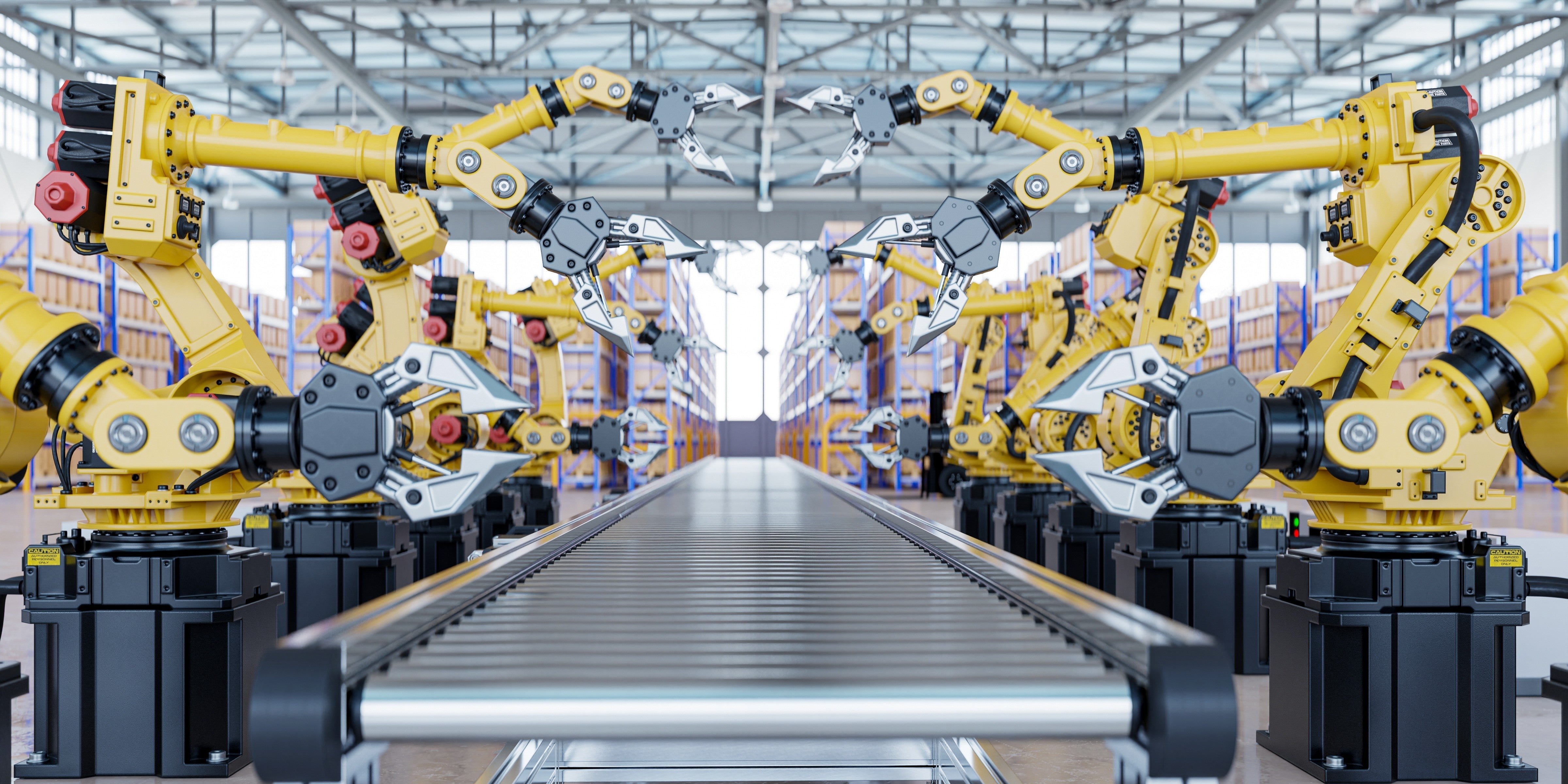
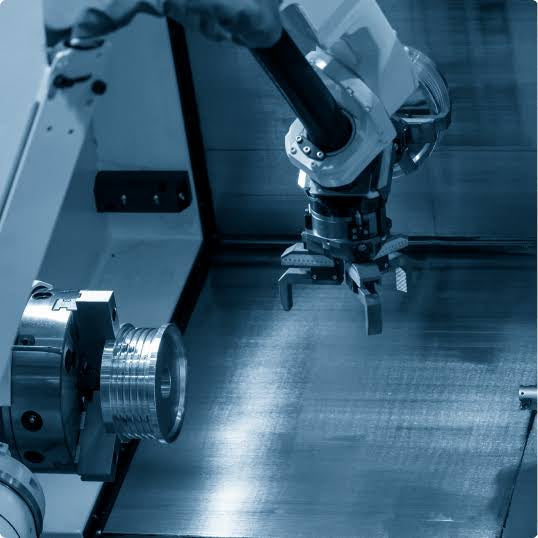
The advanced manufacturing sector already uses AI in several ways. Predictive maintenance remains one of the most common applications.
Sensors monitor vibration, temperature, and machine performance. AI models analyze this data to predict equipment failures.
For example, semiconductor manufacturer GlobalFoundries applies AI in its 300mm fabrication plant in Singapore.
However, many deployments remain limited to individual production lines.
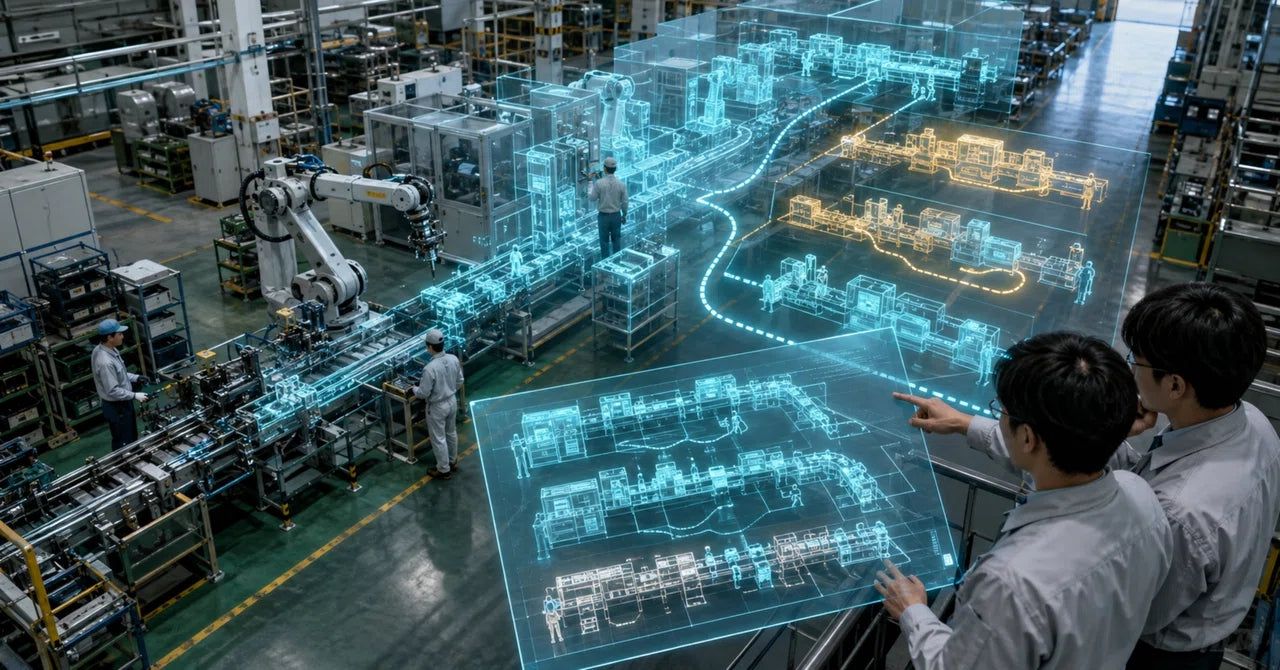
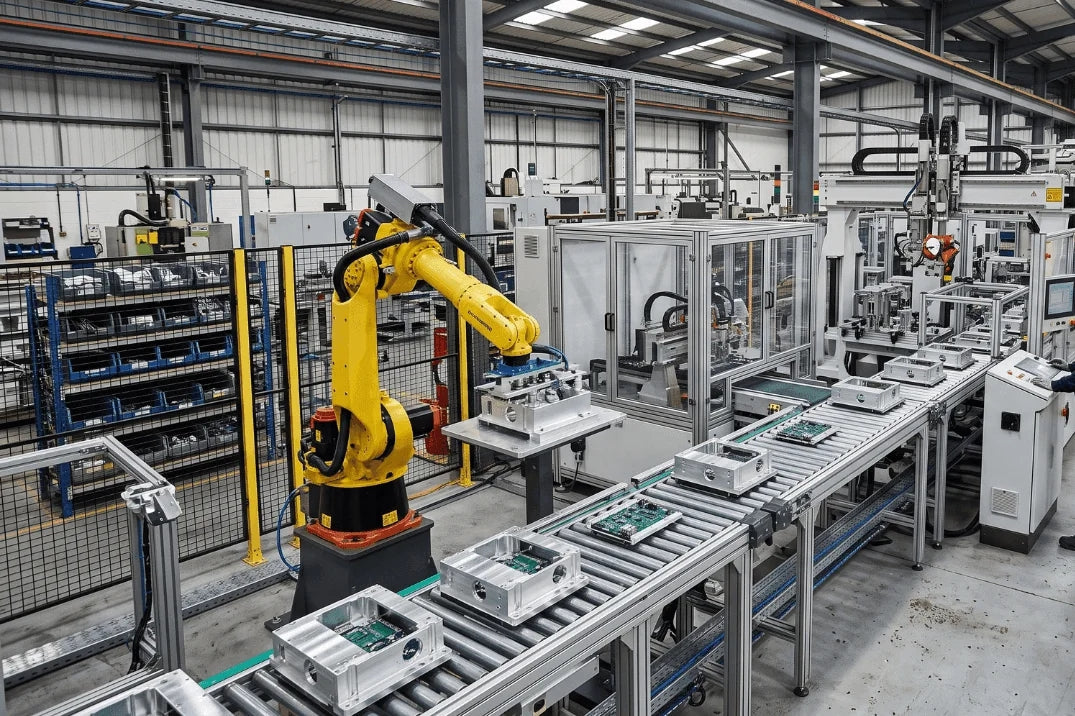
To scale AI effectively, manufacturers must connect predictive maintenance systems with industrial automation platforms, such as PLC, DCS, and factory scheduling software.
If a machine requires maintenance, the system could automatically shift production to another plant. At the same time, the procurement system could order replacement parts.
This integration represents the next step for smart manufacturing and factory automation.
AI Innovation Supported by National Research Programs
Singapore also supports AI development through public research initiatives.
For instance, A*STAR collaborates with the Ministry of Trade and Industry to operate the Sectoral AI Centre of Excellence for Manufacturing.
The centre helps companies adopt AI for product design, predictive maintenance, and industrial automation.
Several global firms participate in this program, including Coca-Cola and Philips.
These collaborations aim to accelerate the adoption of AI across manufacturing ecosystems.
AI in Logistics and Smart Supply Chains
AI also plays a growing role in connectivity and logistics operations.
Companies use AI models to optimize delivery routes and forecast demand. These technologies help reduce transportation costs and improve delivery efficiency.
For example, global logistics providers such as DHL Express and FedEx apply AI for route planning and demand forecasting.
However, many systems still operate independently.
A route prediction system may estimate delivery time accurately. Yet it might not connect with warehouse operations or customer communication platforms.
Therefore, logistics companies must integrate these systems to achieve full automation.
Real-Time Logistics Intelligence Through AI Integration
A fully integrated logistics system could transform supply chain operations.
For instance, AI could combine real-time traffic data with fleet management systems. If an accident occurs, the system could automatically reroute delivery vehicles.
Moreover, customers could receive automatic notifications about potential delays.
AI could also coordinate warehouses, ports, and shipping companies through shared data platforms.
Such integration would enable automated decisions about cargo packing, shipment planning, and customs documentation.
However, achieving this vision requires common data standards and regulatory alignment across borders.
AI Maturity in the Financial Services Sector
Among the four sectors, the financial industry shows the highest level of AI adoption.
Banks possess large volumes of structured transaction data. In addition, regulatory frameworks encourage strong governance and risk management.
For example, Singapore banks use AI to detect fraud, personalize financial services, and automate compliance reporting.
One example is United Overseas Bank, which integrates AI into its digital banking services.
Another example is OCBC Bank. The bank reports that millions of operational decisions occur daily using AI models.
These decisions include fraud detection and personalized financial offers.
Expanding AI Across the Financial Customer Journey
Despite strong adoption, financial institutions still see opportunities to expand AI usage.
AI systems could automate the entire customer journey. For instance, a model could analyze spending habits and credit history.
Based on this analysis, the system could pre-approve a mortgage offer.
If the customer accepts the offer, the application form could automatically populate required information.
Furthermore, AI could monitor repayment behavior to detect early signs of financial stress.
However, transparency remains essential. Financial institutions must explain how AI systems reach decisions.
Customers also need clear disclosure when algorithms influence financial outcomes.
Artificial Intelligence in Healthcare Systems
Healthcare organizations increasingly explore AI applications as well.
Hospitals in Singapore use AI to analyze medical images and detect abnormalities.
For example, diagnostic tools can identify heart or lung issues from chest X-rays.
Another application involves AI-powered chatbots that explain medical reports in simpler language.
These systems help patients better understand laboratory results and treatment information.
Challenges in Scaling AI Across Healthcare Networks
Healthcare AI faces stricter regulatory and ethical requirements.
Medical data requires strong privacy protection. In addition, clinical workflows are complex and difficult to standardize.
Many hospitals therefore implement AI in isolated tools rather than fully integrated systems.
However, future integration could unlock significant benefits.
For example, AI could automatically trigger specialist referrals when a patient record changes. It could also schedule urgent tests or coordinate hospital discharge planning.
Such automation could improve patient care while reducing administrative workload.
National Health Data Platforms Supporting AI Innovation
Singapore recently strengthened its digital healthcare infrastructure.
The government introduced legislation requiring healthcare providers to contribute patient information to the National Electronic Health Record system.
This national data repository allows healthcare professionals to access patient history across institutions.
In addition, anonymized datasets may support AI research and predictive healthcare models.
However, medical AI must achieve consistently high accuracy before large-scale automation becomes acceptable.
The stakes remain extremely high because errors directly affect patient safety.
Author Perspective: AI Integration Will Define the Next Digital Economy
Singapore’s AI strategy reflects a broader global trend.
Many companies adopt AI tools. However, true transformation occurs only when organizations integrate AI across entire workflows.
In manufacturing, this means connecting AI with industrial automation systems, including PLC and DCS platforms.
In logistics, it requires real-time coordination across supply chain partners.
In finance and healthcare, transparency and regulatory governance remain critical.
Therefore, the next phase of AI development will focus less on algorithms and more on system integration and data infrastructure.
Practical Implementation Scenario for Industrial Automation
Consider a smart manufacturing facility implementing AI-driven operations.
The plant may deploy AI sensors for predictive maintenance on production equipment.
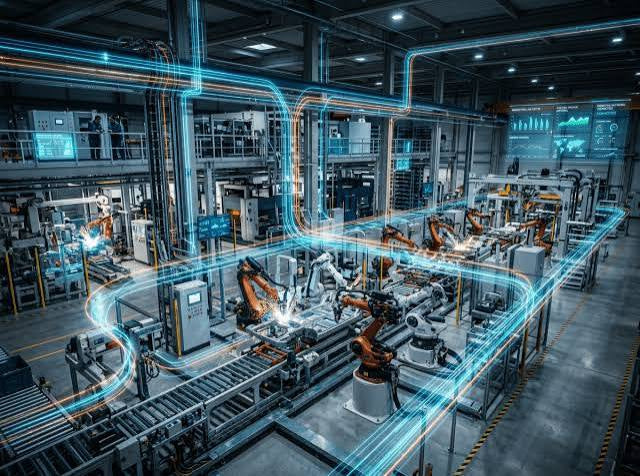
The AI system connects with the factory’s industrial control systems, including PLC controllers and MES platforms.
If a machine shows early failure signs, the system automatically adjusts production schedules.
Meanwhile, the supply chain platform orders replacement components.
This integrated architecture creates a truly intelligent factory automation ecosystem.
Conclusion
Singapore’s national AI strategy highlights the importance of scaling artificial intelligence beyond isolated projects.
Advanced manufacturing, logistics, finance, and healthcare already use AI technologies.
However, real transformation requires integration across data platforms, workflows, and decision systems.
By combining AI with industrial automation, digital infrastructure, and regulatory frameworks, organizations can unlock significant productivity gains and innovation.
- Posted in:
- factory automation technology
- industrial automation AI
- industry 4.0 technology
- PLC and DCS automation