Honeywell International’s Strategic Split: How the Aerospace and Automation Overhaul Could Redefine Its Future
- 〡
- 〡 by WUPAMBO
Introduction: A Defining Moment for Honeywell
Honeywell International (HON) is entering one of the most transformative periods in its modern history. The company has announced an ambitious portfolio overhaul involving major asset sales, targeted spin-offs, and the separation of its aerospace and automation divisions.
This move follows strong quarterly results marked by double-digit organic revenue growth and rising adjusted earnings. However, beyond short-term performance, this restructuring signals a strategic pivot toward a leaner, more innovation-driven Honeywell built around industrial automation, aerospace, and energy transition technologies.
Portfolio Restructuring and Strategic Intent
Honeywell’s decision to decouple its aerospace and automation businesses reflects a broader trend across the industrial automation sector. Global manufacturers are focusing on agility, digitalization, and focused capital allocation. By creating independent operational entities, Honeywell aims to sharpen strategic accountability and attract investors seeking exposure to either aerospace growth or industrial control system modernization.
Moreover, the spin-off could unlock hidden value by allowing each business to pursue tailored growth strategies—one driven by advanced avionics and propulsion systems, the other by factory automation, process control, and digital transformation.
The Investment Narrative: Opportunity Meets Execution Risk
For investors, the central question is not whether Honeywell can grow—but whether it can execute its complex multi-year restructuring without eroding margins. The company’s recent rally, aided by upbeat analyst sentiment, reflects confidence in its management’s ability to deliver.
Goldman Sachs, for instance, recently raised its price target for Honeywell to US $262, signaling optimism about the portfolio realignment. Yet, successful separation requires flawless coordination—especially when integrating acquisitions like Johnson Matthey’s Catalyst Technologies—to ensure continuity across production, supply chain, and R&D operations.
Industrial Automation as the Core Growth Engine
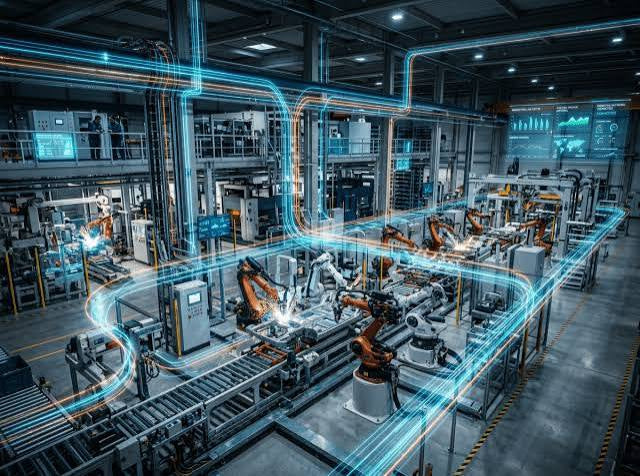
Within the broader control systems ecosystem, Honeywell’s automation arm remains vital. It provides PLC, DCS, and SCADA solutions that anchor critical industries such as oil and gas, pharmaceuticals, and advanced manufacturing.
As the world accelerates toward Industry 4.0, Honeywell’s automation business is uniquely positioned to capitalize on the convergence of operational technology (OT) and information technology (IT). This alignment enables data-driven decision-making and predictive maintenance—cornerstones of future-proof industrial infrastructure.
From a strategic viewpoint, separating this unit may unlock sharper focus on software, cybersecurity, and cloud-connected factory automation systems that compete directly with peers like Siemens and ABB.
Aerospace: Streamlining a Legacy Powerhouse
Honeywell’s aerospace division, a long-time profit leader, will continue to benefit from strong commercial aviation recovery and defense modernization. The separation allows management to pursue distinct innovation cycles, focusing on avionics, AI-enabled flight systems, and sustainable aviation technologies such as hybrid propulsion.
For investors, this division represents a stable cash-flow base with potential upside from the growing demand for autonomous air mobility and digital flight analytics—areas where Honeywell already maintains significant technical expertise.
Financial Outlook and Market Valuation
According to recent projections, Honeywell targets approximately $45.8 billion in revenue and $7.5 billion in earnings by 2028. That translates to a 4.6 % annual revenue growth rate—an achievable goal if the restructuring enhances efficiency.
Analysts currently estimate Honeywell’s fair value near $244 per share, roughly aligned with its trading range. However, should separation synergies materialize sooner than expected, valuation upside could emerge through higher margins and reduced operational complexity.
Risks: Complexity and Market Sensitivity
Despite optimism, investors should not underestimate execution risks. Multi-entity breakups often introduce transitional costs, supply-chain disruption, and employee realignment challenges. Furthermore, softer industrial demand or unexpected regulatory delays could affect post-separation performance.
Therefore, monitoring Honeywell’s progress in cost control, capital expenditure discipline, and segment profitability will be critical over the next 24 months.
Author’s Perspective: Long-Term Value in Structural Focus
In my professional view, Honeywell’s transformation aligns with the global industrial trend toward decentralized automation and digital resilience. The split is not merely administrative—it represents a philosophical shift toward agility and sharper operational identity.
If executed effectively, the aerospace unit could evolve into a high-margin technology enterprise, while the automation division may become a leading platform in connected industries and smart infrastructure. However, timing and precision will determine whether this strategic gamble enhances shareholder value or introduces short-term volatility.
Application Scenario: Honeywell’s Future in Smart Industry
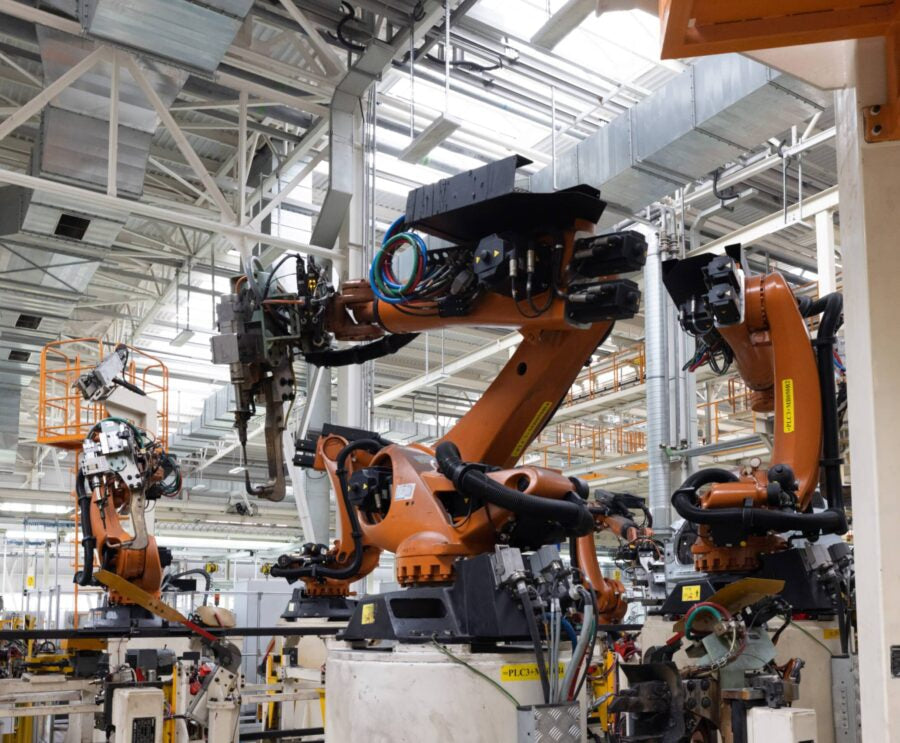
Honeywell’s automation technologies already underpin advanced process control systems in refineries, energy plants, and manufacturing facilities.
Following the split, we can expect:
-
Expanded focus on cloud-native control platforms and AI-driven maintenance tools.
-
Greater integration with edge computing and cyber-secure industrial networks.
-
New partnerships in robotics, digital twins, and autonomous plant management.
These initiatives will reinforce Honeywell’s presence as a critical enabler of the next generation of industrial intelligence.
- Posted in:
- aerospace technology
- control systems
- DCS
- factory automation
- Honeywell International
- Industry 4.0
- PLC