Enterprise Resource Planning in Industrial Automation: Connecting the Factory Floor to Executive Strategy
- 〡
- 〡 by WUPAMBO
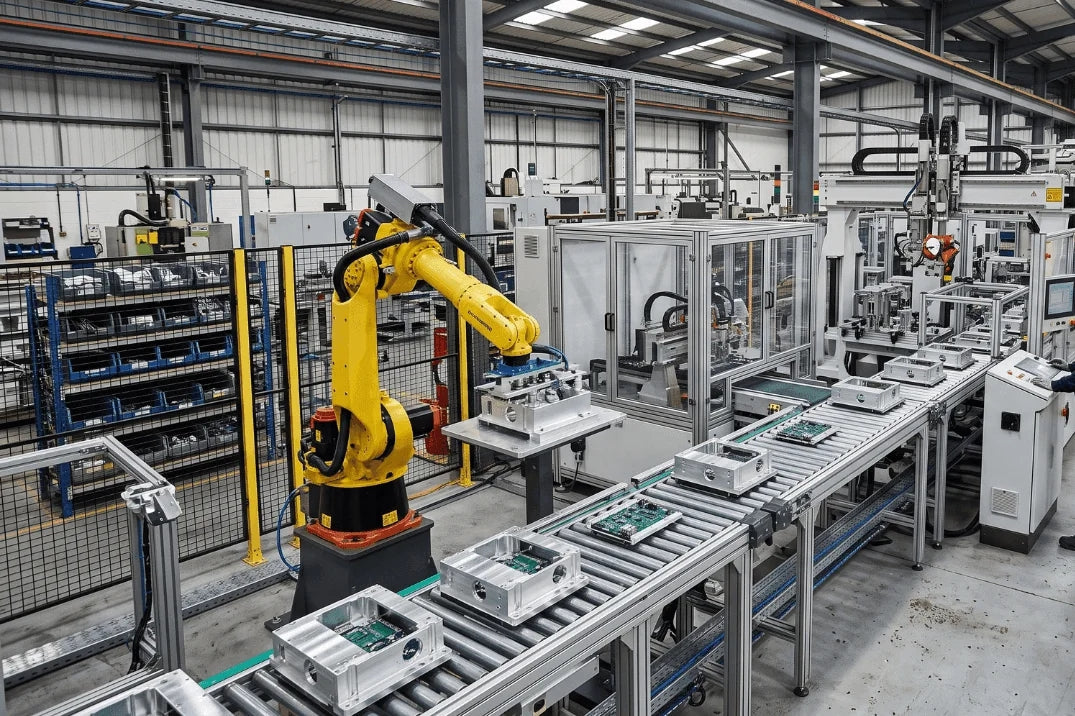
Industrial automation relies on precise coordination between field devices and high-level enterprise software. Modern manufacturing facilities organize these operations using the classic five-level automation pyramid (L0 to L4). Enterprise Resource Planning (ERP) operates at the apex (Level 4), serving as the digital backbone that unites plant floor production data with executive decision-making.
The Role of Level 4 in Modern Automation Architectures
The automation pyramid classifies shop-floor devices—such as sensors, actuators, and Programmable Logic Controllers (PLCs)—at Levels 0 through 2. Level 3 handles Manufacturing Execution Systems (MES) for detailed work-in-progress tracking. Level 4 ERP systems integrate these operational levels directly into enterprise-wide resource allocation, supply chain logistics, and strategic planning platforms.
Eliminating Information Silos Across Plant Departments
In traditional manufacturing plants, departments like procurement, finance, maintenance, and sales often run on isolated systems. Manual communication between these groups creates dangerous bottlenecks and leads to costly inventory errors. Implementing a centralized ERP platform establishes a single source of truth across all operational units, dramatically speeding up information transfer and reducing overhead.
Real-Time Inventory Control and Tracking Precision
Material management directly dictates overall equipment effectiveness (OEE) and plant profitability. ERP platforms track raw materials, finished goods, and spare parts in real time across warehouse facilities. Advanced tracking prevents stockouts during peak production while eliminating dark inventory that quietly drains operational capital.
Automated Alerts and Customer Engagement Dynamics
Modern ERP platforms continuously track customer purchasing cycles and material consumption rates. The software automatically issues low-stock notifications and reorder triggers directly to clients before critical shortages happen. This automated pipeline builds customer trust and ensures steady supply flow across complex distribution networks.
Streamlining Corporate Financials and Regulatory Compliance
Industrial facilities must follow strict accounting standards, tax codes, and regional financial regulations. ERP platforms automatically aggregate cross-departmental cost data, including energy usage, raw material inputs, and labor hours. This automated tracking simplifies audit preparation, optimizes cash flow management, and provides clear visibility into product margins.
Industry 4.0 Integration and Emerging ERP Trends
In the Industry 4.0 era, ERP systems no longer wait for manual data input at the end of a shift. Modern control systems utilize Industrial Internet of Things (IIoT) gateways and MQTT protocols to send telemetry directly from PLCs and DCS networks to the cloud ERP. This real-time visibility allows plant executives to predict equipment maintenance needs and adjust production schedules dynamically based on global market demand.
Real-World Application Scenario: Smart Factory Integration
Consider an automotive component manufacturing plant running automated assembly lines controlled by Siemens S7-1500 PLCs and a Distributed Control System (DCS).
- Trigger: An automated vision inspection camera flags a sudden spike in part rejections caused by a defective raw aluminum batch.
- MES Execution: The Level 3 MES flags the batch and reroutes the active assembly queue to an alternative cell to prevent downtime.
- ERP Action: The Level 4 ERP system receives real-time telemetry from the MES. It automatically generates a vendor return authorization for the defective batch, places an urgent purchase order for fresh stock via API, and updates the customer delivery timeline without human intervention.
Key Technical Takeaways
- ERP Platform Standard: Level 4 enterprise software orchestrating high-level supply chain, finance, and logistics operations.
- Core Automation Value: Seamless bridge connecting shop-floor physical processes directly to enterprise business strategy.
- Top Industry Platforms: SAP S/4HANA, Microsoft Dynamics 365, Oracle ERP Cloud, NetSuite, Odoo.
About the Author
Zhang Wei is a Senior Systems Integration Architect and Industrial Automation Specialist with over 15 years of hands-on experience across process and discrete manufacturing sectors. His technical focus centers on PLC/DCS control architectures, fieldbus networks, and seamless IT/OT integration for Industry 4.0 applications.
- Posted in:
- automation pyramid L4
- ERP in manufacturing
- factory automation
- Industry 4.0
- MES vs ERP
- PLC DCS integration
- smart factory logistics