










Product Details
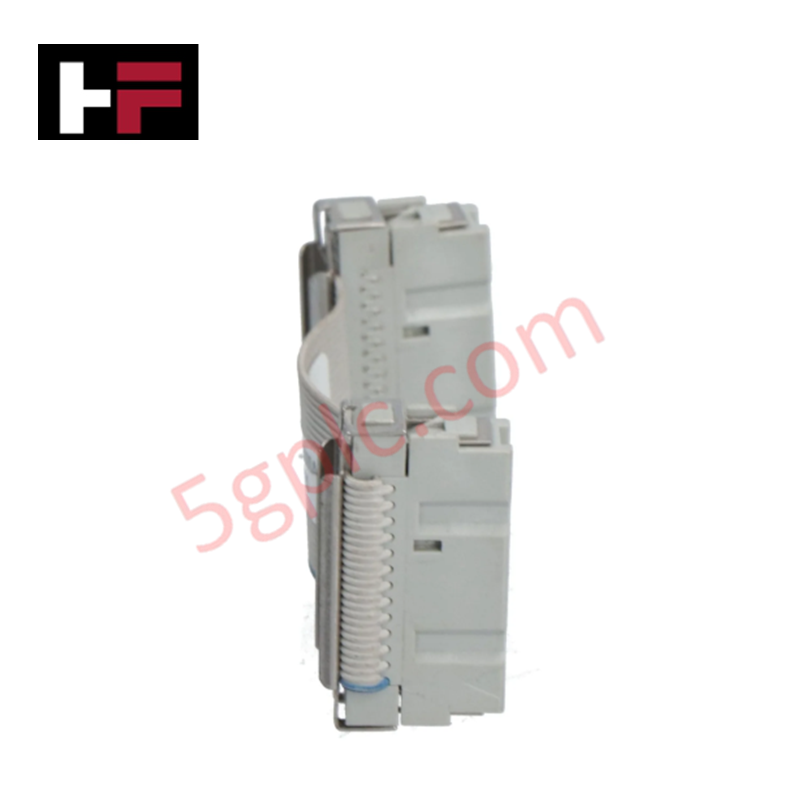
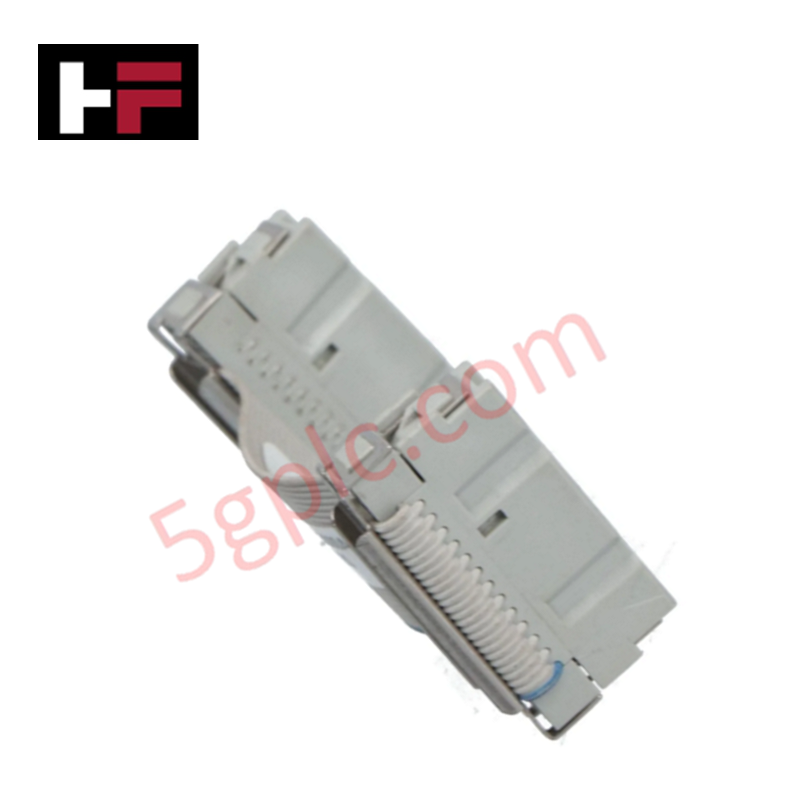
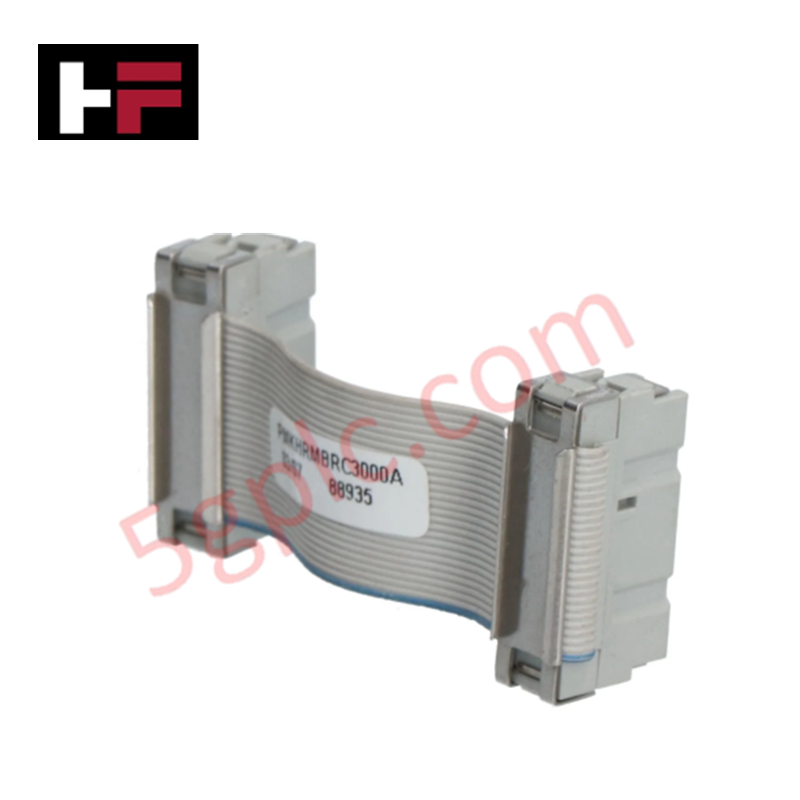
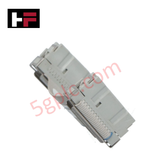
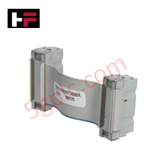
The ABB PMKHRMBRC3000B, also cataloged as the PMKHRMBRC3000B Redundancy Cable, operates as a dedicated hardware component for dual-node tracking synchronization within Bailey Infi 90 systems.
Configured for backup connection maintenance in vertical mounting orientations, the ABB PMKHRMBRC3000B (PMKHRMBRC3000B Redundancy Cable) provides direct physical/electrical execution.
Hardware Specifications
| Parameter | Specification |
|---|---|
| Model | PMKHRMBRC3000B |
| Brand | ABB (Bailey Infi 90 Series) |
| Origin | USA / Europe baseline profiles |
| Weight | 0.15 kg (Standard assembly mass) |
| Dimensions | 200 mm x 20 mm x 3 mm |
| Operating Temp | -20 to +70 deg C (Industrial infrastructure norms) |
| Power Consumption | 0 W (Passive conductor array) |
| Product Type | Prefabricated Cables |
| Module Compatibility | Dedicated interface for NPM22 module assemblies |
| Environmental Scope | Not within the scope of WEEE |
Profinet / EtherNet/IP Deterministic Networks and I/O Density Scaling
The conductor trace integrity within the PMKHRMBRC3000B configuration handles high-speed matrix syncing across redundant hardware pairs. This parallel pathway isolates tracking signals, ensuring that active-to-standby status synchronization does not diminish backplane bus communication velocity indexes. When operating adjacent to modern Profinet / EtherNet/IP deterministic networks, this cable maintains real-time parameter validation parameters without introducing scan clock distortion. The passive inter-module link retains absolute firmware flash compatibility across standard Bailey controller chassis configurations, allowing seamless unit failover switches while supporting continuous local I/O density scaling.
Frequently Asked Questions
Q: Can the PMKHRMBRC3000B redundancy cable be extracted while the primary NPM22 module is executing active control loops?
A: No. Disconnecting the link wire array while the system is powered drops the secondary tracking channel. This immediately causes a redundancy fault state, limits hot-swap protection capabilities, and can trigger diagnostic errors in the primary processor module.
Q: How does this cable maintain signal isolation margins across the 200 mm run?
A: The conductor architecture features internal cross-talk suppression and physical shielding layers embedded into the molded jacket. This protection limits noise induction from surrounding backplane power pins and high-frequency card components.
Q: Are there software configuration steps needed to assign addresses to this cable assembly?
A: No. The PMKHRMBRC3000B is a passive electrical connection. Hardware status sensing is performed automatically by the integrated logic circuits on the NPM22 modules when they detect the termination block pins.
Field Installation Guidelines
- Module Connector Alignment: Insert the cable terminations vertically into the redundancy ports of the adjacent NPM22 modules. Confirm that the latching connectors seat completely to prevent vibration-induced contact separation.
- Enclosure Layout Limitations: Ensure the cable is deployed within the standard vertical layout envelope specified for the 200 mm structural length. Do not tightly pull or twist the cable assembly.
- Shielding Track Continuity: Verify that the cable outer grounding tabs engage securely with the card sub-chassis frame to establish a low-impedance path to the cabinet earth busbar.
- Wiring Segment Separation: Keep the redundancy link pathway separate from adjacent high-voltage AC lines or motor actuator circuits to block electromagnetic noise.
Additional Information
- 100% Genuine Parts: All products are original and authentic, ensuring reliable industrial performance.
- 30-Day Refund Guarantee: Return any in-stock item within 30 days in original, unopened packaging for a full refund (excluding shipping and fees).
- 12-Month Warranty: Covers defects in materials or workmanship; excludes misuse, normal wear, or unauthorized modifications.
- Worldwide Shipping: We ship via USPS, UPS, FedEx, and DHL. Delivery times vary by country and may be subject to customs or import fees.
- Support & Contact: Technical and warranty assistance is available anytime. Contact us here: Contact.
- Purchase Guidance: Check product specifications and compatibility carefully before ordering to ensure proper application.






Tech & Buying Guide

Demystifying the DDE Protocol in Legacy Industrial Automation Systems
Modern control systems rely heavily on seamless interprocess communication to exchange operational data between software programs. Microsoft first introduced the Dynamic Data Exchange (DDE) protocol in 1987 to enable real-time data sharing. In factory automation, DDE served as an early bridge between control software and Windows desktop applications. Therefore, understanding DDE mechanics provides crucial insights into how legacy industrial networks established software-level connectivity.

Demystifying CPU Communication Ports in Siemens PLC Architectures
Industrial automation relies heavily on robust data exchange between devices. Without seamless connectivity, field instruments, network switches, human-machine interfaces, and programmable logic controllers cannot coordinate effectively. Therefore, understanding the various CPU communication ports available in Siemens hardware ensures efficient factory automation design and seamless system integration.

Mastering the Siemens PLC Scan Cycle: How the CPU Executes Automation Programs
Industrial automation relies heavily on programmable logic controllers (PLCs) to manage complex manufacturing processes. Many engineers dive straight into programming without mastering the underlying architecture. However, understanding how a PLC CPU executes a program ensures reliable system design. Therefore, mastering the scan cycle optimizes both performance and troubleshooting in modern control systems.