










Product Details
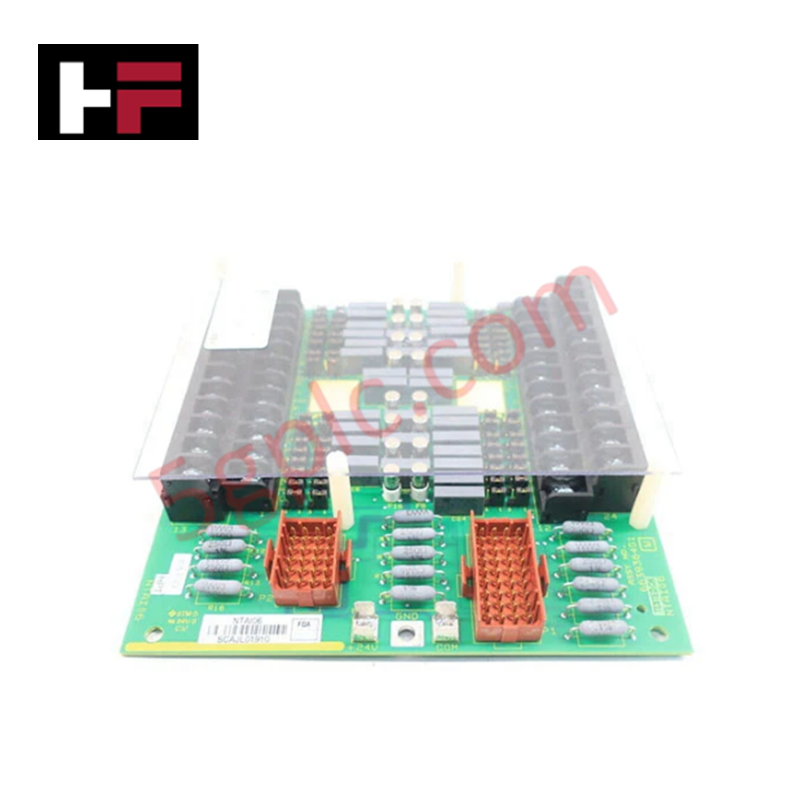
The ABB NTA16-A, also cataloged as the NTA16-A Medium-Voltage Vacuum Circuit Breaker, operates as a dedicated hardware component for high-current fault interruption and electrical circuit isolation within medium-voltage distribution networks.
Hardware Specifications
| Parameter | Specification |
|---|---|
| Model | NTA16-A |
| Brand | ABB |
| Origin | Switzerland |
| Weight | 500 g |
| Dimensions | 1200 mm x 800 mm x 500 mm |
| Operating Temp | -25 to +40 deg C standard industrial range |
| Power Consumption | Dependent on motor charging and trip/close coil actuation |
| Voltage Rating | 12 kV |
| Current Rating | 1600 A |
| Interrupting Rating | 40 kA |
| Operating Mechanism | Spring-operated |
| Closing Time | Less than 3 cycles |
| Trip Time | Less than 1 cycle |
| Interruption Medium | Vacuum |
Profinet / EtherNet/IP Deterministic Networks
When integrated with digital control interfaces, the ABB NTA16-A relays auxiliary contact states, spring charge signals, and trip alarms to supervisory systems across Profinet / EtherNet/IP deterministic networks. This continuous data streaming tracks opening and closing mechanical propagation times, allowing the central logic controller to detect synchronization discrepancies. The high-speed network transmission interface supports predictable telemetry throughput times, minimizing latency in supervisory control and data acquisition loops while ensuring that device status parameters correspond accurately with the localized control room database files.
Frequently Asked Questions
Q: How do the trip and close coil circuits maintain communication velocity with industrial controllers during a fault event?
A: The physical trip and close coils operate via direct binary hardware interlocks. Auxiliary contacts echo the physical state back to network gateways, which package the breaker open/close flags into high-priority communication packets to maintain sub-millisecond status update transmission times.
Q: What are the impacts of firmware flash compatibility on the electronic control and protection units connected to this breaker?
A: The internal spring charging motor and manual trip assemblies function independently of any software. However, the microprocessors in accompanying external protection relays require exact firmware version alignment to ensure precise time-stamping of the less than 1 cycle trip sequence data.
Field Installation Guidelines
- Position the 500 g structure using heavy-duty mechanical hoisting apparatus rated specifically for the physical footprint dimensions.
- Align the primary copper draw-out stabs or terminal bars, applying industrial contact grease to ensure uniform current distribution across the 1600 A interface.
- Secure the auxiliary low-voltage control harness, verifying that the physical wiring remains isolated from high-voltage electromagnetic interference paths.
- Verify the integrity of the station ground network connection by bonding the main chassis grounding pad directly to the switchgear earth bus using the specified torque values.
Additional Information
- 100% Genuine Parts: All products are original and authentic, ensuring reliable industrial performance.
- 30-Day Refund Guarantee: Return any in-stock item within 30 days in original, unopened packaging for a full refund (excluding shipping and fees).
- 12-Month Warranty: Covers defects in materials or workmanship; excludes misuse, normal wear, or unauthorized modifications.
- Worldwide Shipping: We ship via USPS, UPS, FedEx, and DHL. Delivery times vary by country and may be subject to customs or import fees.
- Support & Contact: Technical and warranty assistance is available anytime. Contact us here: Contact.
- Purchase Guidance: Check product specifications and compatibility carefully before ordering to ensure proper application.






Tech & Buying Guide

Demystifying the DDE Protocol in Legacy Industrial Automation Systems
Modern control systems rely heavily on seamless interprocess communication to exchange operational data between software programs. Microsoft first introduced the Dynamic Data Exchange (DDE) protocol in 1987 to enable real-time data sharing. In factory automation, DDE served as an early bridge between control software and Windows desktop applications. Therefore, understanding DDE mechanics provides crucial insights into how legacy industrial networks established software-level connectivity.

Demystifying CPU Communication Ports in Siemens PLC Architectures
Industrial automation relies heavily on robust data exchange between devices. Without seamless connectivity, field instruments, network switches, human-machine interfaces, and programmable logic controllers cannot coordinate effectively. Therefore, understanding the various CPU communication ports available in Siemens hardware ensures efficient factory automation design and seamless system integration.

Mastering the Siemens PLC Scan Cycle: How the CPU Executes Automation Programs
Industrial automation relies heavily on programmable logic controllers (PLCs) to manage complex manufacturing processes. Many engineers dive straight into programming without mastering the underlying architecture. However, understanding how a PLC CPU executes a program ensures reliable system design. Therefore, mastering the scan cycle optimizes both performance and troubleshooting in modern control systems.