










Product Details
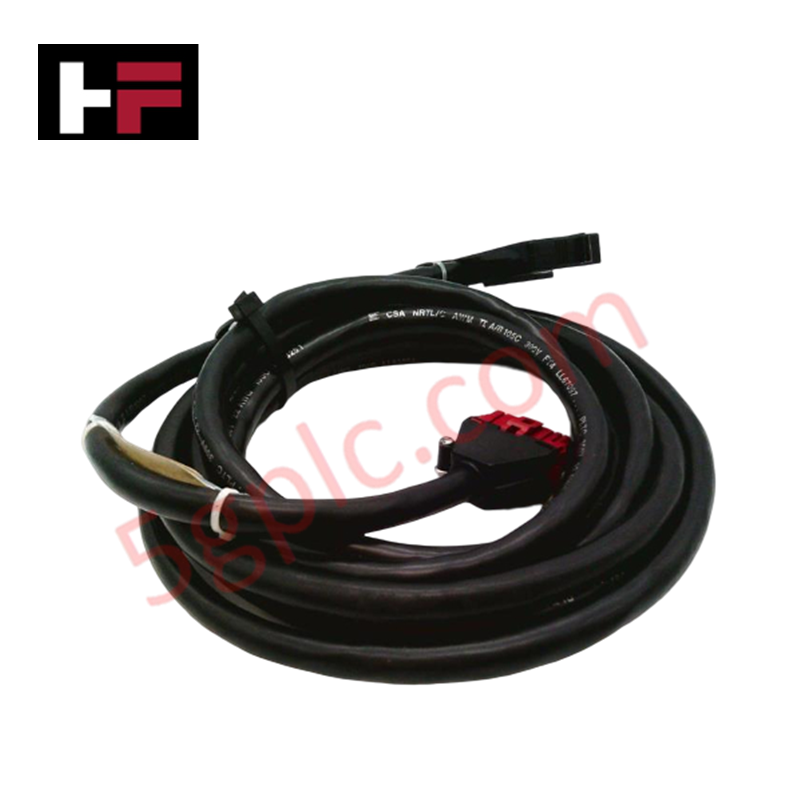
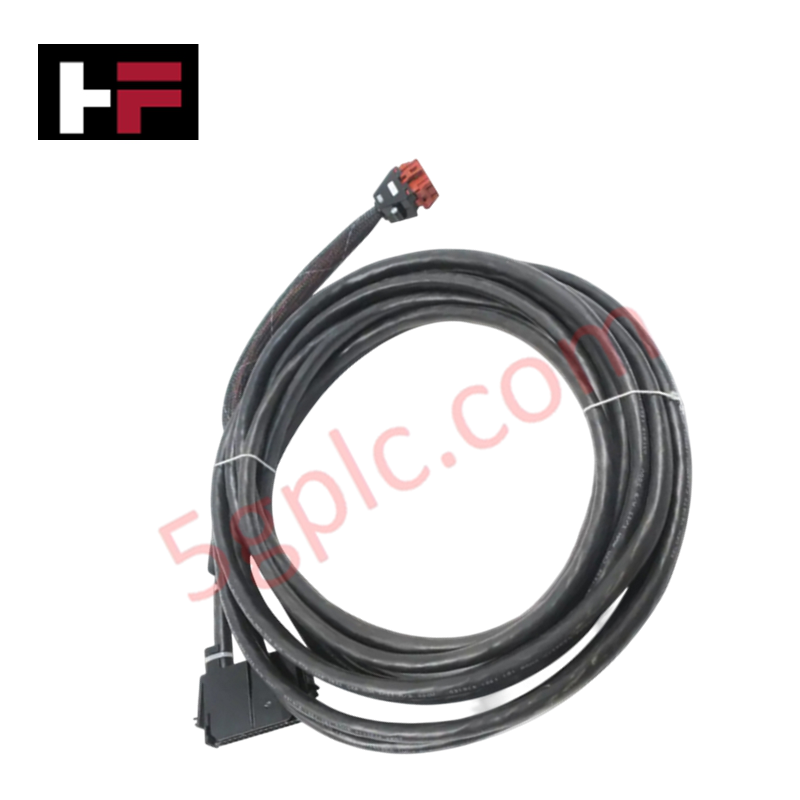
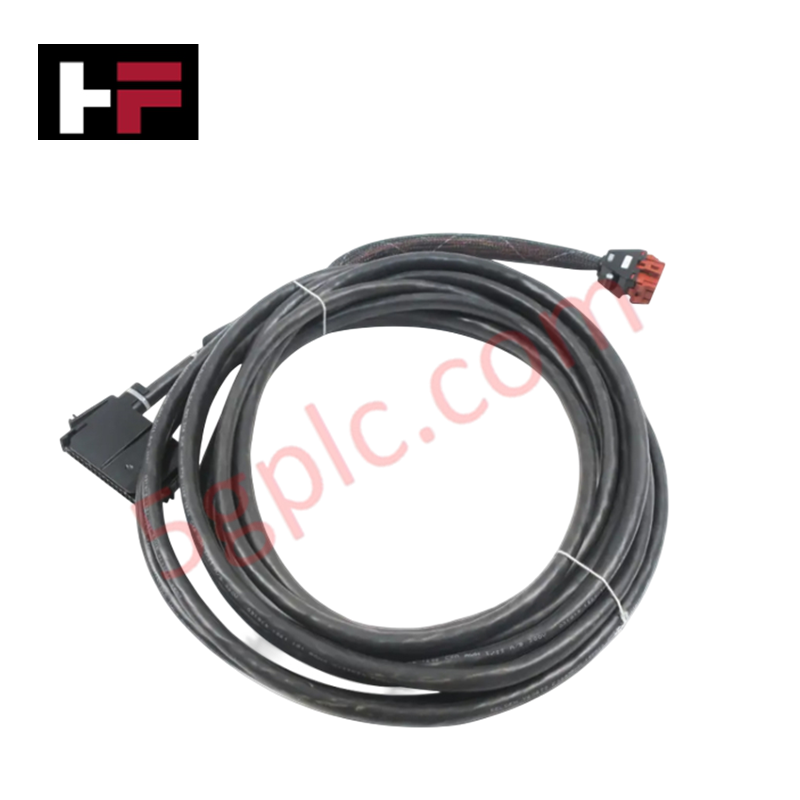
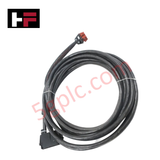
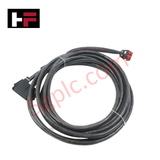
The ABB NKHS03-15 serves as the primary ABB NKHS03 Prefabricated Cable utilized to execute point-to-point electrical signaling across ABB Symphony Plus / Harmony platforms. Configured for connecting IM/SPHSS03/04/05/13 Modules to the NTHS03 Termination Unit, the ABB NKHS03-15 (ABB NKHS03 Prefabricated Cable) provides direct physical/electrical execution of servo valve drive commands and position feedback loops.
Hardware Specifications
| Parameter | Specification |
|---|---|
| Model | NKHS03-15 |
| Brand | ABB |
| Origin | United States |
| Weight | 1.05 kg (Approximate standard nominal weight) |
| Dimensions | 292.1 mm x 317.5 mm x 76.2 mm |
| Operating Temp | 0 to 60 deg C |
| Power Consumption | None (Passive component) |
| Cable Diameter | 0.076 mm (Core conductor subset) |
| Cable Length | 15 ft (4.57 m) |
| Product Type | Prefabricated Cables |
| WEEE Category | Product Not in WEEE Scope |
Firmware Flash Compatibility and I/O Density Scaling
Operating within high-frequency hydraulic servo control loops, the transmission stability of this assembly coordinates directly with host controller processing speeds. Proper execution relies on exact firmware flash compatibility across the connected IM/SPHSS modules to prevent interpolation errors during real-time positioning metrics. The heavy internal shielding suppresses electromagnetic interference during dense I/O density scaling inside the enclosure, ensuring that rapid signal transitions do not corrupt adjacent deterministic backplane networks or local bus communication velocities.
Frequently Asked Questions
Q: Can the NKHS03-15 cable be disconnected or reconnected while the host controller module is under active power?
A: No. Disconnecting the cable while the IM/SPHSS module or NTHS03 termination unit is energized will interrupt the active servo feedback loop, potentially driving the hydraulic actuator to an unsafe state or inducing backplane current spikes. De-energize all associated loop power supplies prior to extraction.
Q: What is the mitigation procedure for data sheets indicating a 0 kg product net weight?
A: The 0 kg value represents an unrecorded technical database placeholder. For physical panel engineering, assume standard nominal copper weight load configurations and install dedicated vertical wireways to ensure the terminal connectors do not bear continuous mechanical tension.
Field Installation Guidelines
- Routing and High-Voltage Separation: Route the signal cable exclusively through low-voltage wireways. Maintain a minimum physical clearance of 100 mm from AC power distribution cables or motor drive leads to eliminate inductive noise coupling.
- Bend Radius Restrictions: Observe strict mechanical handling limitations. The minimum static bend radius must remain above 10 times the outer cable diameter to avoid structural stress or internal wire fracture.
- Shield Termination and Grounding: Ensure the cable shield drain wire is terminated at the single designated master instrument ground bus bar inside the enclosure. Avoid dual-end termination to eliminate potential ground loop currents.
- Mechanical Support and Strain Relief: Secure the cable assembly with industrial zip ties at intervals not exceeding 500 mm. Provide adequate physical strain relief mechanisms adjacent to the module and termination block interfaces to protect the contact pins from vibration.
Additional Information
- 100% Genuine Parts: All products are original and authentic, ensuring reliable industrial performance.
- 30-Day Refund Guarantee: Return any in-stock item within 30 days in original, unopened packaging for a full refund (excluding shipping and fees).
- 12-Month Warranty: Covers defects in materials or workmanship; excludes misuse, normal wear, or unauthorized modifications.
- Worldwide Shipping: We ship via USPS, UPS, FedEx, and DHL. Delivery times vary by country and may be subject to customs or import fees.
- Support & Contact: Technical and warranty assistance is available anytime. Contact us here: Contact.
- Purchase Guidance: Check product specifications and compatibility carefully before ordering to ensure proper application.









Tech & Buying Guide

Demystifying the DDE Protocol in Legacy Industrial Automation Systems
Modern control systems rely heavily on seamless interprocess communication to exchange operational data between software programs. Microsoft first introduced the Dynamic Data Exchange (DDE) protocol in 1987 to enable real-time data sharing. In factory automation, DDE served as an early bridge between control software and Windows desktop applications. Therefore, understanding DDE mechanics provides crucial insights into how legacy industrial networks established software-level connectivity.

Demystifying CPU Communication Ports in Siemens PLC Architectures
Industrial automation relies heavily on robust data exchange between devices. Without seamless connectivity, field instruments, network switches, human-machine interfaces, and programmable logic controllers cannot coordinate effectively. Therefore, understanding the various CPU communication ports available in Siemens hardware ensures efficient factory automation design and seamless system integration.

Mastering the Siemens PLC Scan Cycle: How the CPU Executes Automation Programs
Industrial automation relies heavily on programmable logic controllers (PLCs) to manage complex manufacturing processes. Many engineers dive straight into programming without mastering the underlying architecture. However, understanding how a PLC CPU executes a program ensures reliable system design. Therefore, mastering the scan cycle optimizes both performance and troubleshooting in modern control systems.