










Product Details
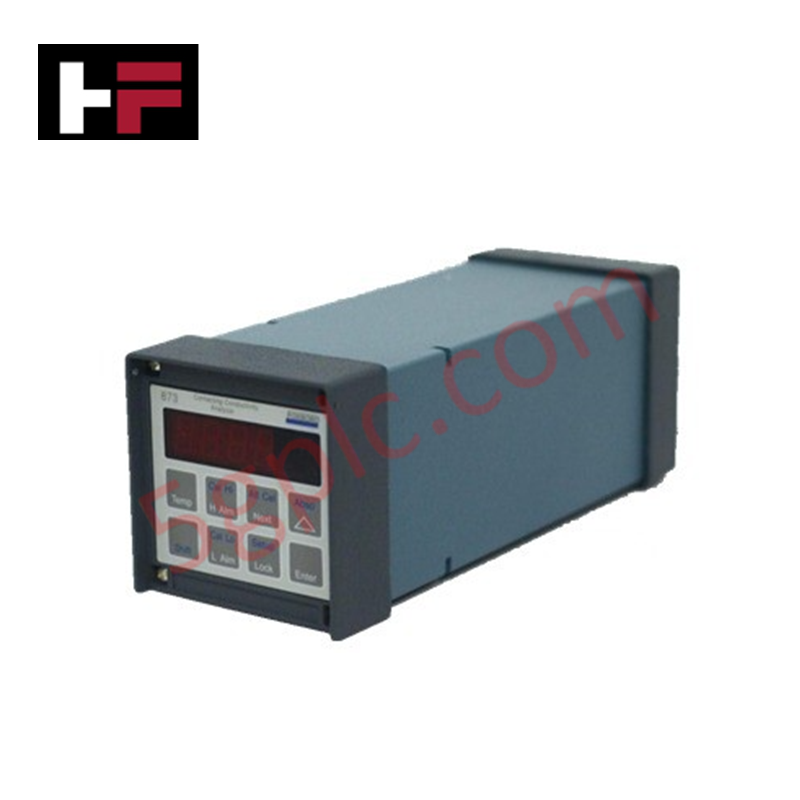
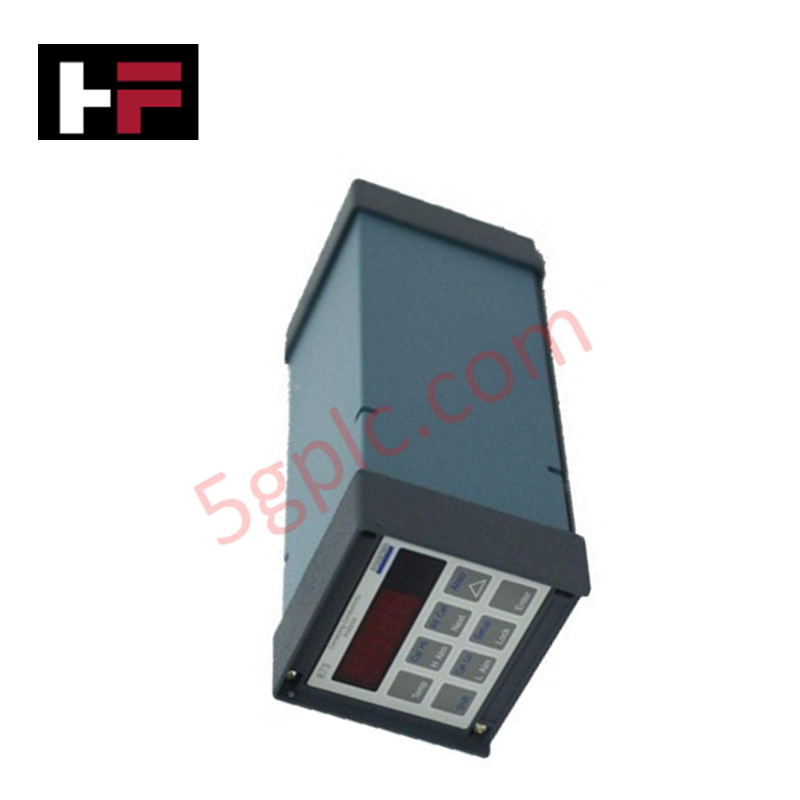
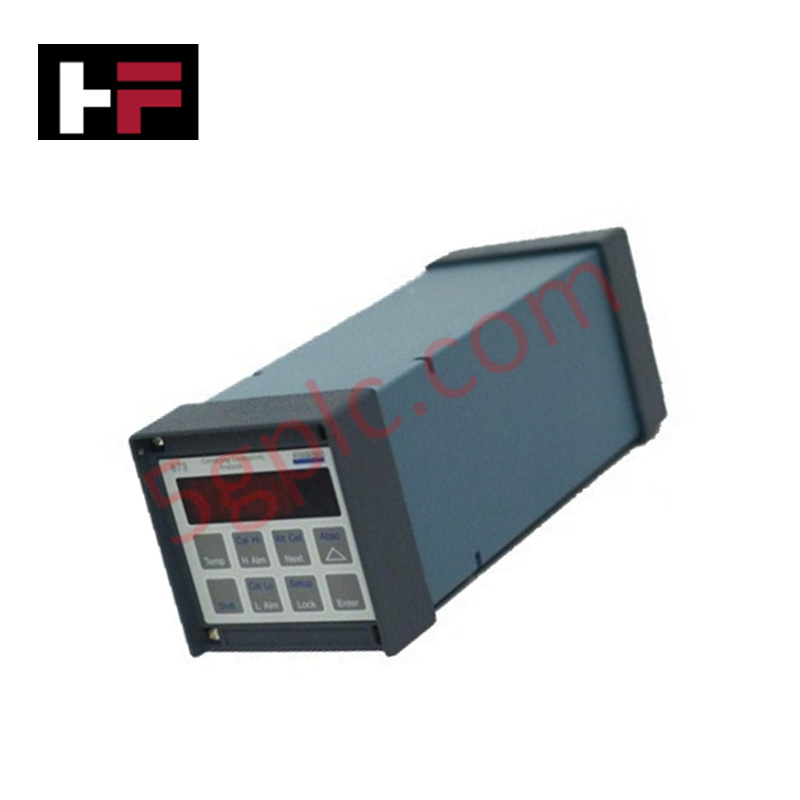
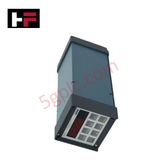
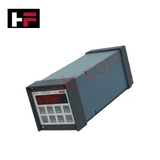
The Foxboro 873CC-BIYFGZ, also cataloged as the 873CC Conductivity Analyzer, operates as a dedicated hardware component for contacting conductivity and resistivity measurement within Foxboro I/A Series analytical measurement loops. It provides direct physical execution of dual-channel sensor processing, liquid ionic concentration evaluation, and 4-20 mA analog transmission. The unit conditions high-resolution inputs to drive real-time display readouts and discrete alarm relays.
Hardware Specifications
| Parameter | Specification |
|---|---|
| Model | 873CC-BIYFGZ |
| Brand | Foxboro |
| Origin | USA |
| Weight | 1.85 lbs (0.84 kg) |
| Dimensions | Standard 1/2 DIN panel cutout mount |
| Operating Temp | -10 to +50 deg C |
| Power Consumption | 100-240 VAC |
| Measurement Type | Contacting conductivity and resistivity |
| Measurement Range | 0.00 uS/cm to 20.00 mS/cm |
| Sensor Inputs | Dual channel (2 inputs) |
| Output Signals | 4-20 mA analog output, alarm relay contacts |
| Protection Rating | NEMA 4X |
DCS Process Loops and Cold Junction / Temperature Compensation
The Foxboro 873CC-BIYFGZ conditions raw analog inputs across dual contacting sensor channels, enforcing channel-to-channel isolation to eliminate ground loop noise. Integrated temperature compensation algorithms scale resistance values dynamically across 0.00 uS/cm to 20.00 mS/cm ranges. The analyzer provides 4-20 mA HART loop protocol compatibility alongside optional RS-485 Modbus serial interfaces, delivering isolated measurement telemetry directly to Foxboro Fieldbus Modules (FBM) and central control processors.
Frequently Asked Questions
Q: How are temperature sensors wired to the 873CC-BIYFGZ for automatic compensation?
A: Integrated RTD temperature elements connect directly to dedicated compensation terminals on the rear barrier block, enabling real-time curve adjustments to normalized reference values.
Q: Can the 4-20 mA output signals be scaled independently for each measurement channel?
A: Yes, the internal firmware allows independent configuration of the 4-20 mA analog outputs to span specific conductivity ranges or resistivity thresholds per channel.
Field Installation Guidelines
- Prepare a standard 1/2 DIN cutout when panel mounting, ensuring the front bezel gasket sits flush against the panel face.
- Terminate dual-channel contacting sensor wiring into labeled screw terminal blocks, keeping signal cables separated from AC power conductors.
- Verify that the NEMA 4X enclosure conduit entries are sealed with rated NPT fitting plugs to prevent moisture intrusion in field applications.
- Connect the main protective earth terminal to the cabinet ground stud before energizing the 100-240 VAC power source.
Additional Information
- 100% Genuine Parts: All products are original and authentic, ensuring reliable industrial performance.
- 30-Day Refund Guarantee: Return any in-stock item within 30 days in original, unopened packaging for a full refund (excluding shipping and fees).
- 12-Month Warranty: Covers defects in materials or workmanship; excludes misuse, normal wear, or unauthorized modifications.
- Worldwide Shipping: We ship via USPS, UPS, FedEx, and DHL. Delivery times vary by country and may be subject to customs or import fees.
- Support & Contact: Technical and warranty assistance is available anytime. Contact us here: Contact.
- Purchase Guidance: Check product specifications and compatibility carefully before ordering to ensure proper application.
Tech & Buying Guide

Will PLCs Become Obsolete? The Future of Control Systems in Industry 4.0
Modern manufacturing is undergoing a rapid technological transformation driven by Industry 4.0 innovations. Technologies like Artificial Intelligence (AI), Machine Learning (ML), and the Industrial Internet of Things (IIoT) are dominating discussions across the factory automation sector. Consequently, many engineers wonder if these advanced digital tools will eventually replace traditional Programmable Logic Controllers (PLCs). However, evaluating the core physics of industrial operations reveals a very different reality for control systems.

Demystifying Open Platform Communication (OPC): The Backbone of Industrial Interoperability
Interoperability remains a cornerstone requirement for modern smart factories and process automation. Open Platform Communication (OPC) bridges the gap between disparate hardware platforms, control systems, and visualization software. By establishing a universal communication standard, OPC allows field controllers, SCADA platforms, and enterprise software from different vendors to exchange real-time data seamlessly.

Understanding Siemens PLC Memory Cards: MMC, SMC, and SD Solutions in Industrial Automation
Memory management plays a pivotal role in maintaining control system reliability across modern manufacturing plants. Industrial control systems rely on specialized memory cards to store project logic, firmware updates, and retentive system data. Siemens uses several memory architectures, including Micro Memory Cards (MMC) and SIMATIC Memory Cards (SMC). Engineers must understand these hardware variations to ensure zero data loss and minimize downtime during maintenance routines.