










Product Details
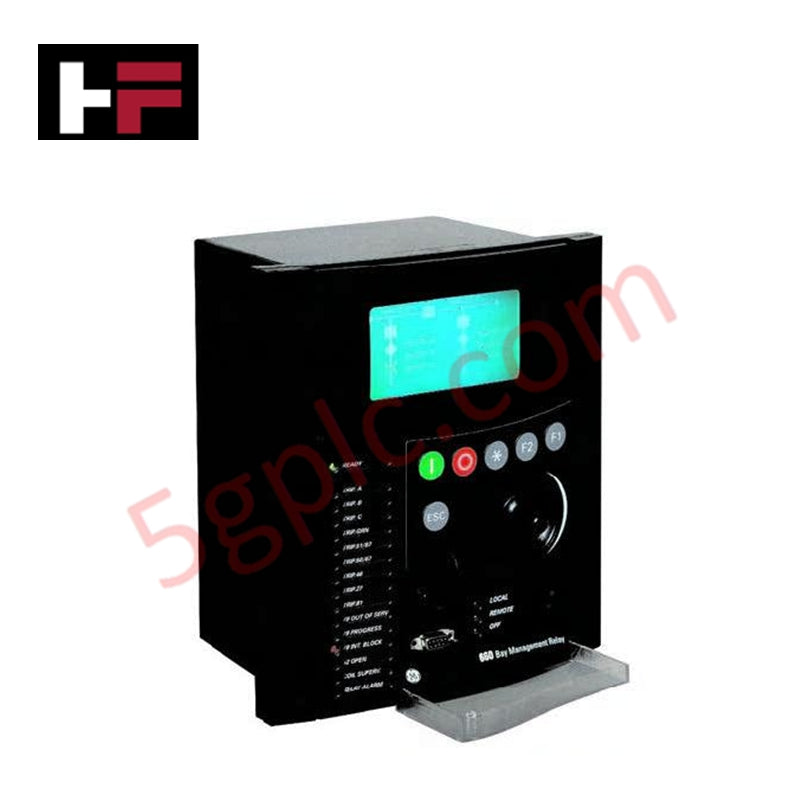
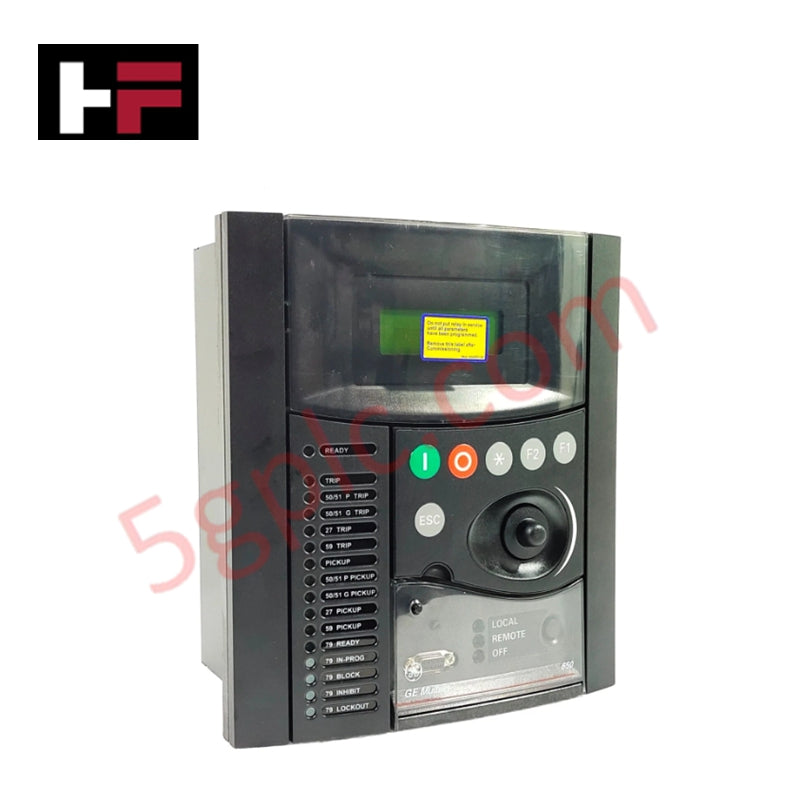
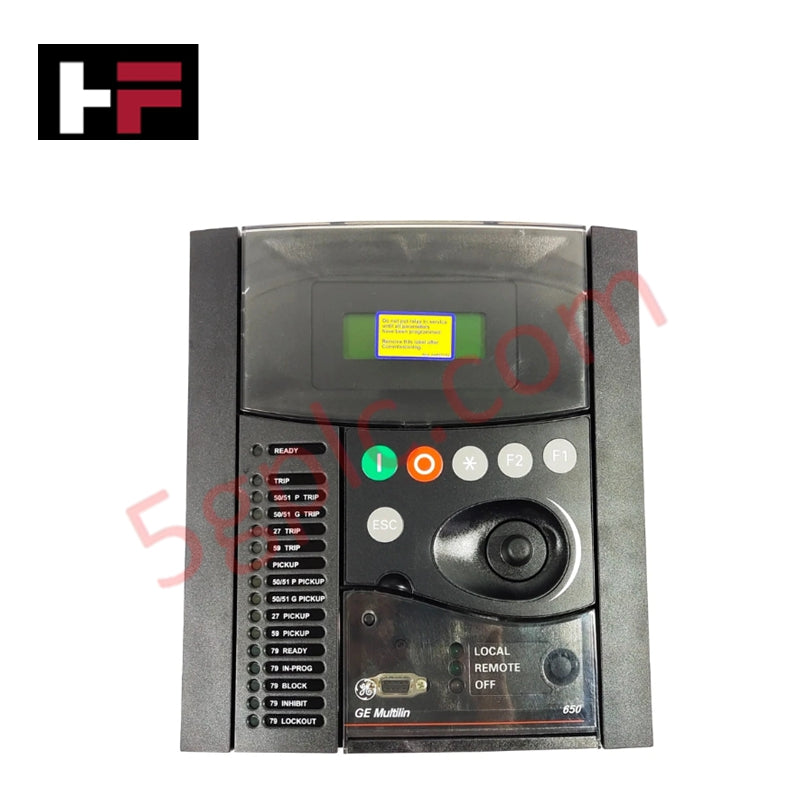
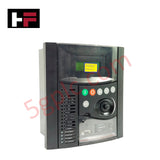
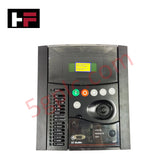
Configured for multi-functional feeder protection and control in electrical distribution networks, the GE F650NFLF2G5HIP6E (F650 Numerical Feeder Protection Relay) provides direct physical/electrical execution of overcurrent, frequency-based tripping, and auto-reclosing logic sequences.
Hardware Specifications
| Parameter | Specification |
|---|---|
| Model | F650NFLF2G5HIP6E |
| Brand | GE Grid Solutions |
| Weight | 2.1 kg |
| Dimensions | 215 x 190 x 115 mm |
| Operating Temp | -20 to 70 deg C |
| Power Consumption | 120/240 VAC/VDC |
| Rated Frequency | 50/60 Hz ±10% |
| Current Inputs | 4 channels (1A or 5A configurable) |
| Voltage Inputs | 4 channels |
Industrial Control Deterministic Network
The F650 integrates into high-speed utility networks supporting protocols including IEC 61850, Modbus, and DNP3. To ensure deterministic data propagation, backplane bus communication velocity must be synchronized with the master substation gateway. The relay utilizes 16 programmable binary inputs and 10 binary outputs for I/O interface, with hardware architecture allowing for firmware flash compatibility to support protocol updates and protection logic revisions. Users must ensure that the communication interface (Ethernet or RS485) is terminated according to protocol specifications to maintain signal integrity and avoid packet latency within the protection bus.
Frequently Asked Questions
Q: Does the F650 support hot-swapping of control modules while the feeder is active?
A: No. Any maintenance involving physical module removal or replacement requires the relay to be isolated and de-energized. Attempting to withdraw the unit while connected to current transformer (CT) secondary circuits will result in high-voltage arcing and loss of protection coverage.
Q: How should the binary I/O be configured to prevent false tripping?
A: Programmable binary inputs must be verified for correct debounce settings in the logic configuration software. Ensure that input circuits are properly shielded and grounded to prevent transient induced noise from being misinterpreted as physical trip signals.
Field Installation Guidelines
- CT Circuit Integrity: Ensure current transformer secondaries are shorted before installation or testing. Permanent damage to CT windings will occur if these circuits remain open-circuited while primary current is flowing.
- Grounding: Terminate the chassis ground stud to the substation earth-ground bar using a minimum 4 mm² copper conductor. Shielded twisted-pair cables should be used for RS485 communication to suppress electromagnetic interference (EMI) typical in switchgear environments.
- Physical Mounting: The unit is designed for panel-mounting. Ensure the cut-out dimensions are accurate to 215 x 190 mm. Tighten mounting hardware uniformly to ensure the gasket provides the intended IP rating against dust and moisture.
- Verification: Prior to commissioning, perform a secondary injection test to confirm the 50/51 overcurrent and 67 directional trip thresholds. Verify the LCD interface displays accurate fundamental phasor values for all voltage and current channels.
Additional Information
- 100% Genuine Parts: All products are original and authentic, ensuring reliable industrial performance.
- 30-Day Refund Guarantee: Return any in-stock item within 30 days in original, unopened packaging for a full refund (excluding shipping and fees).
- 12-Month Warranty: Covers defects in materials or workmanship; excludes misuse, normal wear, or unauthorized modifications.
- Worldwide Shipping: We ship via USPS, UPS, FedEx, and DHL. Delivery times vary by country and may be subject to customs or import fees.
- Support & Contact: Technical and warranty assistance is available anytime. Contact us here: Contact.
- Purchase Guidance: Check product specifications and compatibility carefully before ordering to ensure proper application.


Tech & Buying Guide

Demystifying the DDE Protocol in Legacy Industrial Automation Systems
Modern control systems rely heavily on seamless interprocess communication to exchange operational data between software programs. Microsoft first introduced the Dynamic Data Exchange (DDE) protocol in 1987 to enable real-time data sharing. In factory automation, DDE served as an early bridge between control software and Windows desktop applications. Therefore, understanding DDE mechanics provides crucial insights into how legacy industrial networks established software-level connectivity.

Demystifying CPU Communication Ports in Siemens PLC Architectures
Industrial automation relies heavily on robust data exchange between devices. Without seamless connectivity, field instruments, network switches, human-machine interfaces, and programmable logic controllers cannot coordinate effectively. Therefore, understanding the various CPU communication ports available in Siemens hardware ensures efficient factory automation design and seamless system integration.

Mastering the Siemens PLC Scan Cycle: How the CPU Executes Automation Programs
Industrial automation relies heavily on programmable logic controllers (PLCs) to manage complex manufacturing processes. Many engineers dive straight into programming without mastering the underlying architecture. However, understanding how a PLC CPU executes a program ensures reliable system design. Therefore, mastering the scan cycle optimizes both performance and troubleshooting in modern control systems.