










Product Details
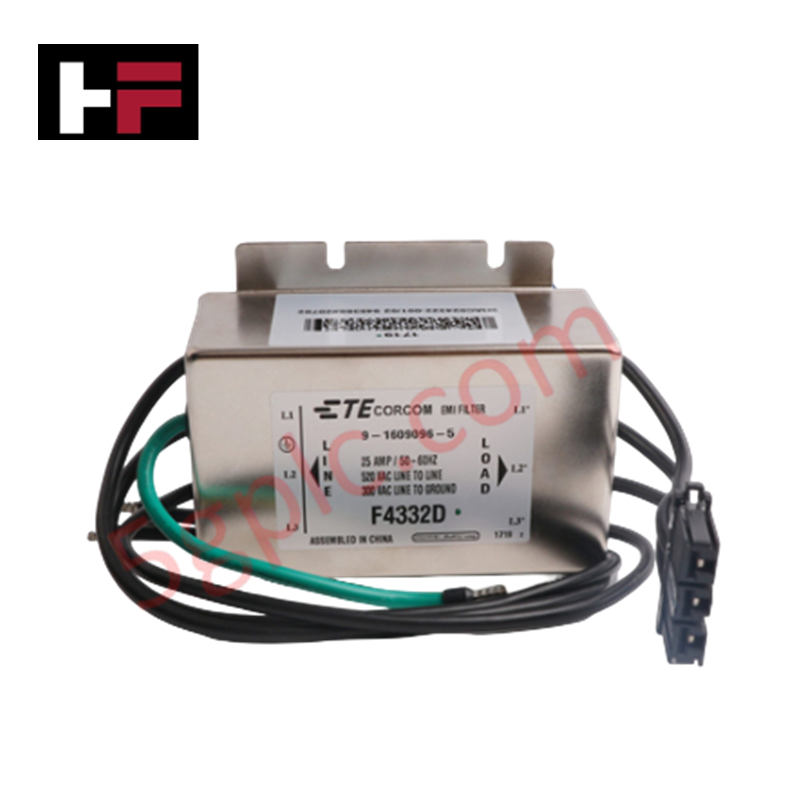
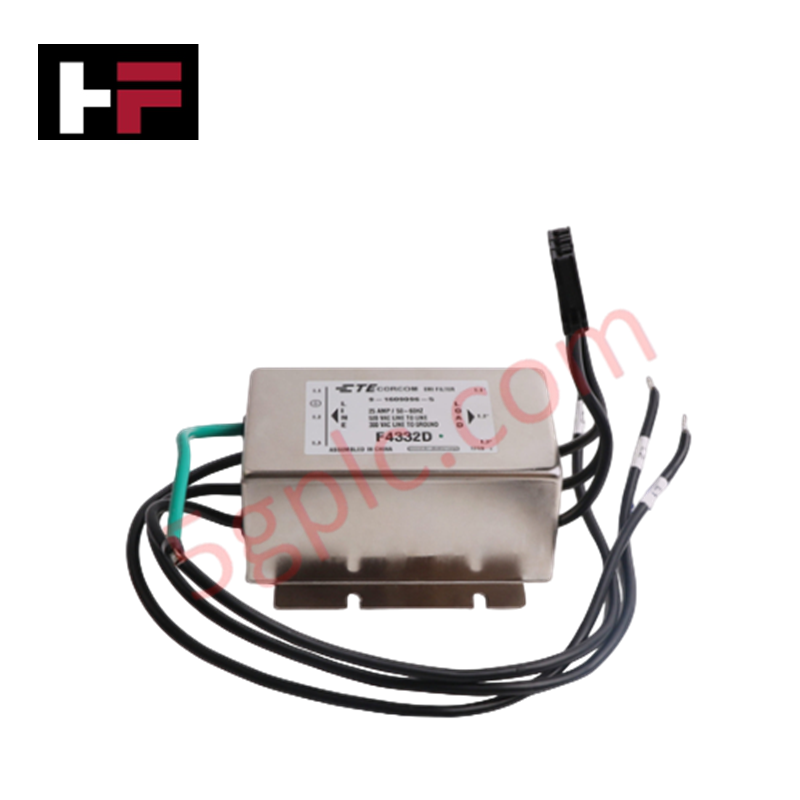
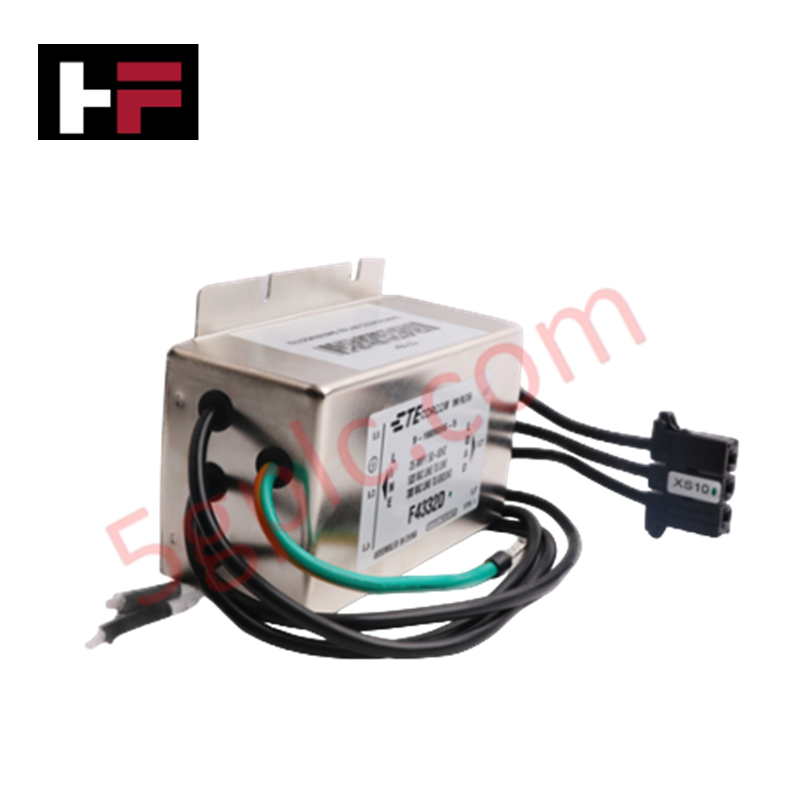
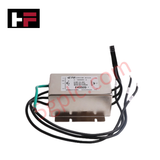
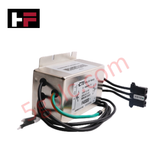
The ABB 3HAC024322-001, also cataloged as the F4332D Mains Line Filter, operates as a dedicated hardware component for localized control logic execution within ABB industrial drive and robotic controller platforms. Configured for electromagnetic interference attenuation and high-frequency noise suppression across primary power supply rails, the device executes physical passive low-pass filtering to maintain standard electrical waveform boundary thresholds.
Hardware Specifications
| Parameter | Specification |
|---|---|
| Model | F4332D (3HAC024322-001) |
| Brand | ABB |
| Origin | Sweden / Germany (Standard production matrix baseline) |
| Weight | 1.34 kg |
| Dimensions | 350 mm x 110 mm x 90 mm |
| Product Type | Mains Line Filters |
| Operating Temp | 0 to 55 deg C (Nominal baseline for standard cabinet housing) |
| Power Consumption | Passive implementation (Insertion loss dependent) |
Profinet / EtherNet/IP Deterministic Networks and I/O Density Scaling
The filtering profile of the ABB F4332D 3HAC024322-001 prevents high-frequency harmonic propagation from degrading internal backplane bus communication velocity metrics. When processing nodes are heavily integrated into Profinet or EtherNet/IP deterministic networks, high-order transients induced by aggressive I/O density scaling are attenuated prior to entering the sensitive rectification stages. This attenuation ensures continuous clock synchronization and safeguards local hardware modules against registration anomalies, preserving overall firmware flash compatibility parameters.
Frequently Asked Questions
Q: Does this passive line filter support hot-swap replacement while the primary AC supply rail is energized?
A: No. The assembly does not possess active short-circuit or arc-suppression isolation mechanisms. Isolating or connecting the filter while lines are under load risks destructive arc tracking on terminal contacts and severe electrical shock to personnel.
Q: How is structural degradation or internal insulation breakdown monitored on the F4332D module?
A: Leakage current values must be verified using precise external clamp instrumentation during planned maintenance intervals. Any rise in leakage current beyond specified design guidelines signifies dielectric breakdown inside the capacitor network, requiring total replacement of the component.
Field Installation Guidelines
- Mechanical Mounting and Orientation: Secure the 1.34 kg module body directly onto the metal panel backplate using low-impedance grounding screws. Maintain standard vertical clearance corridors to support passive thermal air circulation.
- Grounding Trace Requirements: Connect the filter grounding terminal directly to the central industrial cabinet PE bus via the shortest possible copper strap or heavy-gauge wire to maximize high-frequency noise diversion path efficiency.
- Cable Separation Constraints: Maintain separate routing paths for incoming mains lines and filtered outgoing conductors. Do not bundle input and output lines within the same wireway to prevent capacitive re-coupling of attenuated high-frequency noise.
- ESD and High-Voltage Safeguards: Isolate all upstream power supply feeds before terminating lines to the input studs. Ensure all safety shrouds are locked into place to fulfill standard electrical finger-safe operating protections.
Additional Information
- 100% Genuine Parts: All products are original and authentic, ensuring reliable industrial performance.
- 30-Day Refund Guarantee: Return any in-stock item within 30 days in original, unopened packaging for a full refund (excluding shipping and fees).
- 12-Month Warranty: Covers defects in materials or workmanship; excludes misuse, normal wear, or unauthorized modifications.
- Worldwide Shipping: We ship via USPS, UPS, FedEx, and DHL. Delivery times vary by country and may be subject to customs or import fees.
- Support & Contact: Technical and warranty assistance is available anytime. Contact us here: Contact.
- Purchase Guidance: Check product specifications and compatibility carefully before ordering to ensure proper application.









Tech & Buying Guide

Demystifying the DDE Protocol in Legacy Industrial Automation Systems
Modern control systems rely heavily on seamless interprocess communication to exchange operational data between software programs. Microsoft first introduced the Dynamic Data Exchange (DDE) protocol in 1987 to enable real-time data sharing. In factory automation, DDE served as an early bridge between control software and Windows desktop applications. Therefore, understanding DDE mechanics provides crucial insights into how legacy industrial networks established software-level connectivity.

Demystifying CPU Communication Ports in Siemens PLC Architectures
Industrial automation relies heavily on robust data exchange between devices. Without seamless connectivity, field instruments, network switches, human-machine interfaces, and programmable logic controllers cannot coordinate effectively. Therefore, understanding the various CPU communication ports available in Siemens hardware ensures efficient factory automation design and seamless system integration.

Mastering the Siemens PLC Scan Cycle: How the CPU Executes Automation Programs
Industrial automation relies heavily on programmable logic controllers (PLCs) to manage complex manufacturing processes. Many engineers dive straight into programming without mastering the underlying architecture. However, understanding how a PLC CPU executes a program ensures reliable system design. Therefore, mastering the scan cycle optimizes both performance and troubleshooting in modern control systems.