










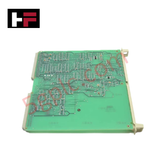
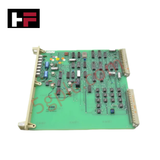
Product Details
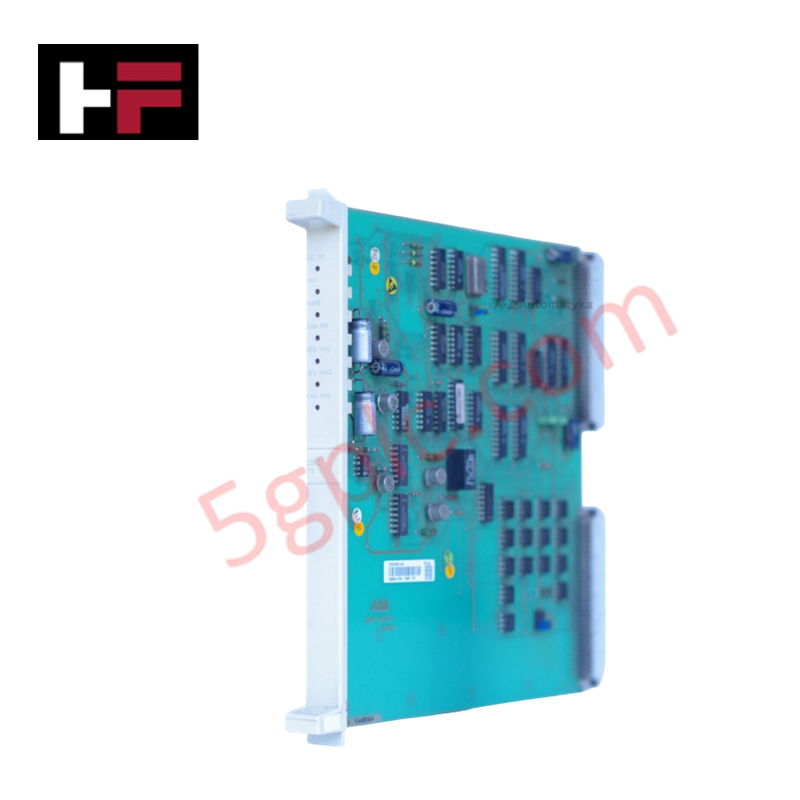
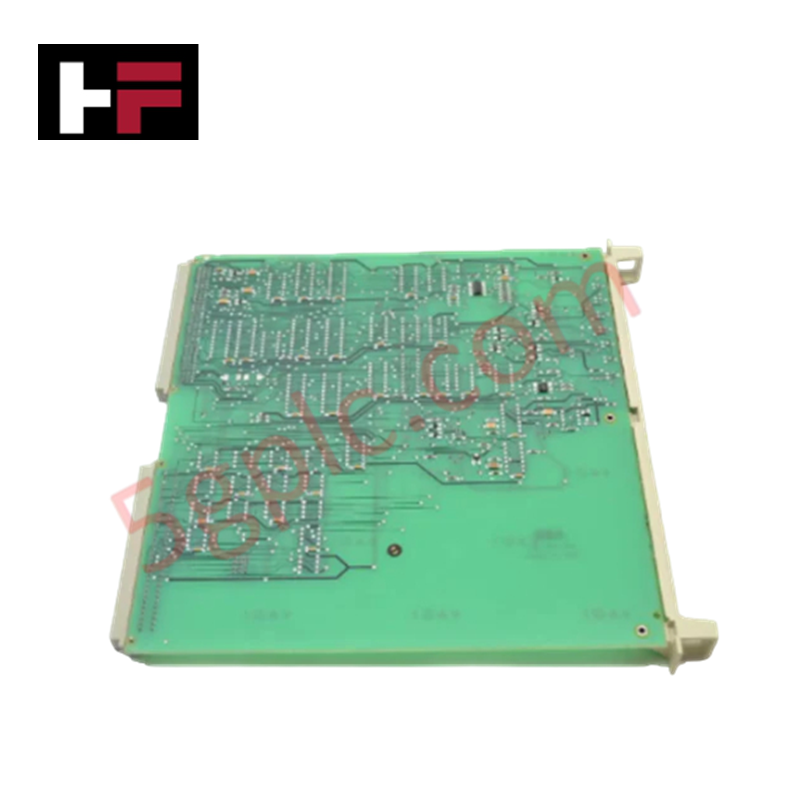
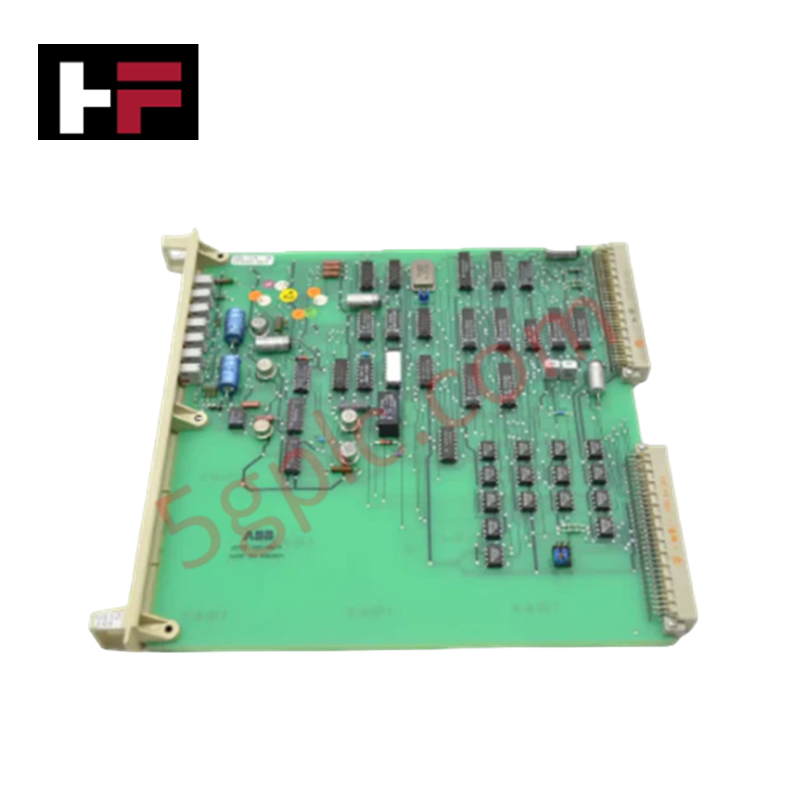
The ABB DSBC 173 57310001-KH, also cataloged as the DSBC 173 Bus Repeater Slave, operates as a dedicated hardware component for localized control logic execution within Advant OCS networks. Configured for signal amplification and electrical isolation across extended bus topologies, the assembly reconstructs degraded transmission frames to provide direct physical/electrical execution of real-time communication protocols.
Hardware Specifications
| Parameter | Specification |
|---|---|
| Model | DSBC 173 57310001-KH |
| Brand | ABB |
| Origin | Sweden / Germany (Standard series production baseline) |
| Weight | 0.43 kg |
| Dimensions | 150 mm x 100 mm x 70 mm |
| Communication Protocols | DeviceNet, CANopen |
| Number of Channels | 10 |
| Input Voltage | 24 VDC |
| Output Current | 12 mA |
| Power Consumption | < 0.5 W |
| Connector Type | M8 x 0.8 mm pitch |
| Operating Temp | -20 to +55 deg C |
| Regulatory Status | RoHS exemption under 2011/65/EU regulations |
| Product Type | Bus Repeater Slaves |
Profinet / EtherNet/IP Deterministic Networks and I/O Density Scaling
The internal signal-conditioning circuitry of the ABB DSBC 173 57310001-KH is calibrated to match strict backplane bus communication velocity parameters. When bridging field segments to higher-level industrial topologies, such as Profinet or EtherNet/IP deterministic networks, the module handles cross-network data packets without increasing propagation latencies. The 10-channel layout isolates electrical noise vectors during periods of high I/O density scaling, keeping data frame transitions accurate and maintaining local node operation within the boundaries of host controller firmware flash compatibility requirements.
Frequently Asked Questions
Q: Is hot-swapping or live extraction of the M8 connector plugs supported while the module is powered?
A: No. The DSBC 173 does not feature active live-insertion isolation circuitry. Removing or re-inserting the communication interfaces while the 24 VDC supply or bus segments are energized can cause electrical transients, causing immediate data frame corruption or permanent physical trace failure on the communication paths.
Q: How is an internal channel signal degradation or transmission fault diagnosed?
A: Diagnostic states must be verified through the central host controller register map. If a bus link drops or registers CRC errors, check the physical 24 VDC input tolerances and confirm that the overall cable length across the M8 connectors does not violate protocol distance specifications.
Field Installation Guidelines
- ESD Grounding Requirements: Technical field personnel must use a properly calibrated and grounded electrostatic discharge (ESD) wrist strap prior to opening the protective packaging or handling the internal circuit boards to prevent dielectric micro-circuit damage.
- Mechanical Mounting and Fastening: Mount the 0.43 kg housing securely inside the control enclosure. When mating the M8 x 0.8 mm pitch connectors, torque the connections to factory specification limits to avoid loose mechanical contacts and ensure proper environmental sealing.
- Control Cable Routing Isolation: Route all incoming DeviceNet and CANopen communication lines inside separate low-voltage wireways. Keep a physical separation distance of at least 100 mm from high-voltage AC conductors and motor drive cabling to protect against electromagnetic interference.
- Environmental Exposure Limits: Install the module inside an IP 54 or better enclosure that eliminates ambient moisture condensation, airborne conductive dust, and corrosive vapors to prevent tracking short-circuits.
Additional Information
- 100% Genuine Parts: All products are original and authentic, ensuring reliable industrial performance.
- 30-Day Refund Guarantee: Return any in-stock item within 30 days in original, unopened packaging for a full refund (excluding shipping and fees).
- 12-Month Warranty: Covers defects in materials or workmanship; excludes misuse, normal wear, or unauthorized modifications.
- Worldwide Shipping: We ship via USPS, UPS, FedEx, and DHL. Delivery times vary by country and may be subject to customs or import fees.
- Support & Contact: Technical and warranty assistance is available anytime. Contact us here: Contact.
- Purchase Guidance: Check product specifications and compatibility carefully before ordering to ensure proper application.






Tech & Buying Guide

Demystifying the DDE Protocol in Legacy Industrial Automation Systems
Modern control systems rely heavily on seamless interprocess communication to exchange operational data between software programs. Microsoft first introduced the Dynamic Data Exchange (DDE) protocol in 1987 to enable real-time data sharing. In factory automation, DDE served as an early bridge between control software and Windows desktop applications. Therefore, understanding DDE mechanics provides crucial insights into how legacy industrial networks established software-level connectivity.

Demystifying CPU Communication Ports in Siemens PLC Architectures
Industrial automation relies heavily on robust data exchange between devices. Without seamless connectivity, field instruments, network switches, human-machine interfaces, and programmable logic controllers cannot coordinate effectively. Therefore, understanding the various CPU communication ports available in Siemens hardware ensures efficient factory automation design and seamless system integration.

Mastering the Siemens PLC Scan Cycle: How the CPU Executes Automation Programs
Industrial automation relies heavily on programmable logic controllers (PLCs) to manage complex manufacturing processes. Many engineers dive straight into programming without mastering the underlying architecture. However, understanding how a PLC CPU executes a program ensures reliable system design. Therefore, mastering the scan cycle optimizes both performance and troubleshooting in modern control systems.