










Product Details
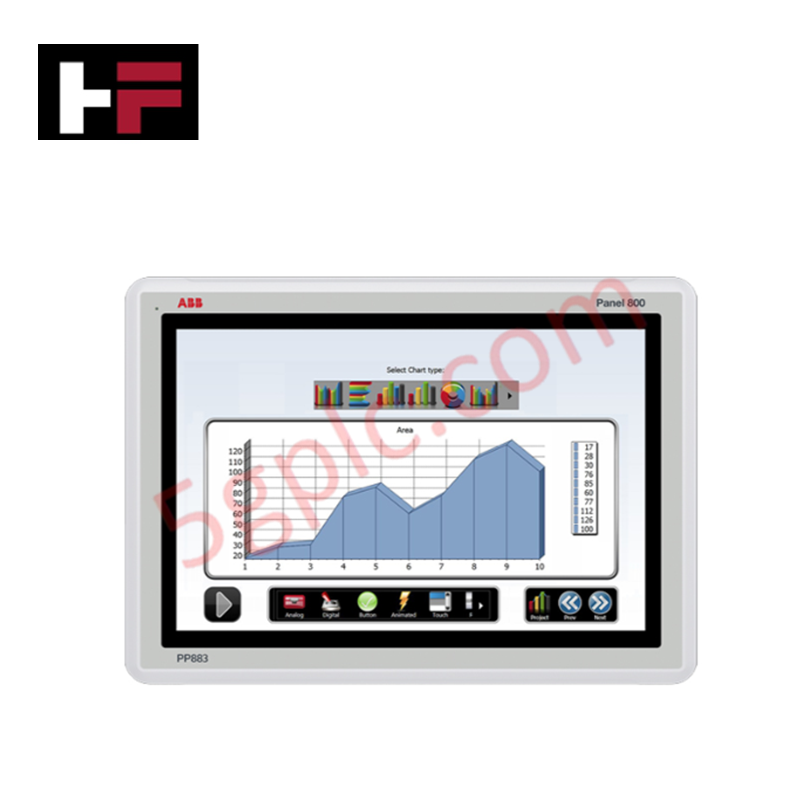
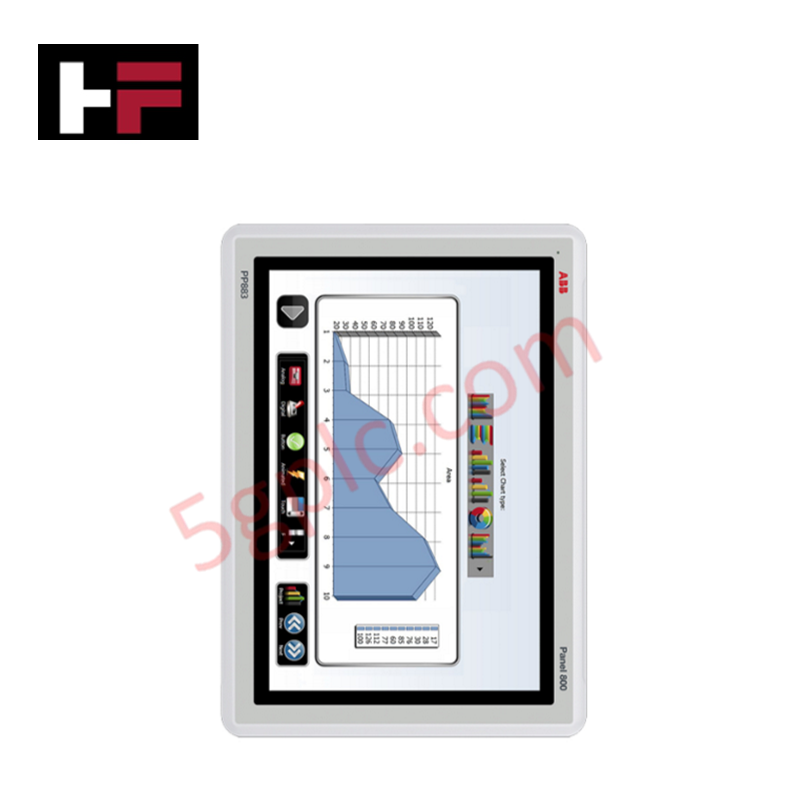
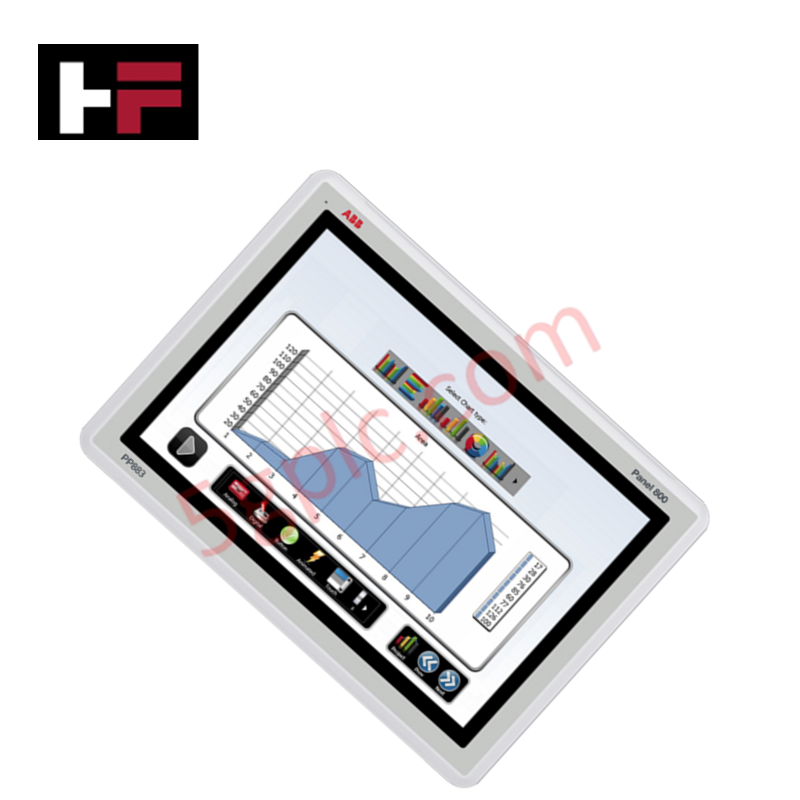
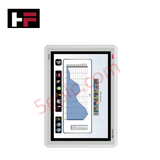
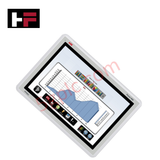
The ABB PP865 3BSE042236R1, also cataloged as the PP865 Operator Panel, serves as the primary PP865 Operator Panel utilized to execute industrial control and monitoring operations across ABB automation platforms.
Hardware Specifications
| Parameter | Specification |
| Model | PP865 (Product ID: 3BSE042236R1) |
| Brand | ABB |
| Origin | Sweden / Switzerland |
| Weight | 1.80 kg (Standard baseline parameter) |
| Dimensions | 200 mm x 220 mm x 50 mm |
| Operating Temp | -40 to +125 deg C |
| Power Consumption | PWM drive switching topography dependent |
| Voltage Range | 690 V - 750 V |
| Current Range | 100 A - 140 A |
| Rated Voltage | 750 V |
| Rated Current | 120 A |
| Control Type | Pulse Width Modulation (PWM) |
| Drive Voltage | 15 V |
| Reverse Voltage | 690 V |
| Reverse Current | 10 A |
| Mounting Type | Board-mounted |
Firmware Flash Compatibility and High-Voltage PWM Execution
The hardware interface integrates direct Pulse Width Modulation (PWM) internal control circuitry running with a 15 V drive voltage profile. The internal logic maintains strict firmware flash compatibility with host power controller stages to manage high-current execution vectors from 100 A to 140 A. Operating up to a rated 750 V boundary, the board architecture processes high-speed gating triggers while mitigating commutation noise across the integrated backplane interfaces.
Frequently Asked Questions
Q: How does the module react to reverse voltage transients up to the 690 V specification limit?
A: The internal semiconductor topology is rated for a continuous reverse voltage of 690 V, maintaining a maximum reverse leakage current of 10 A before protective thermal clamping or upstream circuit isolation triggers.
Q: Is this board-mounted unit hot-swappable during active PWM generation?
A: No. Due to the high-voltage parameters (750 V) and rated currents up to 140 A, the module must be fully de-energized and the DC bus discharged before executing physical replacement to prevent terminal arcing.
Q: What defines the firmware flash compatibility criteria for this unit?
A: The unit interfaces with the primary drive or controller firmware blocks via specific slot addresses. Configuration and timing parameters for the 15 V PWM gating must be aligned in the host controller software version.
Field Installation Guidelines
-
Board-Mounted Alignment: Secure the module to the master board sub-rack using specified torque settings. Misalignment can damage the high-current contact pins or cause tracking faults under 750 V conditions.
-
Thermal Dissipation: Given the extreme operating temperature range of -40 to +125 deg C, clear cooling channels must be verified around the board matrix to manage heat dissipation during peak 140 A current loads.
-
Shielding Regulations: High-voltage gating cables must be shielded and separated from low-voltage signal lines to suppress electromagnetic field coupling from the PWM switching circuits.
-
Grounding Path: Ensure low-impedance chassis grounding paths are established at the designated board mounting holes to limit transient overvoltage conditions and sink common-mode leakage currents.
Additional Information
- 100% Genuine Parts: All products are original and authentic, ensuring reliable industrial performance.
- 30-Day Refund Guarantee: Return any in-stock item within 30 days in original, unopened packaging for a full refund (excluding shipping and fees).
- 12-Month Warranty: Covers defects in materials or workmanship; excludes misuse, normal wear, or unauthorized modifications.
- Worldwide Shipping: We ship via USPS, UPS, FedEx, and DHL. Delivery times vary by country and may be subject to customs or import fees.
- Support & Contact: Technical and warranty assistance is available anytime. Contact us here: Contact.
- Purchase Guidance: Check product specifications and compatibility carefully before ordering to ensure proper application.






Tech & Buying Guide

Demystifying CPU Communication Ports in Siemens PLC Architectures
Industrial automation relies heavily on robust data exchange between devices. Without seamless connectivity, field instruments, network switches, human-machine interfaces, and programmable logic controllers cannot coordinate effectively. Therefore, understanding the various CPU communication ports available in Siemens hardware ensures efficient factory automation design and seamless system integration.

Mastering the Siemens PLC Scan Cycle: How the CPU Executes Automation Programs
Industrial automation relies heavily on programmable logic controllers (PLCs) to manage complex manufacturing processes. Many engineers dive straight into programming without mastering the underlying architecture. However, understanding how a PLC CPU executes a program ensures reliable system design. Therefore, mastering the scan cycle optimizes both performance and troubleshooting in modern control systems.

How to Connect to Siemens S7 PLCs: 5 Essential Communication Methods
Establishing a reliable hardware link between a programming terminal and a Siemens SIMATIC controller is essential for engineering workflows. Field engineers rely on distinct physical layers, ranging from legacy serial connections to high-speed Industrial Ethernet protocols. Modern factory automation environments prioritize fast data transfer and seamless driver integration. Selecting the correct connection method simplifies program downloads, online monitoring, and system troubleshooting in complex control systems.