










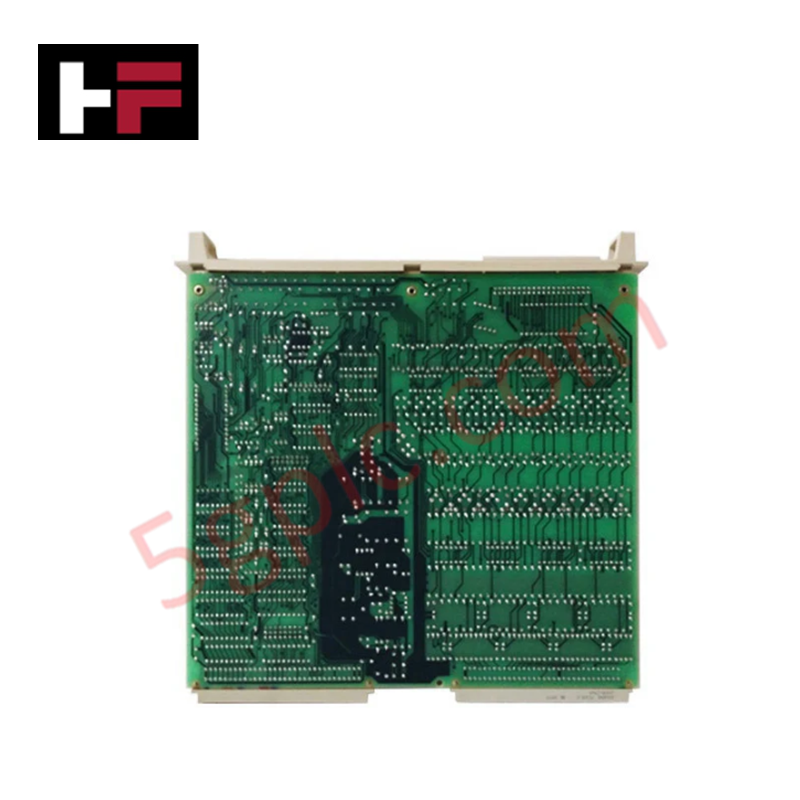
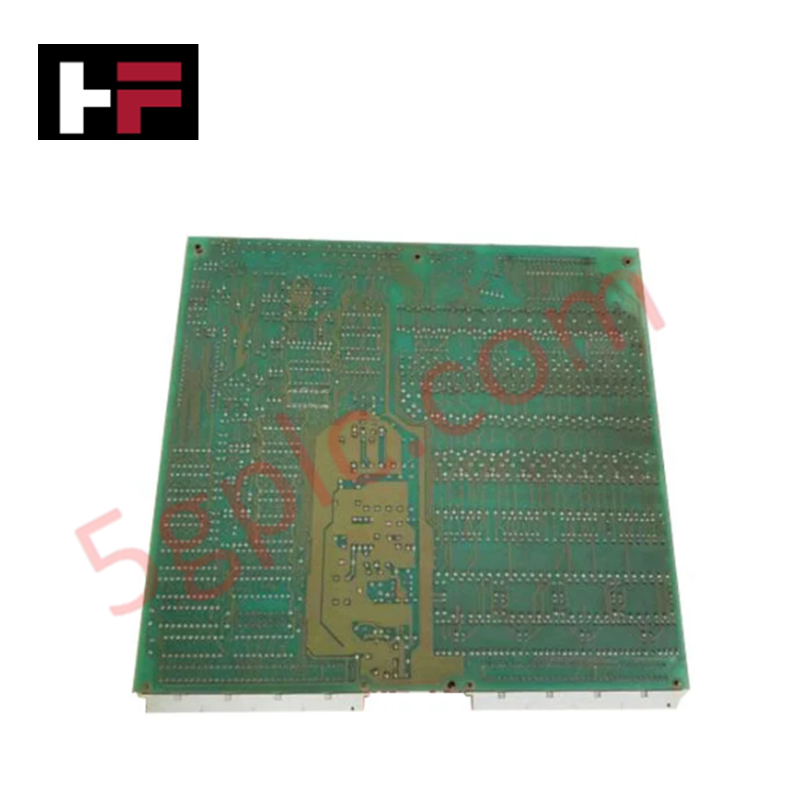
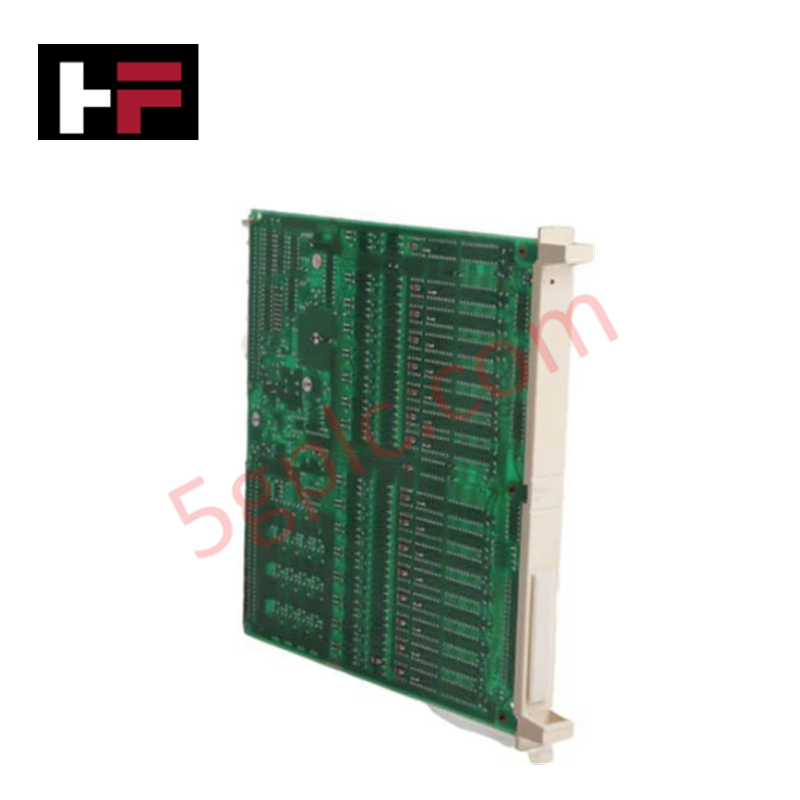
Product Details
The ABB HAC782AE 3BHB006840R0001 serves as the primary HAC782AE Contactor Module utilized to execute high-power alternating current switching sequences across industrial drive and distribution platforms. The hardware acts as a physical interruption and contact closure mechanism, receiving low-voltage control signals and routing an independent 110-240V AC line power path to downstream inductive or resistive loads. It tracks auxiliary mechanical contact states and relays diagnostic variables through integrated serial and network bus nodes.
Hardware Specifications
| Parameter | Specification |
|---|---|
| Model | HAC782AE 3BHB006840R0001 |
| Brand | ABB |
| Origin | Switzerland |
| Weight | 0.5 kg |
| Dimensions | 200 mm x 150 mm x 50 mm |
| Operating Temp | -10 to +60 deg C |
| Power Consumption | 15 W |
| Power Supply Voltage | 110-240V AC |
| Communication Interface | Ethernet, Modbus |
| Switching Element | AC Contactor Mechanism |
Profinet / EtherNet/IP Deterministic Networks and Firmware Flash Compatibility
The integrated communication processor monitors contact closure response timelines and logs coil actuation cycles. When deploying the unit into network environments utilizing Profinet / EtherNet/IP deterministic networks, precise synchronization of control packet transmission times is mandatory to prevent timing dropouts on the coil controller. Before deploying updated automation sequence blocks, engineers must verify internal firmware flash compatibility to prevent communication state errors from misaligning the Modbus register maps or delaying the physical contactor release state.
Frequently Asked Questions
Q: What are the explicit hot-swap limits for the HAC782AE module?
A: This contactor module is strictly prohibited from hot-swapping maneuvers while the 110-240V AC primary circuit is energized. The complete terminal block input line must be isolated to prevent phase-to-phase electrical short circuits and transient damage to the local communication processing board.
Q: How does a mismatch in firmware flash compatibility manifest within the Modbus registry?
A: A firmware mismatch alters the register offset tables on the communication chip, which induces data drops or registers false errors regarding the coil continuity status over the network.
Q: Does the module contain localized suppression for inductive coil voltage transients?
A: Yes, the contactor coil assembly incorporates an integrated RC suppression block to clip high-voltage back-EMF spikes generated during de-energization cycles.
Field Installation Guidelines
Mount the module securely on a grounded steel backplate inside a sealed industrial enclosure to isolate surrounding electronics from magnetic field transients during contactor state execution. Separate the 110-240V AC power conductors from low-voltage Ethernet and Modbus signaling wires by running them in separate, grounded wireways to eliminate inductive cross-talk. Tighten all screw terminal contacts according to the specific torque values to ensure steady low-resistance physical connections under constant vibrational stress. Maintain an open 50 mm convective clearance envelope around the 200 mm x 150 mm x 50 mm chassis to prevent localized thermal buildup.
Additional Information
- 100% Genuine Parts: All products are original and authentic, ensuring reliable industrial performance.
- 30-Day Refund Guarantee: Return any in-stock item within 30 days in original, unopened packaging for a full refund (excluding shipping and fees).
- 12-Month Warranty: Covers defects in materials or workmanship; excludes misuse, normal wear, or unauthorized modifications.
- Worldwide Shipping: We ship via USPS, UPS, FedEx, and DHL. Delivery times vary by country and may be subject to customs or import fees.
- Support & Contact: Technical and warranty assistance is available anytime. Contact us here: Contact.
- Purchase Guidance: Check product specifications and compatibility carefully before ordering to ensure proper application.






Tech & Buying Guide

Demystifying the DDE Protocol in Legacy Industrial Automation Systems
Modern control systems rely heavily on seamless interprocess communication to exchange operational data between software programs. Microsoft first introduced the Dynamic Data Exchange (DDE) protocol in 1987 to enable real-time data sharing. In factory automation, DDE served as an early bridge between control software and Windows desktop applications. Therefore, understanding DDE mechanics provides crucial insights into how legacy industrial networks established software-level connectivity.

Demystifying CPU Communication Ports in Siemens PLC Architectures
Industrial automation relies heavily on robust data exchange between devices. Without seamless connectivity, field instruments, network switches, human-machine interfaces, and programmable logic controllers cannot coordinate effectively. Therefore, understanding the various CPU communication ports available in Siemens hardware ensures efficient factory automation design and seamless system integration.

Mastering the Siemens PLC Scan Cycle: How the CPU Executes Automation Programs
Industrial automation relies heavily on programmable logic controllers (PLCs) to manage complex manufacturing processes. Many engineers dive straight into programming without mastering the underlying architecture. However, understanding how a PLC CPU executes a program ensures reliable system design. Therefore, mastering the scan cycle optimizes both performance and troubleshooting in modern control systems.