










Product Details
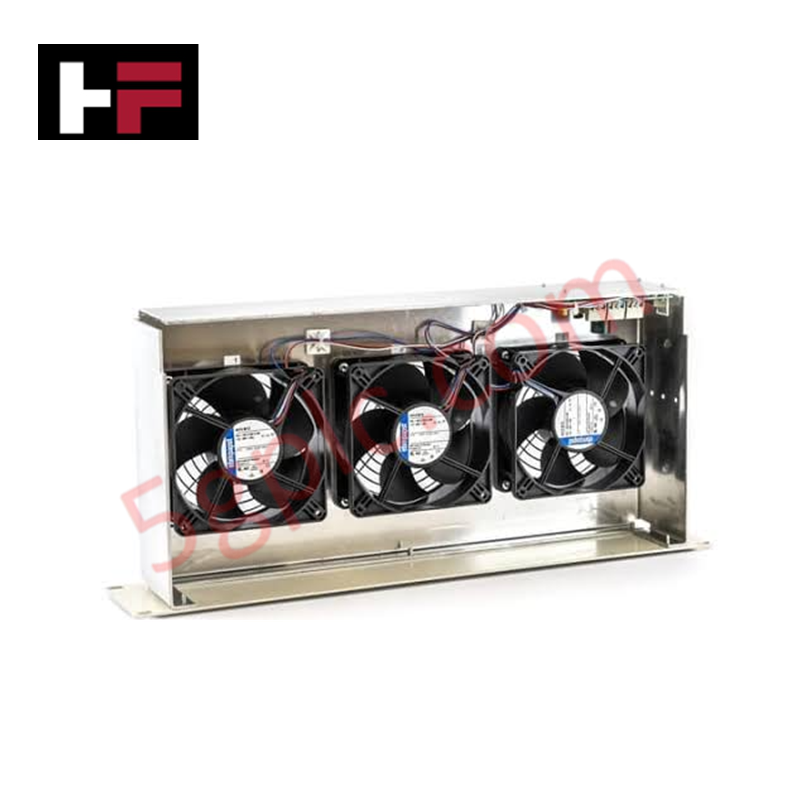
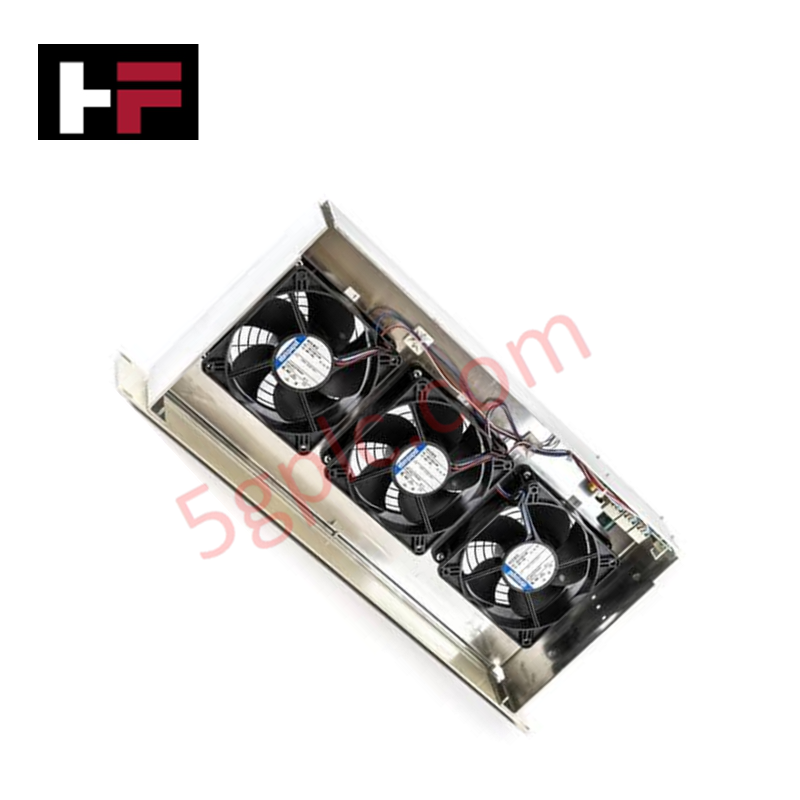
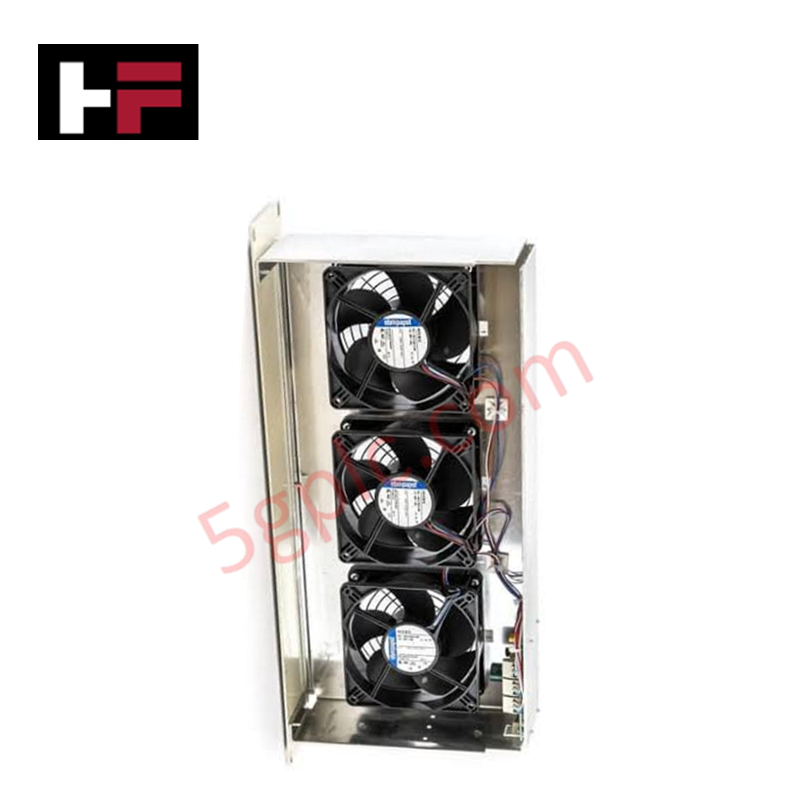
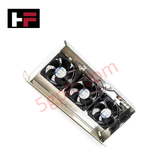
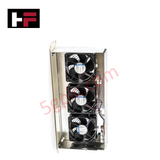
The ABB DSRC 113 52820083-LF, also cataloged as the DSRC 113 Fan Unit, operates as a dedicated hardware component for forced-air thermal management within industrial automation chassis enclosures. The unit directly executes physical heat dissipation sequences by driving internal fan assemblies via a 24 VDC electrical input.
Hardware Specifications
| Parameter | Specification |
|---|---|
| Model | DSRC 113 |
| Brand | ABB |
| Part Number | 52820083-LF |
| Exchange Part Number | 7650 055-357 |
| Origin | Sweden |
| Weight | 3.710 kg net / 3.710 kg gross |
| Dimensions | Standard industrial subrack enclosure footprint |
| Operating Temp | 0 to +60 deg C (Standard baseline for enclosure cooling hardware) |
| Power Consumption / Supply | 24 VDC typical |
| Component Complement | 1x DSRC 001 (52820090-A), 3x Fans (6480096-9), 1x Fuse (56722011-17) |
| Accessory Option | 1x Air Filter (3BSC930057R1) |
Deterministic Networks & Firmware Compatibility
The unit establishes local circuit tracking to maintain internal subrack operational stability. Unlike active computing modules processing data over Profinet / EtherNet/IP deterministic networks, this hardware regulates physical airspeed parameters without executing high-level software instructions. The internal terminal connections maintain direct electrical compliance metrics to preserve backplane bus communication velocity licenses across adjacent computing cards while ensuring immediate hardware framework integration during firmware flash compatibility adjustments.
Frequently Asked Questions
Q: Can single internal fans be individualistically replaced during live system operation?
A: No. S500/Advant subrack layout rules dictate that servicing internal sub-components like the 6480096-9 fans requires isolation of the 24 VDC power rail to prevent transient electrical shorts or injuries from mechanical rotational elements.
Q: What protection parameter does the internal 56722011-17 fuse enforce?
A: The integrated fuse serves as an over-current suppression threshold on the incoming 24 VDC power bus, isolating the internal DSRC 001 terminal board if any fan motor experiences a locked-rotor fault condition.
Q: Is the 3BSC930057R1 air filter mandatory for standard operation?
A: The air filter is an optional component designed for deployment in high-particulate air profiles to limit debris accumulation on adjacent active electronic card boundaries.
Field Installation Guidelines
- Slide the assembly into the designated enclosure tray slot, verifying structural alignment with the primary mounting channels prior to finalizing mechanical retention.
- Connect the input power lines to the 24 VDC source, observing explicit polarity conventions to prevent backwards airflow distribution profile changes.
- Ensure a physical separation of at least 100 mm between the DC power input wires and high-voltage AC lines to mitigate inductive noise coupling.
- Perform monthly inspections of the optional air filter element to prevent blockage conditions from reducing convective volumetric flow rates below the specification floor.
Additional Information
- 100% Genuine Parts: All products are original and authentic, ensuring reliable industrial performance.
- 30-Day Refund Guarantee: Return any in-stock item within 30 days in original, unopened packaging for a full refund (excluding shipping and fees).
- 12-Month Warranty: Covers defects in materials or workmanship; excludes misuse, normal wear, or unauthorized modifications.
- Worldwide Shipping: We ship via USPS, UPS, FedEx, and DHL. Delivery times vary by country and may be subject to customs or import fees.
- Support & Contact: Technical and warranty assistance is available anytime. Contact us here: Contact.
- Purchase Guidance: Check product specifications and compatibility carefully before ordering to ensure proper application.






Tech & Buying Guide

Demystifying the DDE Protocol in Legacy Industrial Automation Systems
Modern control systems rely heavily on seamless interprocess communication to exchange operational data between software programs. Microsoft first introduced the Dynamic Data Exchange (DDE) protocol in 1987 to enable real-time data sharing. In factory automation, DDE served as an early bridge between control software and Windows desktop applications. Therefore, understanding DDE mechanics provides crucial insights into how legacy industrial networks established software-level connectivity.

Demystifying CPU Communication Ports in Siemens PLC Architectures
Industrial automation relies heavily on robust data exchange between devices. Without seamless connectivity, field instruments, network switches, human-machine interfaces, and programmable logic controllers cannot coordinate effectively. Therefore, understanding the various CPU communication ports available in Siemens hardware ensures efficient factory automation design and seamless system integration.

Mastering the Siemens PLC Scan Cycle: How the CPU Executes Automation Programs
Industrial automation relies heavily on programmable logic controllers (PLCs) to manage complex manufacturing processes. Many engineers dive straight into programming without mastering the underlying architecture. However, understanding how a PLC CPU executes a program ensures reliable system design. Therefore, mastering the scan cycle optimizes both performance and troubleshooting in modern control systems.