










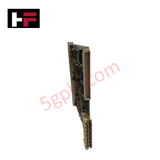
Product Details
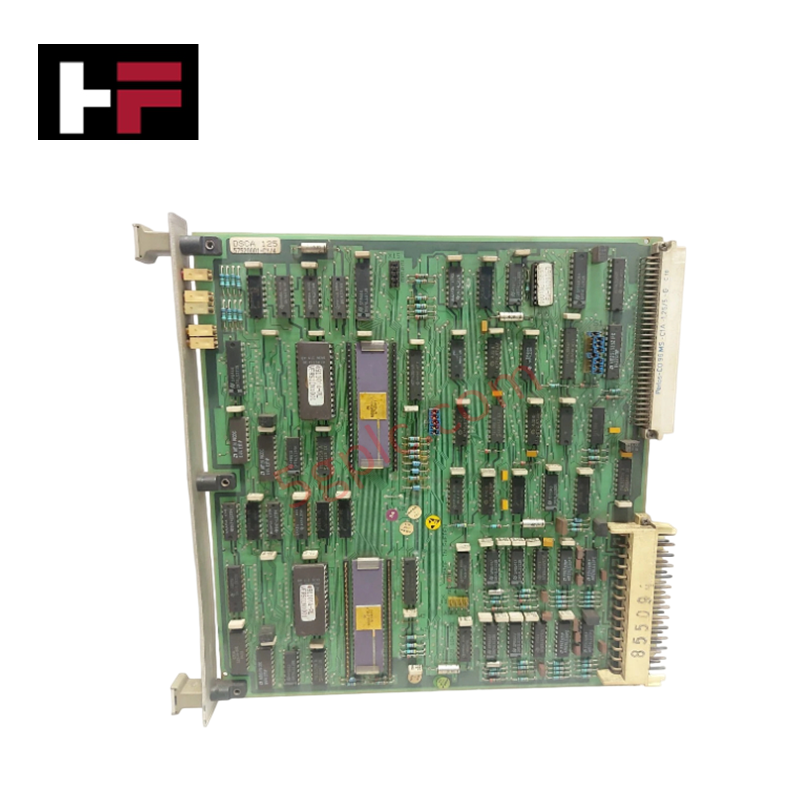
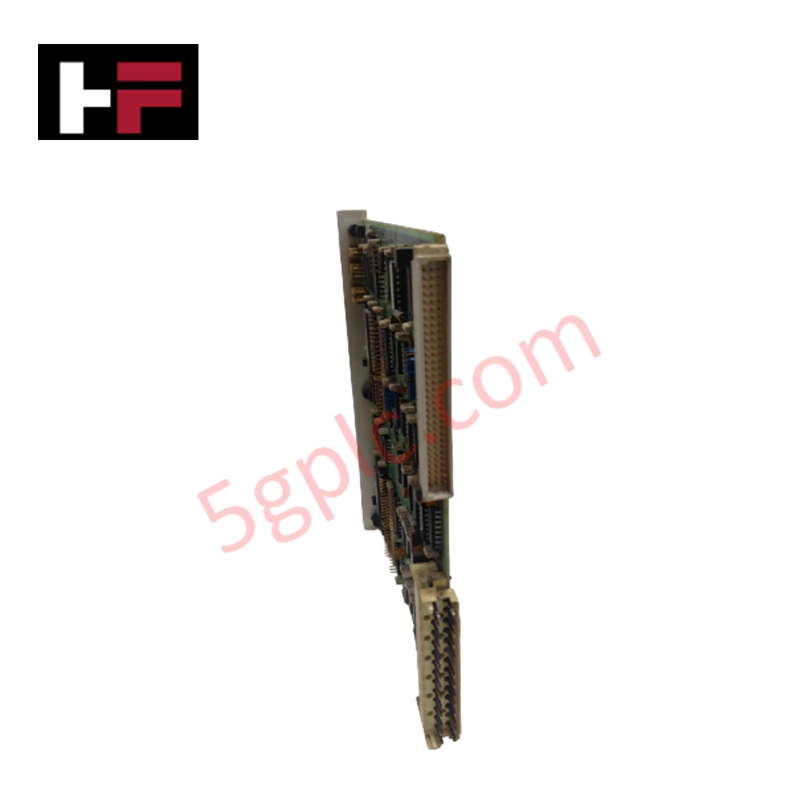
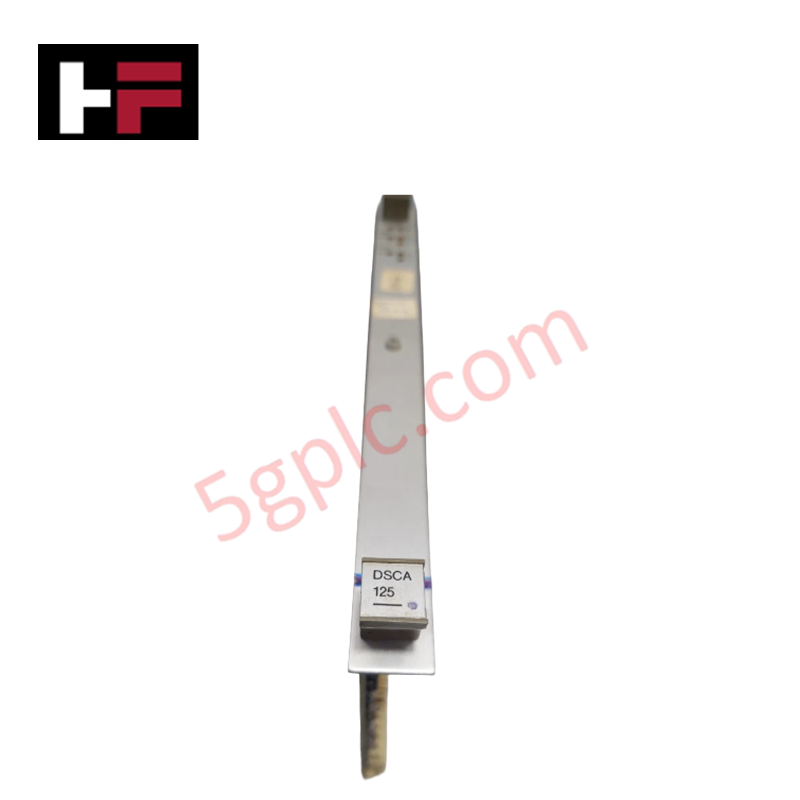
The ABB DSCA 125 57520001-CY, also cataloged as the DSCA 125 Communications Board, operates as a dedicated hardware component for MasterBus 200 data routing within MasterPiece / Advant OCS controller networks. The unit provides physical layer translation and frame processing to manage data packet transmission rates between localized central processing cards and adjacent bus loops.
Hardware Specifications
| Parameter | Specification |
|---|---|
| Model | DSCA 125 |
| Brand | ABB |
| Product ID | 57520001-CY |
| Origin | Sweden |
| Weight | 0.39 kg |
| Dimensions | 10 mm x 240 mm x 240 mm (W x H x D) |
| Operating Temp | 0 to +70 deg C |
| Power Consumption | Powered via 24 VDC input rail |
| Communication Protocol | MasterBus 200 |
| Relative Humidity | 5% to 95% non-condensing up to +55 deg C |
| Operating Altitude | Sea level to 3 km |
| Certifications | CSA and FM certified for nonhazardous locations |
Deterministic Networks & Firmware Compatibility
The electronic interface is optimized to stabilize serial transmission waveforms across industrial subrack environments. Communication tasks comply directly with data intervals established under specific backplane bus communication velocity licenses. This synchronous tracking supports real-time network stability over Profinet / EtherNet/IP deterministic networks, maintaining explicit firmware flash compatibility and managing dynamic I/O density scaling profiles without generating internal register drift or diagnostic flag timeout faults.
Frequently Asked Questions
Q: Does the DSCA 125 support module replacement or hot-swapping under powered conditions?
A: No. Power to the 24 VDC input rail must be disconnected before board insertion or extraction. Live handling can cause localized voltage transients, affecting the backplane bus communication velocity licenses and forcing the processor into an error-stop loop.
Q: How is the physical layer connection for MasterBus 200 terminated on this hardware layout?
A: Node termination requires matched resistance links deployed at the physical outer boundaries of the network topology segment to secure baseline transceiver voltage thresholds.
Q: Does an altitude above 3 km require specialized de-rating metrics for operation?
A: Yes. The board is structurally specified for operation from sea level up to 3 km. Altitudes above this boundary limit reduce the air density index, impacting convective thermal profiles and lowering dielectric breakdown thresholds.
Field Installation Guidelines
- Slide the board into the designated subrack compartment chassis slot, pushing firmly to seat the backplane pins before clamping down any retention screws.
- Maintain a minimum installation distance of 100 mm between MasterBus 200 communication cables and any high-power AC distribution conduits inside the cubicle.
- Connect all communication cable screen wraps directly to the master enclosure low-impedance grounding rail to isolate external high-frequency electrical noise components.
- Confirm cabinet cooling fans are configured to keep local air pockets within the 0 to +70 deg C operating threshold when slots are completely populated.
Additional Information
- 100% Genuine Parts: All products are original and authentic, ensuring reliable industrial performance.
- 30-Day Refund Guarantee: Return any in-stock item within 30 days in original, unopened packaging for a full refund (excluding shipping and fees).
- 12-Month Warranty: Covers defects in materials or workmanship; excludes misuse, normal wear, or unauthorized modifications.
- Worldwide Shipping: We ship via USPS, UPS, FedEx, and DHL. Delivery times vary by country and may be subject to customs or import fees.
- Support & Contact: Technical and warranty assistance is available anytime. Contact us here: Contact.
- Purchase Guidance: Check product specifications and compatibility carefully before ordering to ensure proper application.






Tech & Buying Guide

Demystifying the DDE Protocol in Legacy Industrial Automation Systems
Modern control systems rely heavily on seamless interprocess communication to exchange operational data between software programs. Microsoft first introduced the Dynamic Data Exchange (DDE) protocol in 1987 to enable real-time data sharing. In factory automation, DDE served as an early bridge between control software and Windows desktop applications. Therefore, understanding DDE mechanics provides crucial insights into how legacy industrial networks established software-level connectivity.

Demystifying CPU Communication Ports in Siemens PLC Architectures
Industrial automation relies heavily on robust data exchange between devices. Without seamless connectivity, field instruments, network switches, human-machine interfaces, and programmable logic controllers cannot coordinate effectively. Therefore, understanding the various CPU communication ports available in Siemens hardware ensures efficient factory automation design and seamless system integration.

Mastering the Siemens PLC Scan Cycle: How the CPU Executes Automation Programs
Industrial automation relies heavily on programmable logic controllers (PLCs) to manage complex manufacturing processes. Many engineers dive straight into programming without mastering the underlying architecture. However, understanding how a PLC CPU executes a program ensures reliable system design. Therefore, mastering the scan cycle optimizes both performance and troubleshooting in modern control systems.