










Product Details
Product Overview
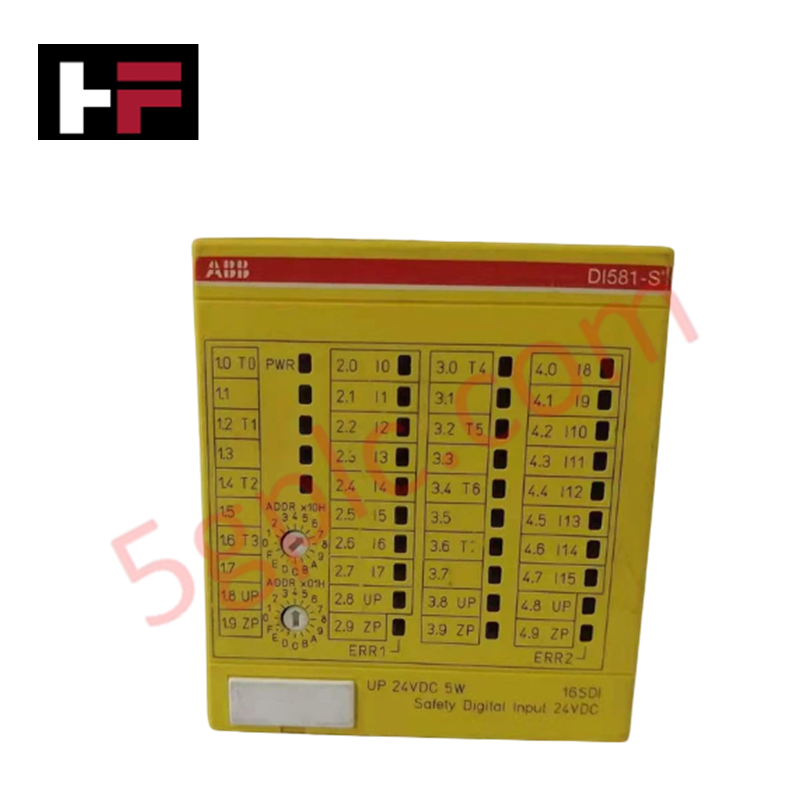
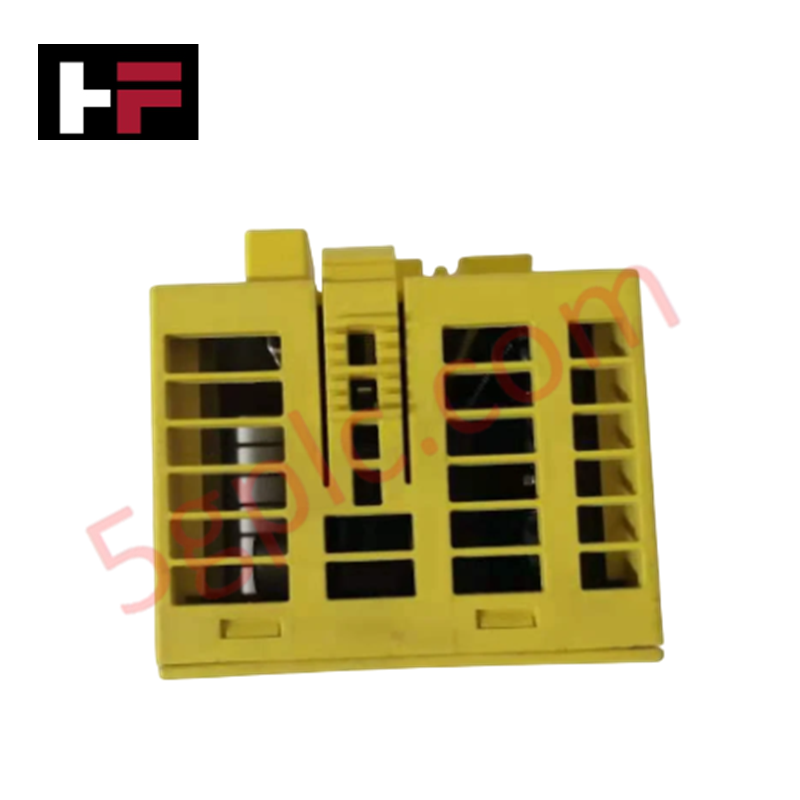
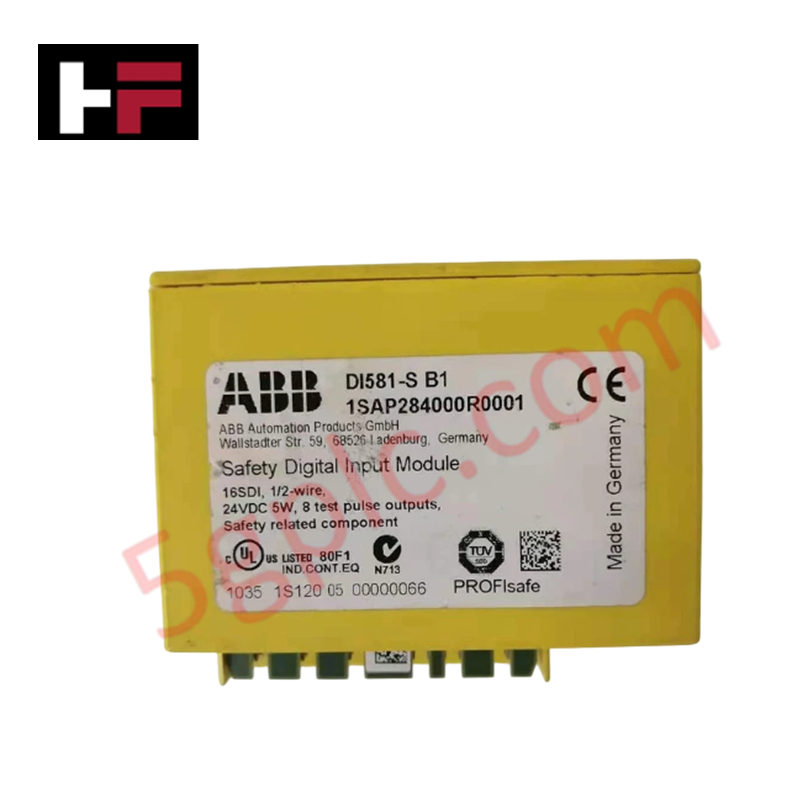
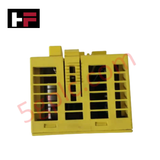
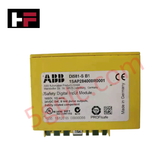
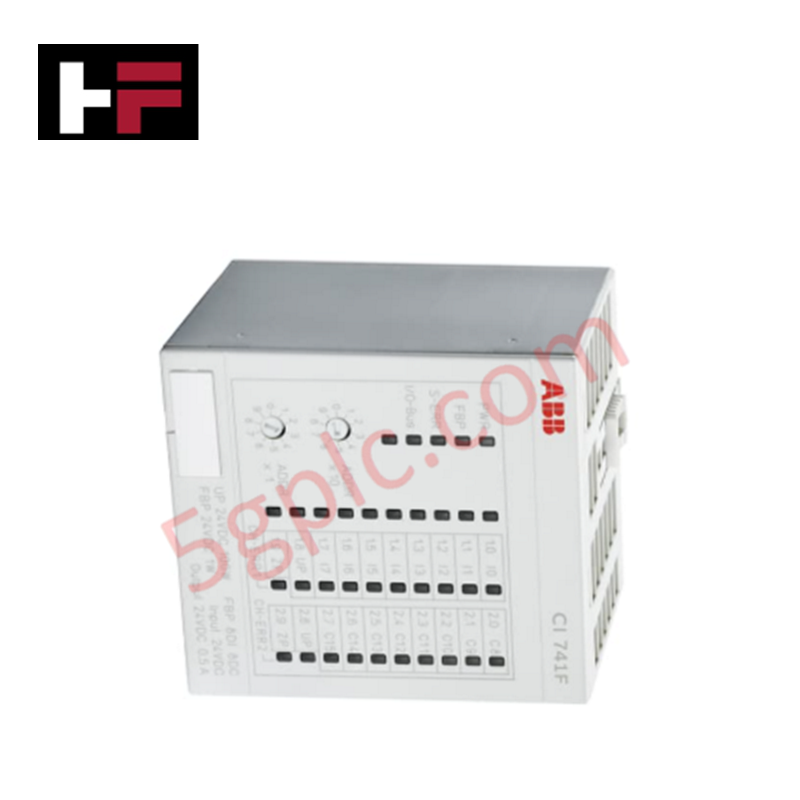
The ABB DI581-S (1SAP284000R0001) functions as a critical safety component within the AC500-S functional safety PLC system. This module provides flexible high-integrity monitoring for safety-related field devices, supporting up to 16 Safety Digital Inputs (SDI) for SIL2 applications or 8 SDI for SIL3 architectures. By integrating 8 dedicated pulse outputs, the DI581-S performs continuous cross-talk monitoring and short-circuit detection for safety sensors. We supply this module as 100% Brand New and Original, ensuring your industrial safety loops meet the most stringent international standards with factory-certified reliability.
Technical Specifications
The DI581-S manages safety-critical signals through the following hardware parameters:
-
Safety Integrity Level: SIL2 (16 SDI) / SIL3 (8 SDI)
-
Safety Inputs: 16 Channels (24VDC, 7mA per channel)
-
Pulse Outputs: 8 Channels for sensor testing and cross-fault detection
-
Input Voltage Range: 24V DC (Standard) / 0V to 30V DC (Maximum)
-
Delay Time ($\tau$): Adjustable from 1 ms up to 500 ms
-
Wiring Configuration: 1-wire connection
-
Protection Rating: IP20
-
Dimensions: 67.5 mm (W) x 76 mm (H) x 62 mm (D)
-
Net Weight: 0.122 kg
Engineering Advantages
-
Scalable Safety Integrity: The DI581-S offers dual-mode functionality. You configure the module for 16-channel SIL2 operation to maximize I/O density, or switch to 2-channel redundancy for 8-channel SIL3 requirements. This versatility allows a single hardware type to cover diverse risk assessment needs.
-
Advanced Fault Detection: 8 integrated pulse outputs provide sophisticated signal cross-talk monitoring. These pulses verify the integrity of the wiring to emergency stop buttons and light curtains, instantly identifying short circuits to external voltage sources or internal signal overlaps.
-
Highly Customizable Response Times: The programmable delay time (up to 500 ms) allows engineers to fine-tune the debouncing logic. This prevents nuisance trips caused by high-vibration environments while maintaining the rapid reaction times required for catastrophic safety events.
-
Efficient 1-Wire Architecture: The 1-wire design minimizes wiring complexity within the safety cabinet. When paired with the standard AC500 terminal base, this architecture accelerates commissioning and reduces the physical footprint of the fail-safe system.
-
Seamless Safety Integration: The module communicates via the PROFIsafe protocol over PROFINET. This ensures consistent, high-speed data exchange between the safety I/O and the AC500-S safety CPU, providing a unified diagnostic environment for the entire automation cell.
FAQs
-
Can the DI581-S operate as a standard (non-safety) digital input module?
While the DI581-S can read standard signals, you primarily use it for safety applications. Operating this module within the AC500-S safety system allows you to utilize its fail-safe logic and diagnostic features which a standard CPU cannot fully exploit.
-
How do the pulse outputs improve safety?
The pulse outputs send specific bit patterns through the field sensors. If the module detects a mismatch—due to a cable crush or insulation failure between two wires—the safety PLC triggers a fail-safe state (e.g., stopping the machine) to prevent an unsafe condition.
-
Does this module require a specialized terminal base?
The DI581-S requires a compatible S500 Terminal Base (such as the TU582-S). The safety-certified terminal base ensures proper isolation and signal routing required for SIL-rated installations.
-
What is the difference between the DI581 and the DI581-S?
The "-S" designation indicates a Safety-rated module. The DI581-S includes internal hardware redundancy, specialized firmware for functional safety, and pulse output hardware that the standard DI581 lacks.
Additional Information
- 100% Genuine Parts: All products are original and authentic, ensuring reliable industrial performance.
- 30-Day Refund Guarantee: Return any in-stock item within 30 days in original, unopened packaging for a full refund (excluding shipping and fees).
- 12-Month Warranty: Covers defects in materials or workmanship; excludes misuse, normal wear, or unauthorized modifications.
- Worldwide Shipping: We ship via USPS, UPS, FedEx, and DHL. Delivery times vary by country and may be subject to customs or import fees.
- Support & Contact: Technical and warranty assistance is available anytime. Contact us here: Contact.
- Purchase Guidance: Check product specifications and compatibility carefully before ordering to ensure proper application.






Tech & Buying Guide

Demystifying the DDE Protocol in Legacy Industrial Automation Systems
Modern control systems rely heavily on seamless interprocess communication to exchange operational data between software programs. Microsoft first introduced the Dynamic Data Exchange (DDE) protocol in 1987 to enable real-time data sharing. In factory automation, DDE served as an early bridge between control software and Windows desktop applications. Therefore, understanding DDE mechanics provides crucial insights into how legacy industrial networks established software-level connectivity.

Demystifying CPU Communication Ports in Siemens PLC Architectures
Industrial automation relies heavily on robust data exchange between devices. Without seamless connectivity, field instruments, network switches, human-machine interfaces, and programmable logic controllers cannot coordinate effectively. Therefore, understanding the various CPU communication ports available in Siemens hardware ensures efficient factory automation design and seamless system integration.

Mastering the Siemens PLC Scan Cycle: How the CPU Executes Automation Programs
Industrial automation relies heavily on programmable logic controllers (PLCs) to manage complex manufacturing processes. Many engineers dive straight into programming without mastering the underlying architecture. However, understanding how a PLC CPU executes a program ensures reliable system design. Therefore, mastering the scan cycle optimizes both performance and troubleshooting in modern control systems.