










Product Details
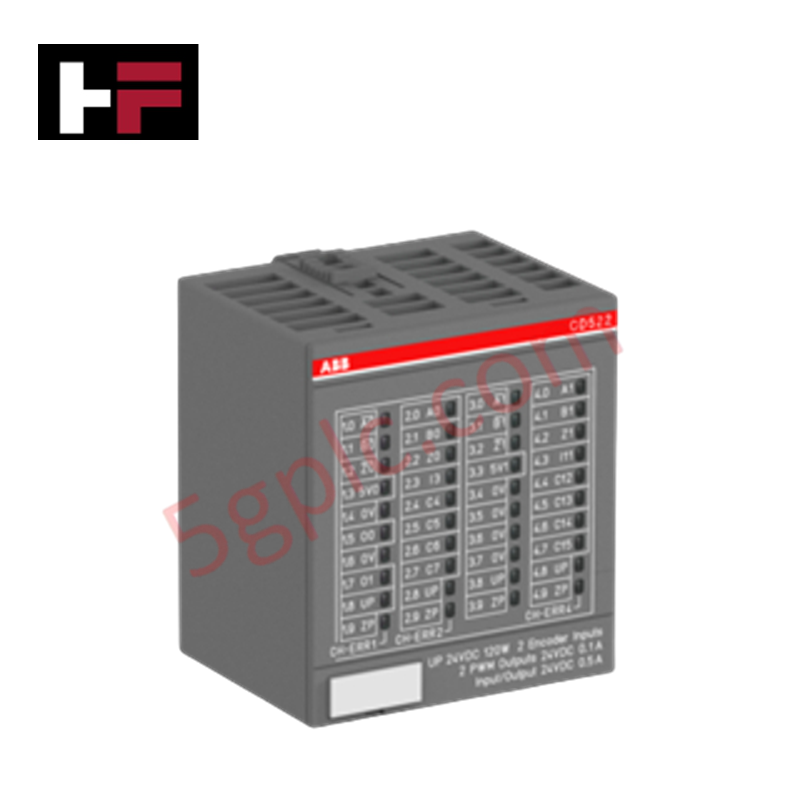
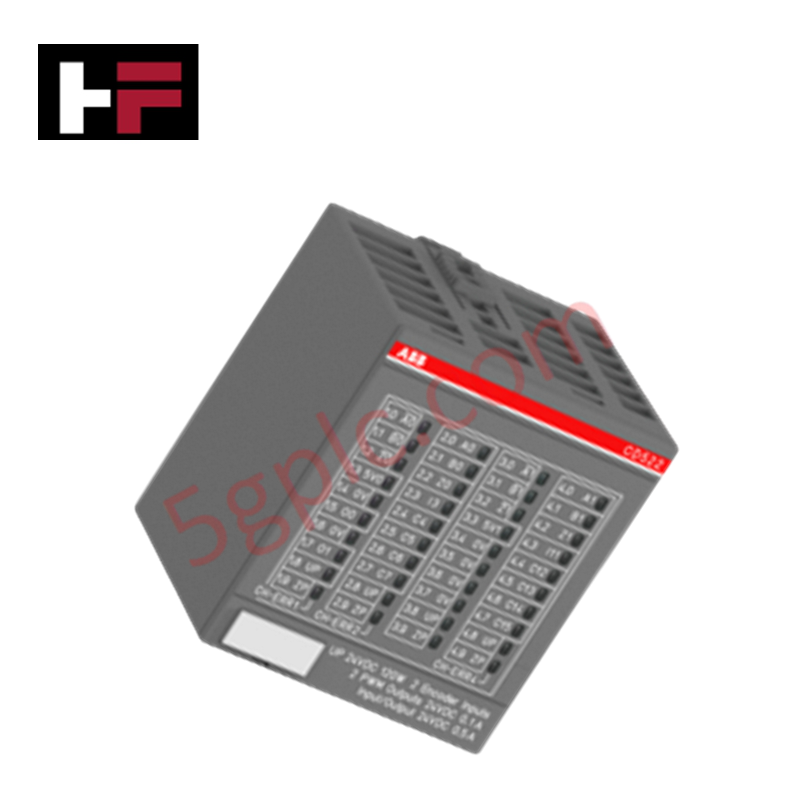
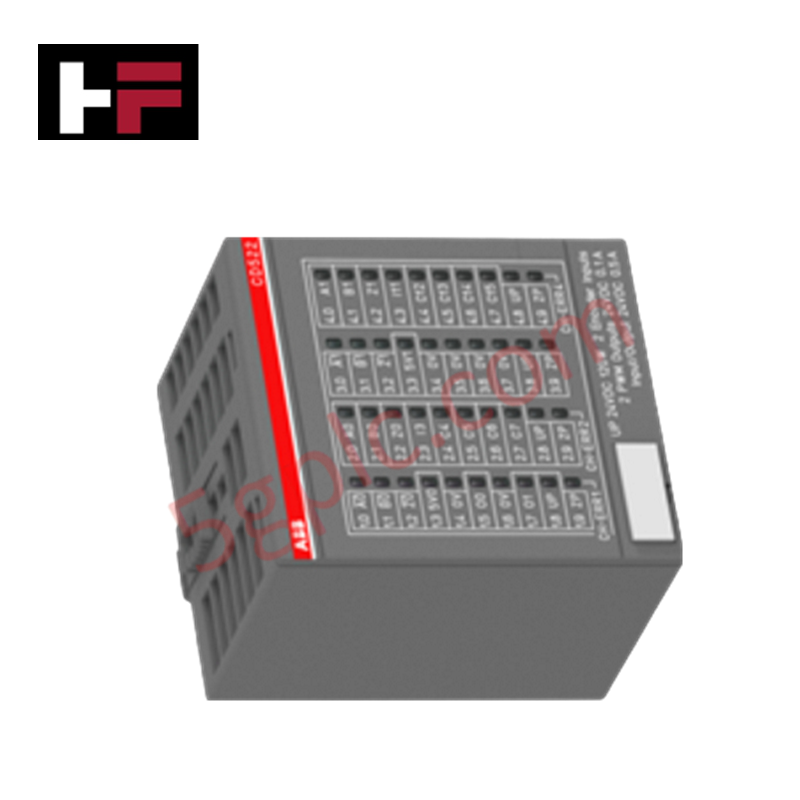
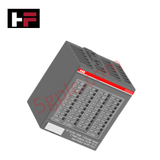
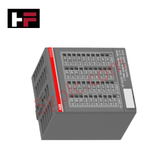
The ABB 1SAP260300R0001, also cataloged as the CD522 Functional Module, operates as a dedicated hardware component for localized control logic execution within ABB AC500 Distributed Automation I/O platforms. This module processes specialized high-speed hardware tasks, interfacing via 2 encoder inputs, 2 PWM outputs, 2 fixed 24 VDC digital inputs, and 8 configurable 24 VDC digital inputs/outputs to handle precise positioning and discrete signal logic.
Hardware Specifications
| Parameter | Specification |
|---|---|
| Model | CD522 (1SAP260300R0001) |
| Brand | ABB |
| Origin | Germany / Sweden (Standard series production baseline) |
| Weight | 0.124 kg net / 0.151 kg gross |
| Dimensions | 67.5 mm x 62 mm x 76 mm |
| Power Supply Voltage | 24 VDC |
| Output Voltage | 24 VDC |
| Output Current | 2 A maximum per channel |
| Encoder Inputs | 2 channels |
| PWM Outputs | 2 channels |
| Digital Inputs | 2 channels (24 VDC) |
| Configurable DI/O | 8 channels (24 VDC) |
| Degree of Protection | IP20 |
| Operating Temp | 0 to +60 deg C |
| Storage Temp | -40 to +70 deg C |
| Product Type | PLC Functional Modules |
Profinet / EtherNet/IP Deterministic Networks and I/O Density Scaling
The internal signal switching architecture of the ABB CD522 1SAP260300R0001 correlates precisely with baseline backplane bus communication velocity metrics. When encoder tracking metrics and PWM modulation states are routed to upper controller infrastructures over Profinet or EtherNet/IP deterministic networks, frame integrity is preserved under tight cyclic intervals. This processing performance remains constant during substantial I/O density scaling routines across the distributed cluster, provided that the newly addressed channel parameters fall within the software limitations defined by the central processor firmware flash compatibility matrix.
Frequently Asked Questions
Q: Can the CD522 module be inserted or removed from the active terminal base while the 24 VDC system power is switched on?
A: No. Live insertion or extraction is not supported on this hardware configuration. Disconnecting the module while the backplane assembly is energized risks electrical transient tracking, which can cause register data loss or permanent physical logic trace breakdown.
Q: How do the 8 configurable DI/O channels behave under an overcurrent circuit condition?
A: The 24 VDC channels monitor internal output current thresholds. If an external short circuit or overload exceeds the 2 A nominal rating allocation, the affected channels trip electrically. Fault verification must be monitored through the central host register diagnostics.
Field Installation Guidelines
- Electrostatic Discharge Minimization: Field personnel must use a certified, grounded electrostatic discharge (ESD) wrist strap during handling and mounting procedures to protect internal microprocessors against static disruption.
- DIN-Rail Terminal Alignment: Align the housing carefully onto the designated AC500 terminal block adapter mounted on a standard 35 mm DIN rail. Engage the locking tabs completely to ensure secure backplane pin engagement and continuous ground continuity.
- High-Speed Signal Isolation: Route the high-frequency encoder input and PWM output cables through separate shielded wireways. Maintain a minimum physical spacing of 100 mm from high-voltage AC feeders or variable speed drive conductors to prevent electromagnetic interference.
- Thermal Dissipation Maintenance: Verify that installation clearance dimensions around the IP20 perimeter match standard specifications, ensuring adequate ambient air cooling to keep the module below the max +60 deg C operating temperature limit.
Additional Information
- 100% Genuine Parts: All products are original and authentic, ensuring reliable industrial performance.
- 30-Day Refund Guarantee: Return any in-stock item within 30 days in original, unopened packaging for a full refund (excluding shipping and fees).
- 12-Month Warranty: Covers defects in materials or workmanship; excludes misuse, normal wear, or unauthorized modifications.
- Worldwide Shipping: We ship via USPS, UPS, FedEx, and DHL. Delivery times vary by country and may be subject to customs or import fees.
- Support & Contact: Technical and warranty assistance is available anytime. Contact us here: Contact.
- Purchase Guidance: Check product specifications and compatibility carefully before ordering to ensure proper application.









Tech & Buying Guide

Demystifying the DDE Protocol in Legacy Industrial Automation Systems
Modern control systems rely heavily on seamless interprocess communication to exchange operational data between software programs. Microsoft first introduced the Dynamic Data Exchange (DDE) protocol in 1987 to enable real-time data sharing. In factory automation, DDE served as an early bridge between control software and Windows desktop applications. Therefore, understanding DDE mechanics provides crucial insights into how legacy industrial networks established software-level connectivity.

Demystifying CPU Communication Ports in Siemens PLC Architectures
Industrial automation relies heavily on robust data exchange between devices. Without seamless connectivity, field instruments, network switches, human-machine interfaces, and programmable logic controllers cannot coordinate effectively. Therefore, understanding the various CPU communication ports available in Siemens hardware ensures efficient factory automation design and seamless system integration.

Mastering the Siemens PLC Scan Cycle: How the CPU Executes Automation Programs
Industrial automation relies heavily on programmable logic controllers (PLCs) to manage complex manufacturing processes. Many engineers dive straight into programming without mastering the underlying architecture. However, understanding how a PLC CPU executes a program ensures reliable system design. Therefore, mastering the scan cycle optimizes both performance and troubleshooting in modern control systems.