










Product Details
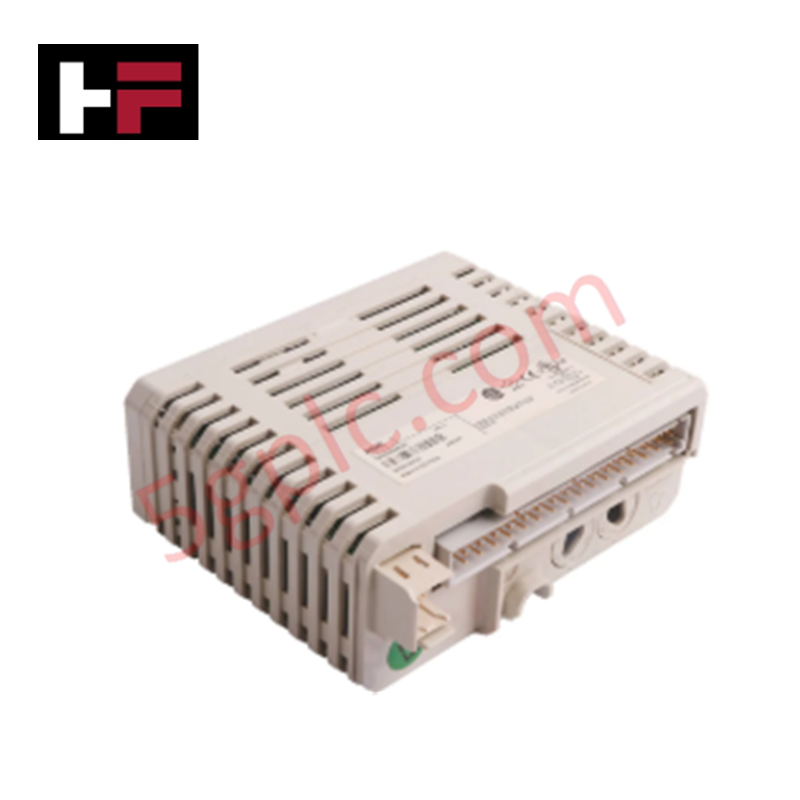
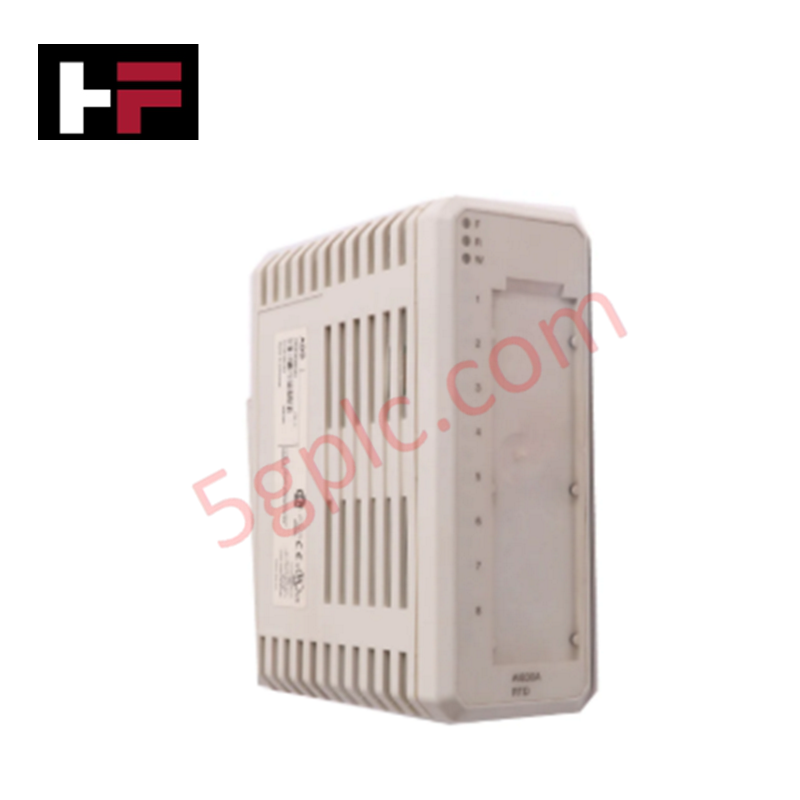
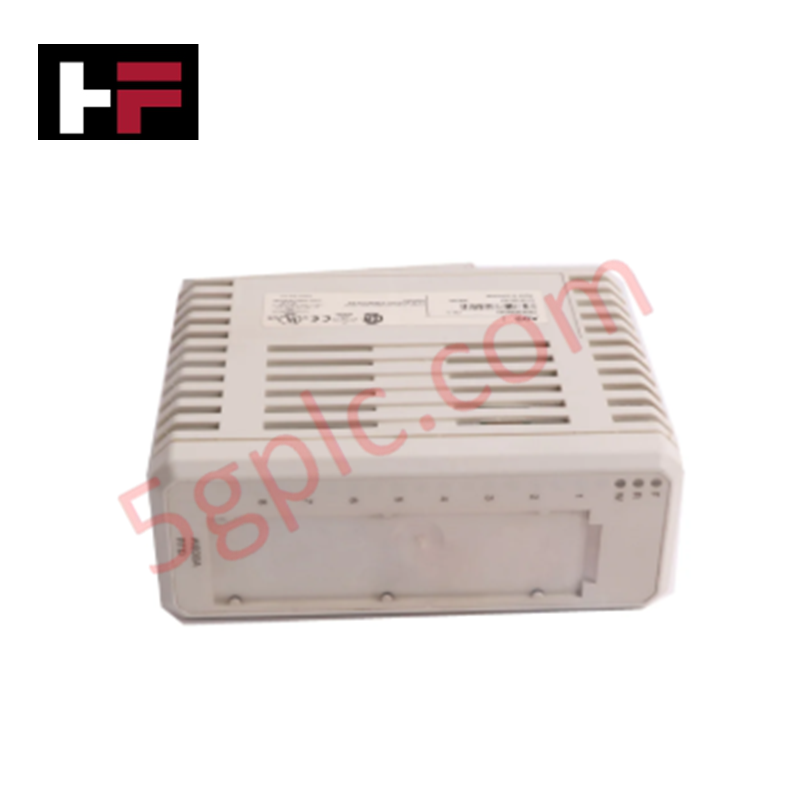
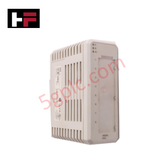
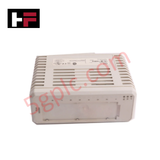
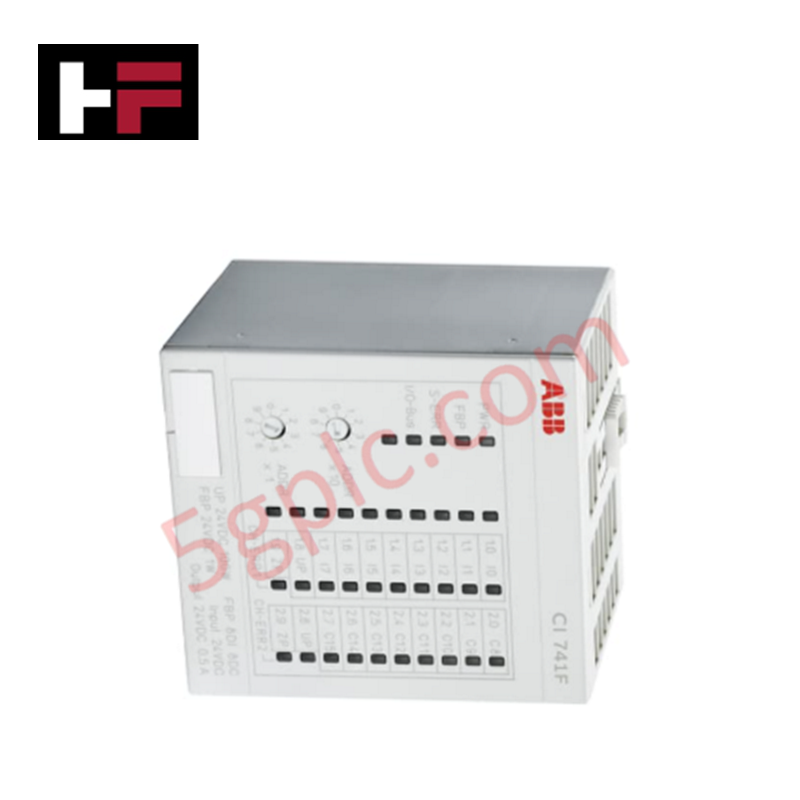
onfigured for high-density multi-channel parameter acquisition in industrial automation networks, the ABB AI623 (AI623 Analog Input Module) provides direct physical/electrical execution. The hardware executes real-time sampling across 16 independent analog channels, converting current loop or voltage source potentials directly into system-level engineering variables. Operating on a 24 VDC bus input, the device processes incoming signals within a strict sub-millisecond scanning frame, writing digitized values straight onto the system register matrix.
Hardware Specifications
| Parameter | Specification |
|---|---|
| Model | AI623 |
| Brand | ABB |
| Origin | Germany (Standard manufacturing location applies) |
| Weight | 0.35 kg (Standard module housing benchmark) |
| Dimensions | Compact standard module enclosure sizing |
| Operating Temp | -20 to +60 deg C (Standard industrial parameters apply) |
| Power Supply | 24 VDC |
| Power Consumption | Less than 5 W |
| Input Capacity | 16 Analog Inputs |
| Input Range | -20 mA to +20 mA, 0 V to 10 V, or 4 mA to 20 mA |
| Accuracy | Plus or minus 0.1% of full scale |
| Noise | Less than 0.2 uV RMS |
| Response Time | Less than 2 ms |
| EMC Compliance | IEC 61131-2 |
| Hazardous Area Certification | ATEX and IECEx Zone 2 |
| Mounting | DIN rail or panel mount |
I/O Density Scaling and Backplane Throughput
The AI623 architecture utilizes optimized input array mapping to facilitate expanded I/O density scaling without inducing processing lag within the automation rack. The 16 concurrent sensor channels are scanned sequentially via a hardware multiplexer that routes digitized results straight through to the local register blocks. This configuration isolates the individual channel streams, maintaining data synchronization across deterministic bus architectures even when processing high-frequency signal fluctuations from the field.
Frequently Asked Questions
Q: How does the AI623 module manage out-of-range sensor currents up to +20 mA or down to -20 mA?
A: The input circuitry features hard-wired scaling thresholds that continuously convert bipolar current loops into digitized values. Signal parameters outside the configured boundaries trigger channel fault flags in the status register without dropping the primary backplane connection.
Q: Is hot-swapping permitted for this 16-channel analog hardware while the system is under load?
A: No, hot-swapping is not supported unless specified by a compatible active backplane terminal unit. Removing the card while energized can disrupt backplane line impedance, causing transient errors on adjacent modules and risking voltage stress to the onboard multiplexer.
Q: What grounding method is required to preserve the low-noise specification of less than 0.2 uV RMS?
A: The module relies on direct mechanical contact with a grounded DIN rail or panel frame. Field instrument shield wires must terminate onto an isolated ground bar linked directly to the main station earth grid to eliminate common-mode ground loop noise.
Field Installation Guidelines
The AI623 module must be mounted vertically onto a standard symmetrical DIN rail or bolted directly to a rigid panel surface inside an environmental enclosure. All low-level analog wiring must use shielded twisted-pair cables, keeping current loops separated from voltage signals within the conduit. To mitigate electromagnetic interference, avoid routing analog signals parallel to high-voltage AC lines or motor variable-frequency drives. Ensure a minimum spacing clearance of 50 mm above and below the module housing to allow adequate convective airflow and prevent thermal stress.
Additional Information
- 100% Genuine Parts: All products are original and authentic, ensuring reliable industrial performance.
- 30-Day Refund Guarantee: Return any in-stock item within 30 days in original, unopened packaging for a full refund (excluding shipping and fees).
- 12-Month Warranty: Covers defects in materials or workmanship; excludes misuse, normal wear, or unauthorized modifications.
- Worldwide Shipping: We ship via USPS, UPS, FedEx, and DHL. Delivery times vary by country and may be subject to customs or import fees.
- Support & Contact: Technical and warranty assistance is available anytime. Contact us here: Contact.
- Purchase Guidance: Check product specifications and compatibility carefully before ordering to ensure proper application.






Tech & Buying Guide

Demystifying CPU Communication Ports in Siemens PLC Architectures
Industrial automation relies heavily on robust data exchange between devices. Without seamless connectivity, field instruments, network switches, human-machine interfaces, and programmable logic controllers cannot coordinate effectively. Therefore, understanding the various CPU communication ports available in Siemens hardware ensures efficient factory automation design and seamless system integration.

Mastering the Siemens PLC Scan Cycle: How the CPU Executes Automation Programs
Industrial automation relies heavily on programmable logic controllers (PLCs) to manage complex manufacturing processes. Many engineers dive straight into programming without mastering the underlying architecture. However, understanding how a PLC CPU executes a program ensures reliable system design. Therefore, mastering the scan cycle optimizes both performance and troubleshooting in modern control systems.

How to Connect to Siemens S7 PLCs: 5 Essential Communication Methods
Establishing a reliable hardware link between a programming terminal and a Siemens SIMATIC controller is essential for engineering workflows. Field engineers rely on distinct physical layers, ranging from legacy serial connections to high-speed Industrial Ethernet protocols. Modern factory automation environments prioritize fast data transfer and seamless driver integration. Selecting the correct connection method simplifies program downloads, online monitoring, and system troubleshooting in complex control systems.