










Product Details
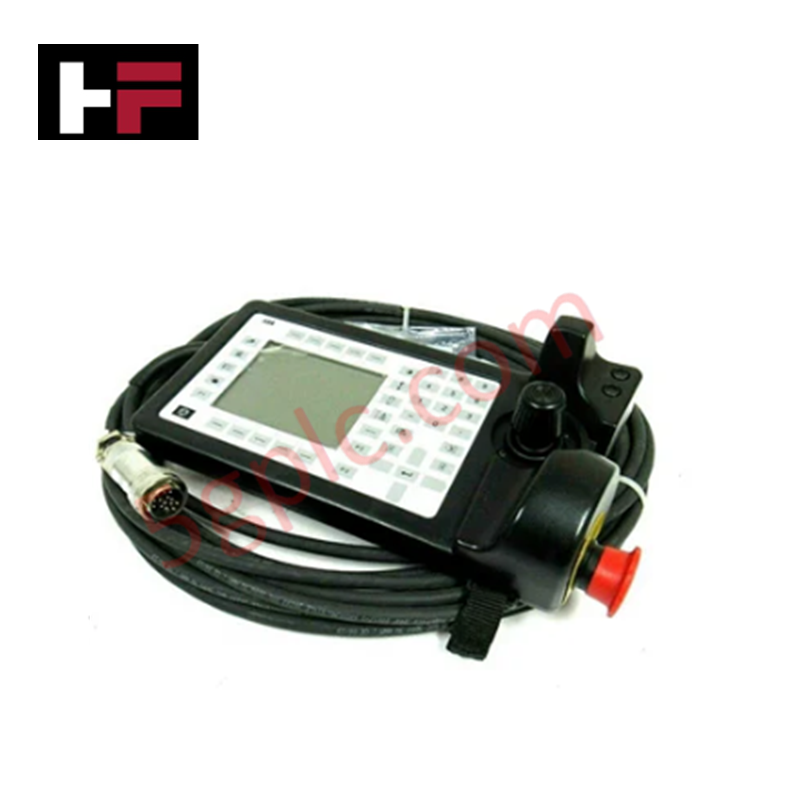
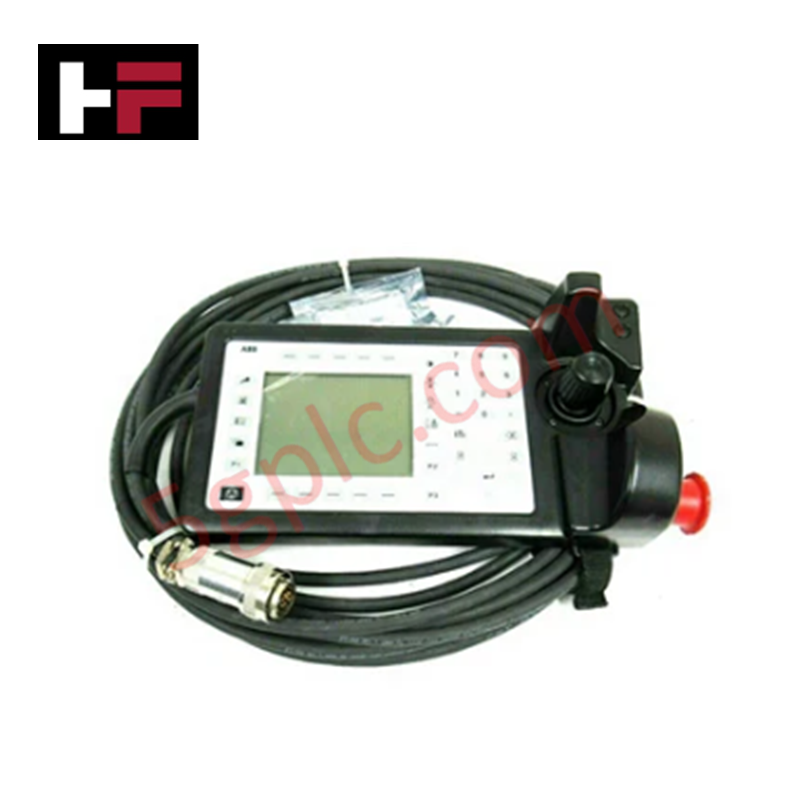
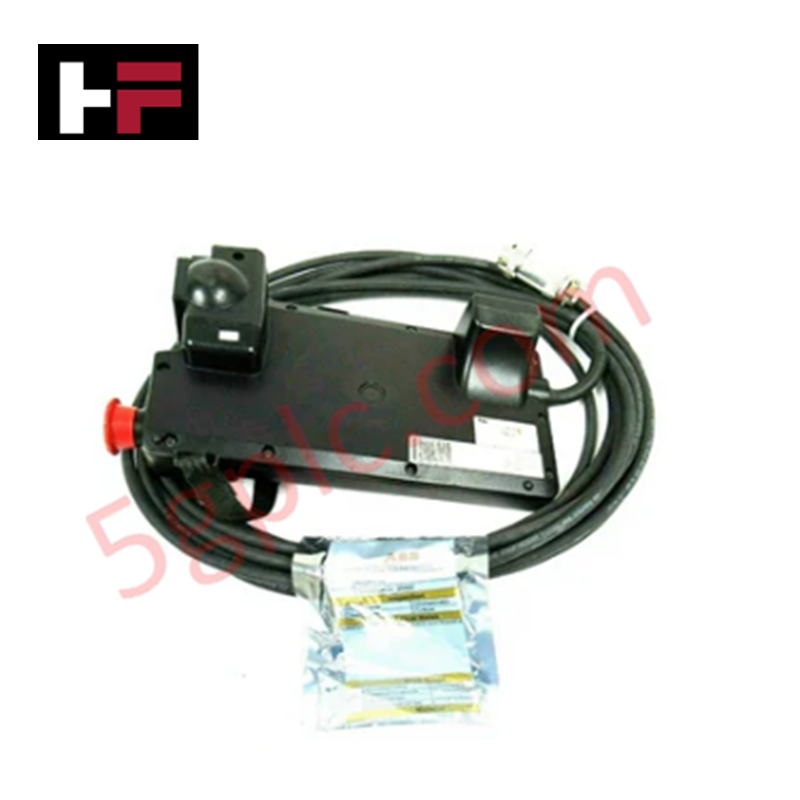
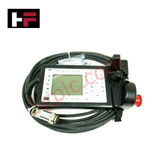
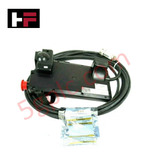
The ABB 3HNE00313-1, also cataloged as the 3HNE00313-1 Programmable Unit, operates as a dedicated hardware component for manual coordinate registration and loop parameter visualization within robotic control networks.
Hardware Specifications
| Parameter | Specification |
|---|---|
| Model | 3HNE00313-1 |
| Brand | ABB |
| Origin | Sweden |
| Weight | 2.4 kg (Gross mass: 3.3 kg) |
| Dimensions | 450 mm x 275 mm x 275 mm |
| Operating Temp | 0 to +50 deg C |
| Power Consumption | 24 VDC nominal supply line input |
| Product Type | Teach Pendants |
| Display Element | Integrated LCD with monochrome/color backlight array |
| Replaced Product IDs | 3HNE00314-1, 3HNE00131-1, 3HNE00132-1, E3HNE00313-1 |
| Environmental Scope | Product Not in WEEE Scope |
Firmware Flash Compatibility and I/O Density Scaling
The internal interface circuitry of the 3HNE00313-1 processes real-time button matrix inputs and serial diagnostic strings. The unit relies on correct firmware flash compatibility matching the main controller rack configuration to parse automated state variables accurately. When running beside parallel control nodes linked via Profinet / EtherNet/IP deterministic networks, data transmissions are executed over separate bus registers to prevent any drop in backplane bus communication velocity metrics. This independent data loop allocation allows extensive system configuration tracking and flexible I/O density scaling on the main automation panel without introducing command processing latency.
Frequently Asked Questions
Q: Does the 3HNE00313-1 interface allow active online hot-swap connection switches?
A: Yes, the hardware layer allows connection modifications while the controller remains powered. However, extracting the terminal while safety circuits are armed will open the dual-channel emergency stop loop, initiating an immediate emergency stop routine.
Q: How is legacy hardware version matching managed across the listed replaced product IDs?
A: The 3HNE00313-1 retains identical pin allocation geometry and trace impedance specifications as models 3HNE00314-1 and 3HNE00131-1. Base firmware flash compatibility must be verified at the main controller processor block during hardware version substitution.
Q: What structural protection isolates the internal display board from industrial floor transients?
A: The electronics are mounted within an impact-resistant composite housing. Internal cable entry tracks feature built-in strain relief rings and conductive shield brackets to divert high-frequency noise lines directly to ground before they can reach the primary processor.
Field Installation Guidelines
- Umbilical Cable Coupling: Align the multi-pin connector keyways with the main panel receptacle. Push and rotate the threaded outer locking sleeve completely to prevent contact wear from movement.
- Safety Circuit Interlock Verification: Perform functional point-to-point confirmation loops on the integrated enabling switch and emergency stop elements immediately following installation before enabling automatic mode tracking.
- Conductor Routing Separation: Route the connection line away from variable frequency drives, heavy switching contactors, and high-voltage AC cables to minimize inductive noise cross-talk.
- Handling and Environmental Limits: Store the unit within the designated holsters when idle. Avoid direct contact between the display window and localized heat profiles or chemical cleaning sprays to prevent physical degradation.
Additional Information
- 100% Genuine Parts: All products are original and authentic, ensuring reliable industrial performance.
- 30-Day Refund Guarantee: Return any in-stock item within 30 days in original, unopened packaging for a full refund (excluding shipping and fees).
- 12-Month Warranty: Covers defects in materials or workmanship; excludes misuse, normal wear, or unauthorized modifications.
- Worldwide Shipping: We ship via USPS, UPS, FedEx, and DHL. Delivery times vary by country and may be subject to customs or import fees.
- Support & Contact: Technical and warranty assistance is available anytime. Contact us here: Contact.
- Purchase Guidance: Check product specifications and compatibility carefully before ordering to ensure proper application.









Tech & Buying Guide

Demystifying the DDE Protocol in Legacy Industrial Automation Systems
Modern control systems rely heavily on seamless interprocess communication to exchange operational data between software programs. Microsoft first introduced the Dynamic Data Exchange (DDE) protocol in 1987 to enable real-time data sharing. In factory automation, DDE served as an early bridge between control software and Windows desktop applications. Therefore, understanding DDE mechanics provides crucial insights into how legacy industrial networks established software-level connectivity.

Demystifying CPU Communication Ports in Siemens PLC Architectures
Industrial automation relies heavily on robust data exchange between devices. Without seamless connectivity, field instruments, network switches, human-machine interfaces, and programmable logic controllers cannot coordinate effectively. Therefore, understanding the various CPU communication ports available in Siemens hardware ensures efficient factory automation design and seamless system integration.

Mastering the Siemens PLC Scan Cycle: How the CPU Executes Automation Programs
Industrial automation relies heavily on programmable logic controllers (PLCs) to manage complex manufacturing processes. Many engineers dive straight into programming without mastering the underlying architecture. However, understanding how a PLC CPU executes a program ensures reliable system design. Therefore, mastering the scan cycle optimizes both performance and troubleshooting in modern control systems.